
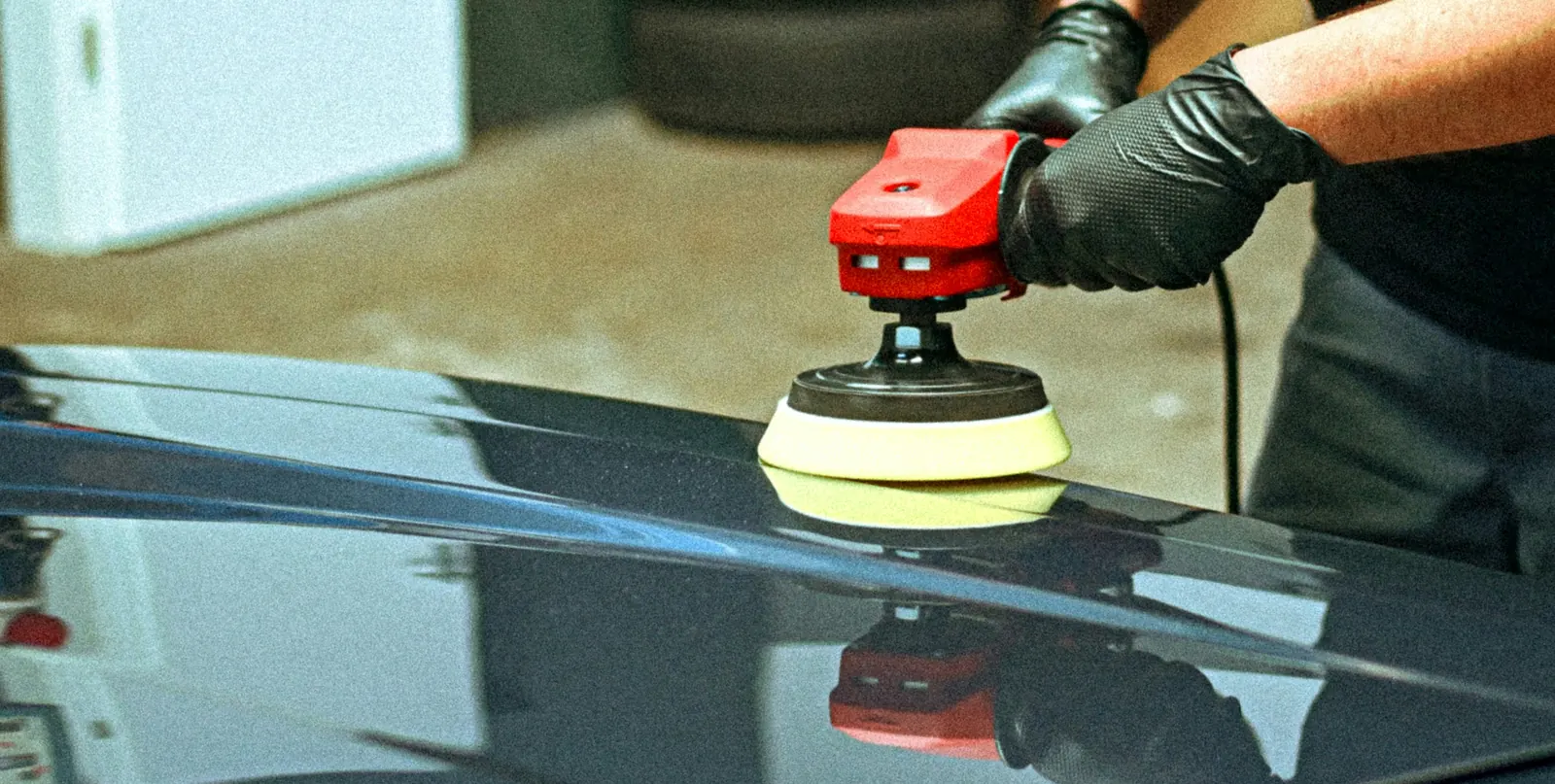
Paint and metal
Gloss returned,with nothing taken that cannot be spared.
Aircraft paint is thin and expensive to replace. We assess before we polish, and we polish only where the coating can afford it.
- Usually scheduled into a longer ground period, such as planned downtime, because full correction is slow, careful work. Brightwork on its own often fits a shorter window.
- At your FBO or hangar
- Confidential by default
What is paint correction and brightwork?
Paint correction and brightwork is the machine polishing of an aircraft's painted surfaces and bright metal to remove oxidation, haze and swirl marks. Noctavius Aviation polishes only where paint condition and thickness safely allow, masks sensors, seams and markings, and restores polished metal such as engine inlet lips with metal-appropriate compounds.
Overview
Paint correction and brightworkdone properly.
Aircraft paint ages under conditions a car never sees. UV is stronger at altitude, temperature swings are extreme, and the airframe meets jet fuel, exhaust, hydraulic fluid and de-icing chemicals. Over time the topcoat oxidises, gloss fades, and wash marring builds into a grey haze, most visibly on dark liveries.
Correction levels those defects by removing a microscopic layer of coating, which is exactly why it must be measured. Aircraft coatings are applied thinly to save weight, and a livery may include stripes, logos and registration markings at different heights, some of them vinyl. We assess the paint before proposing any machine work, and we leave alone any area that cannot spare the material.
Brightwork is its own discipline. Polished aluminium and other bright metal, such as the inlet lips on many jets, dulls and stains with weather and exhaust. It responds to metal polish worked carefully by hand or machine, with compound kept out of seams and away from adjoining paint.
The scope
What it includes.Every surface, by name.
- Paint assessment
- Gloss, oxidation, defects and coating condition recorded panel by panel before any machine work is proposed.
- Masking
- Static ports, sensors, antennas, seams, decals and registration markings masked off.
- Machine polishing
- Measured correction where condition allows, using the least aggressive combination that delivers the result.
- Hand finishing
- Edges, fastener rows and tight areas refined by hand where a machine would be unsafe.
- Brightwork
- Inlet lips and bright trim restored with metal-appropriate compound.
- Residue removal
- Polish dust and compound cleared from seams, fasteners and panel lines.
- Protection advice
- A recommendation on sealing the corrected paint so the finish holds longer.
Why the method matters
The differenceis in what you don't see.
- I
Paint is finite
Every correction removes material. Polishing without assessment can thin a coating towards an early, costly repaint.
- II
Markings must stay legible
Registration and required markings cannot be polished through. Damaging them creates a maintenance issue.
- III
Compound in the wrong place
Polish packed into seams, sensors or vents is hard to remove and can interfere with function. Masking prevents it.
- IV
Heat needs control
Machine heat on thin paint, sometimes over composite structure, calls for careful pad choice, speed and technique.
The process
How we workon your aircraft.
Usually scheduled into a longer ground period, such as planned downtime, because full correction is slow, careful work. Brightwork on its own often fits a shorter window.
- I
Wash and decontaminate
A full exterior clean so no grit is dragged under the pad.
- II
Assess
Paint condition reviewed and areas unsuitable for correction excluded.
- III
Mask
Sensors, ports, seams, decals and markings protected.
- IV
Test section
A small area confirms the gentlest method that achieves the result.
- V
Correct and polish
Panel-by-panel correction, with brightwork completed separately.
- VI
Clean up and review
Residue removed, masking lifted, and the finish reviewed with your crew.
Airframes
Matched to the aircraft,not applied generically.
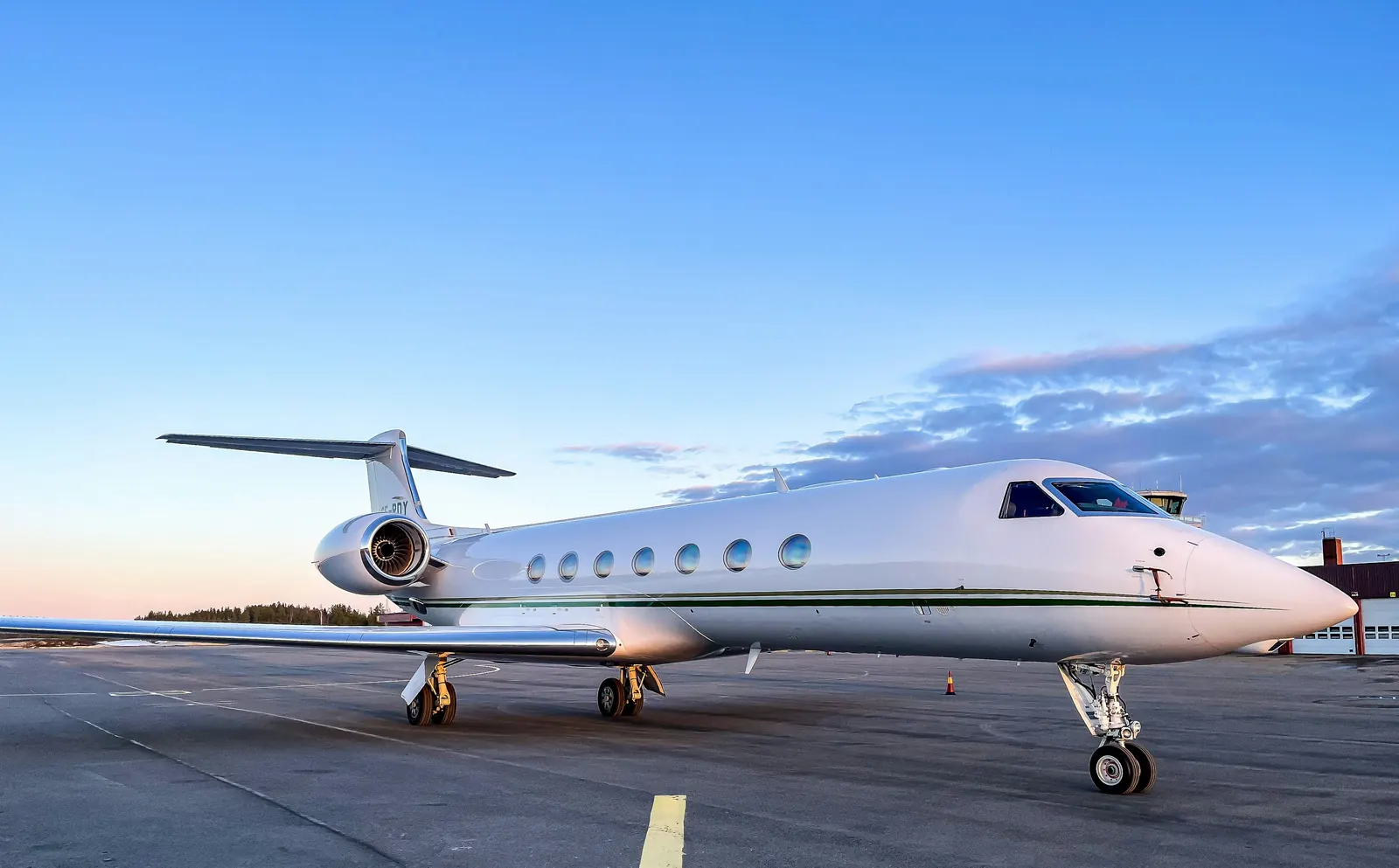 Large-cabin and ultra-long-range jetsGulfstreamG700, G650, G550, G450
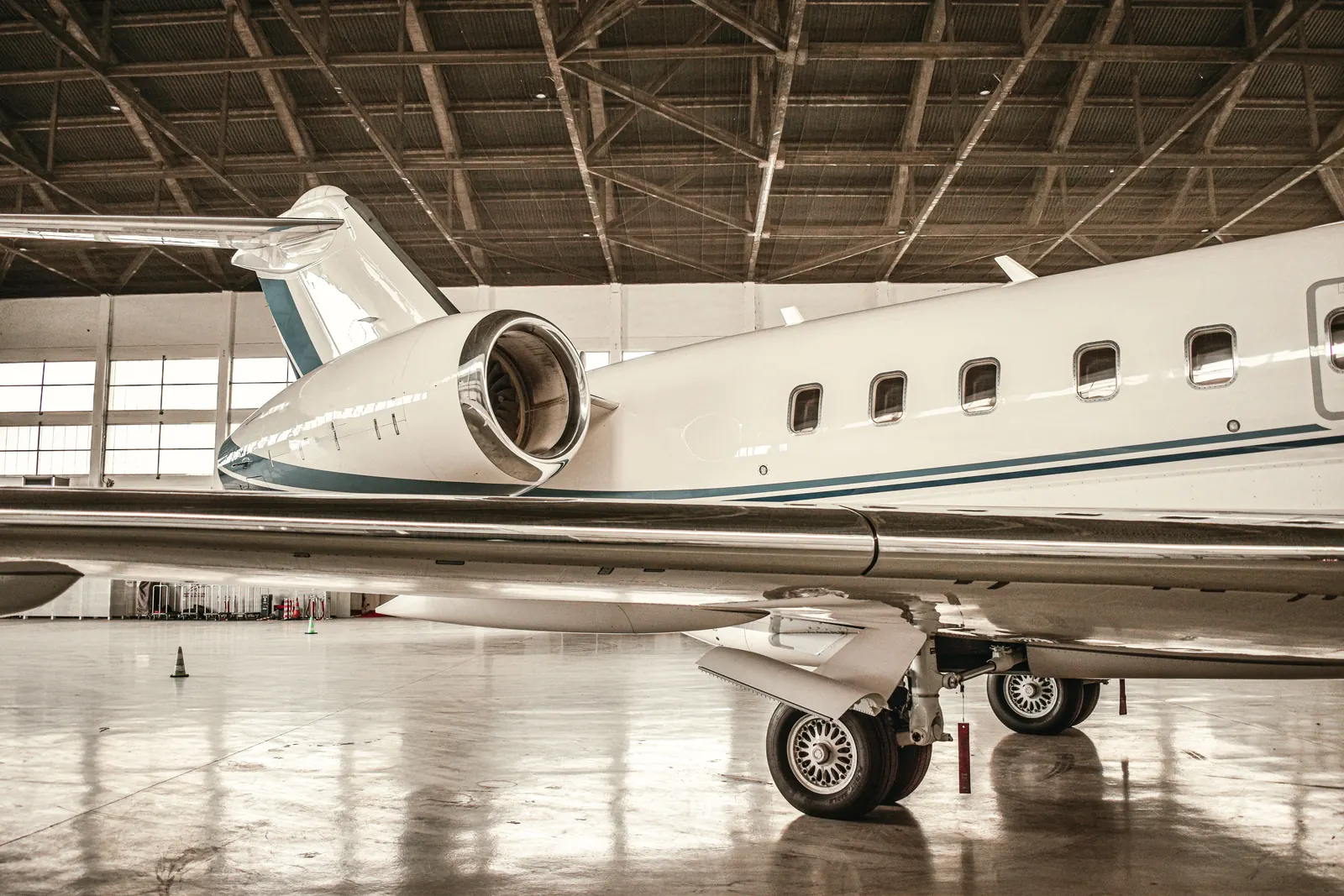 Large-cabin trijets and twinjetsDassault FalconFalcon 8X, Falcon 7X, Falcon 2000
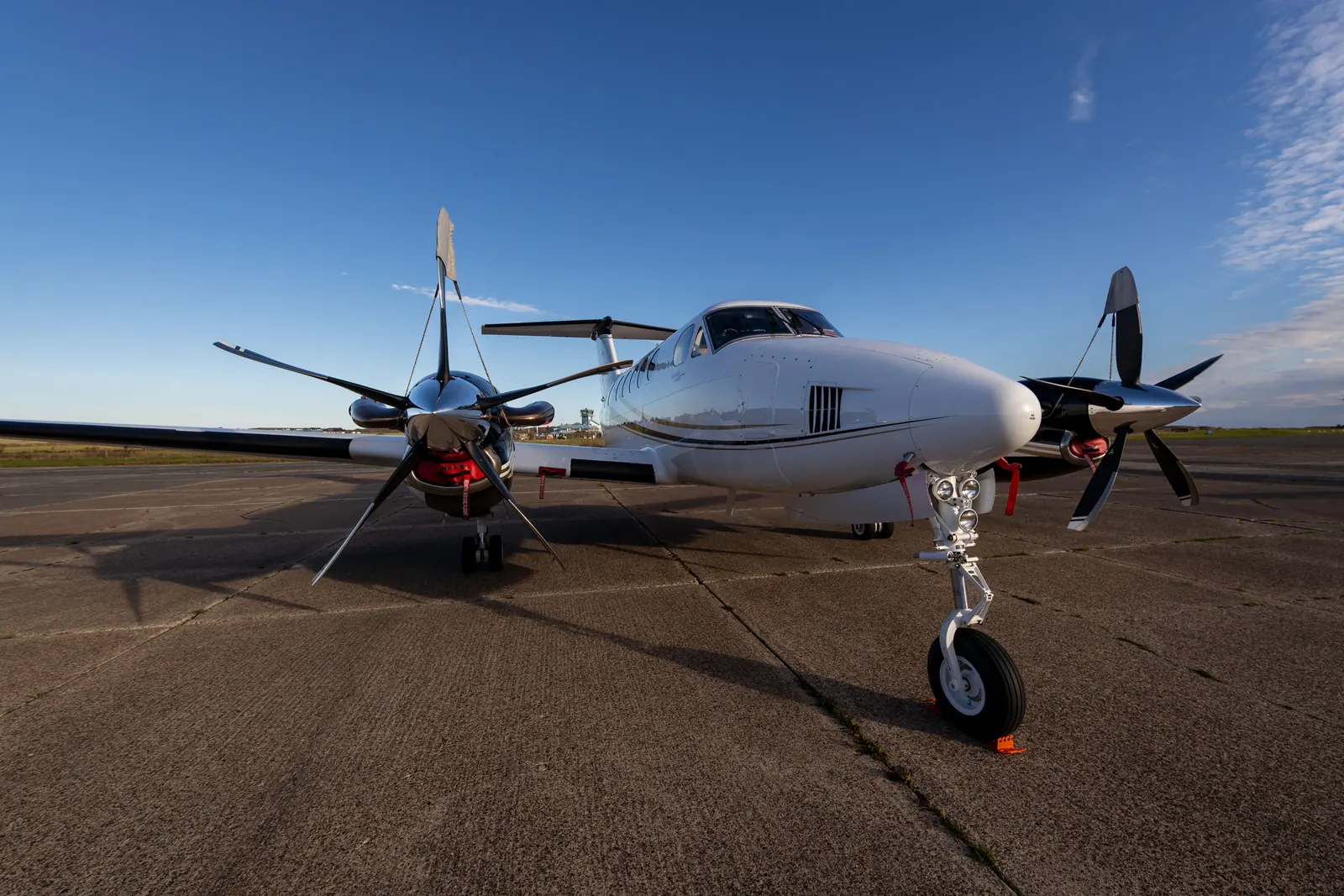 Twin-engine turbopropsBeechcraft King AirKing Air 350i, King Air 260
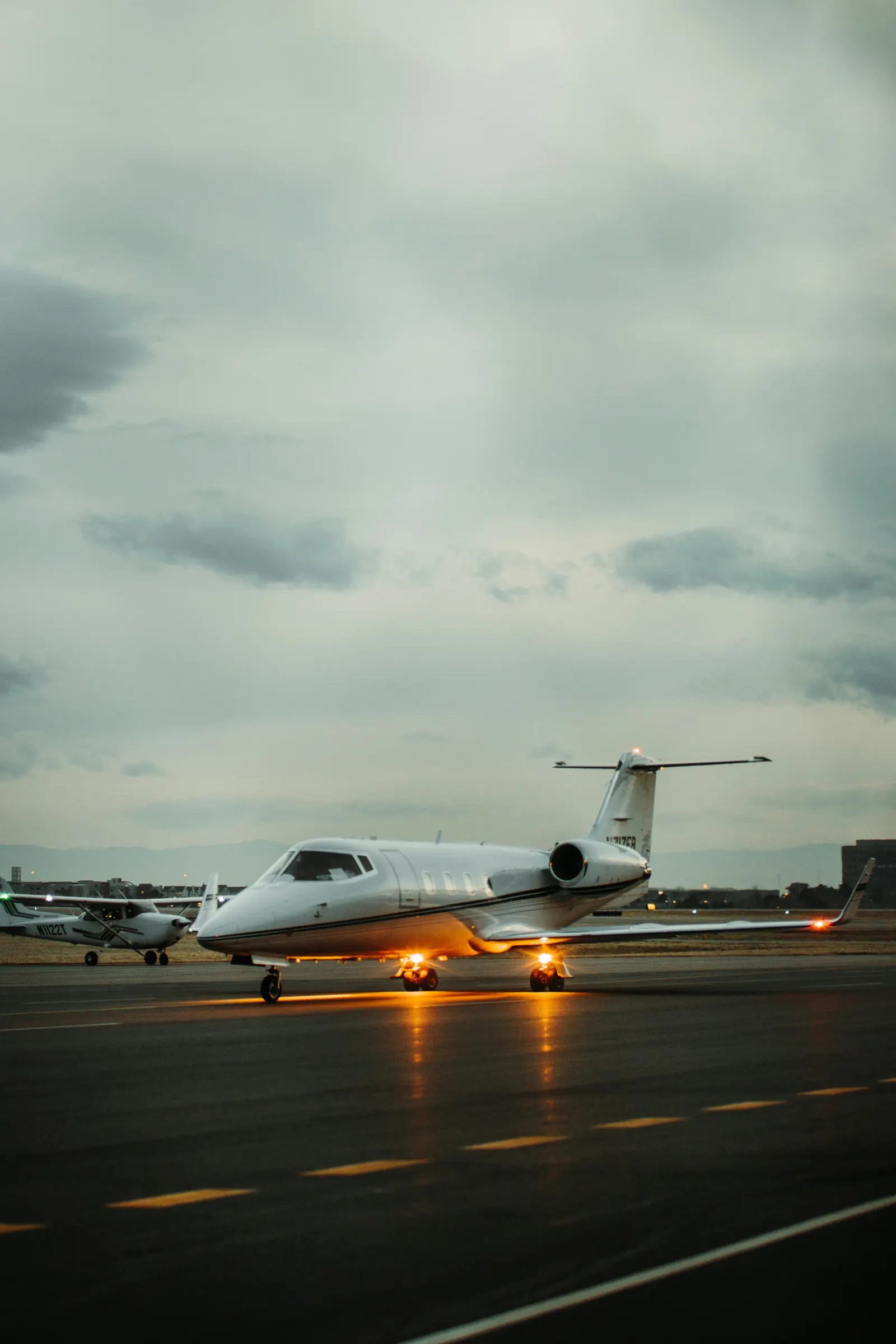 Light and midsize jetsLearjetLearjet 40, Learjet 45, Learjet 60, Learjet 70, Learjet 75
Questions
Asked by ownersand flight departments.
Is machine polishing safe on aircraft paint?
It is safe when it is assessed and controlled. Aircraft coatings are thin, so we review paint condition first, test the gentlest method on a small section, and exclude any area that cannot spare material. Sensors, seams and markings are masked. Polishing by feel, without assessment, is how paint gets thinned for no good reason.
Can paint correction fix chips or peeling paint?
No. Correction restores gloss and removes surface defects such as oxidation, haze and light marring. Chips, cracking, peeling or corrosion beneath the paint are paint-shop and maintenance matters. We note anything of that kind during assessment so your maintenance provider can decide how to deal with it.
What is aircraft brightwork?
Brightwork is the polished or bare metal on an aircraft, such as engine inlet lips and bright trim. It dulls and stains with weather, exhaust and handling, and polishing brings the shine back. We keep compound out of seams and away from painted edges, and inlet work is done with the engine protected as the crew or maintenance provider directs.
How often does an aircraft need paint correction?
Far less often than washing. Most aircraft benefit from correction only once oxidation or haze has visibly built up, which depends on storage, utilization and wash habits. Protecting the paint with a sealant and washing it with gentle dry wash methods lengthens the interval considerably, and preserves more paint over the aircraft's life.
Will you polish over the livery and registration?
Registration markings are masked, and stripes, decals and logos are treated with care, because they sit at different heights and some are vinyl rather than paint. Vinyl is never machine-polished aggressively. Markings must stay clear and intact, so where there is any doubt we work by hand or leave the area untouched.
Does paint correction need to be done in a hangar?
It is best done under cover, out of direct sun and wind, so the paint stays cool and dust stays off the work. We plan correction around time in your hangar or the FBO's, coordinated in advance. Brightwork and light polishing can sometimes be done on the ramp when the weather is suitable.
Often paired with
Related services.
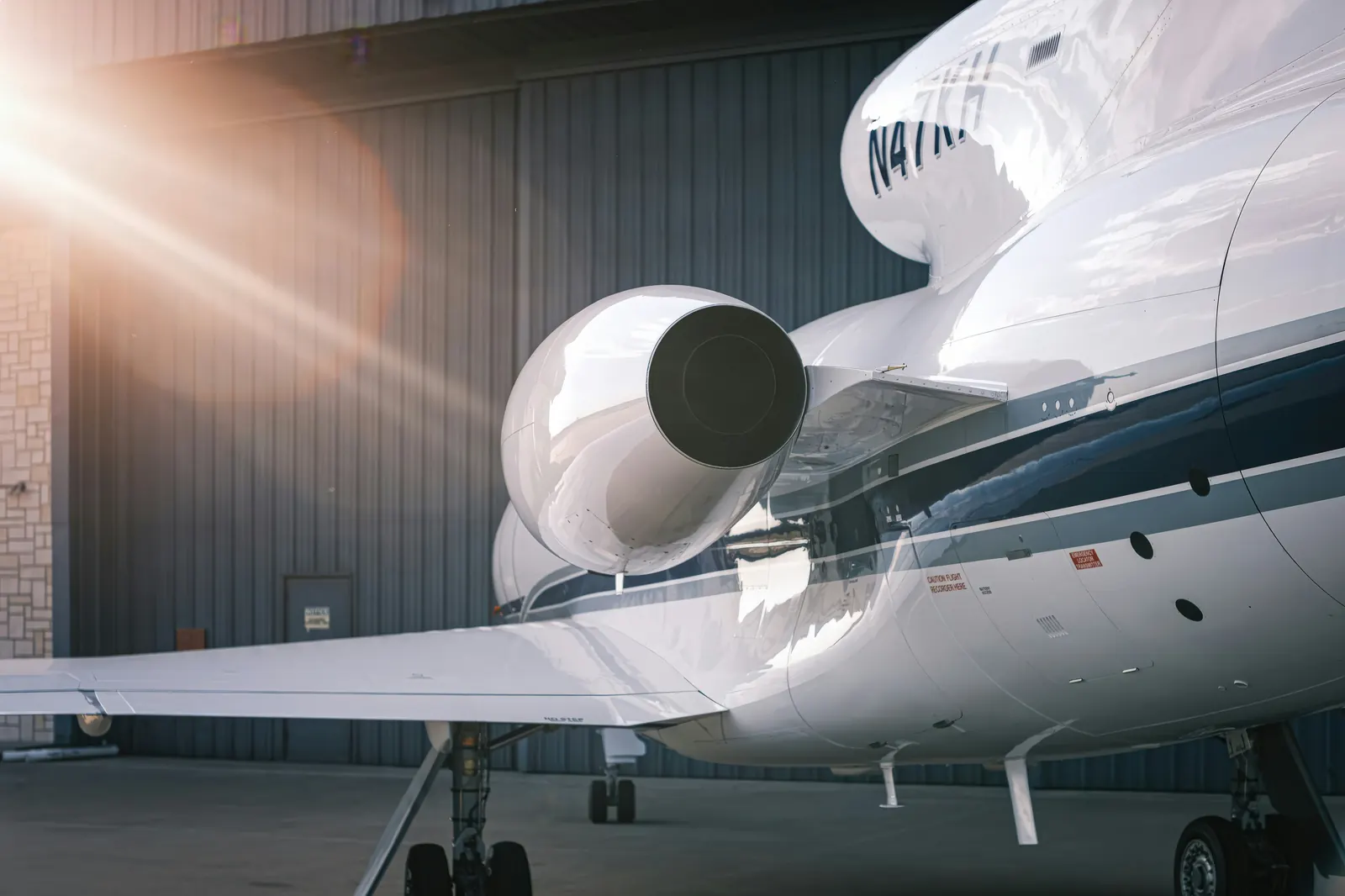 Aviation ceramic sealantAircraft-formulated SiO₂ protection that helps paint resist UV, exhaust residue and environmental fallout.
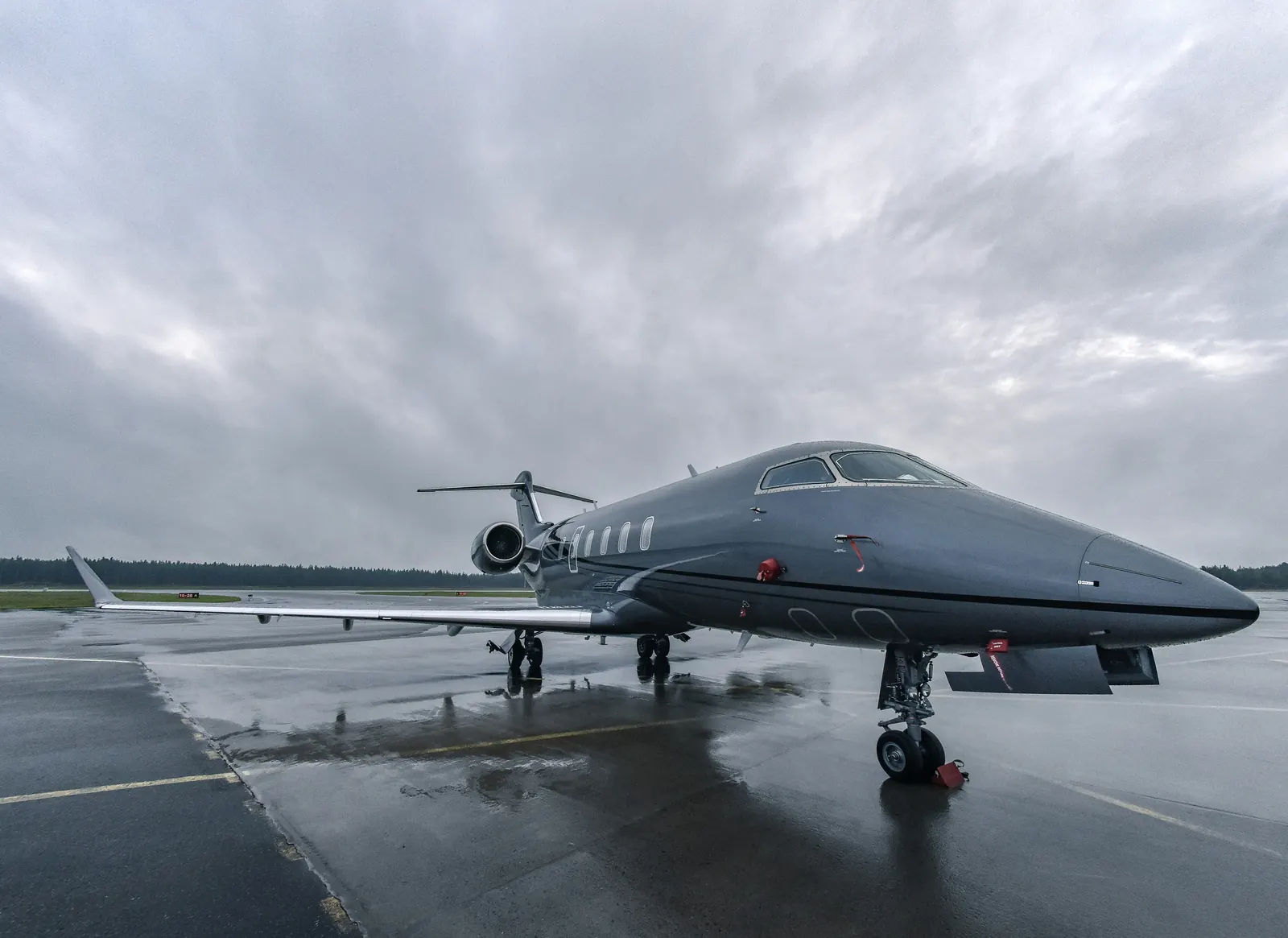 Exterior dry washWaterless exterior cleaning that keeps moisture out of ports, hinge lines and panel seams.
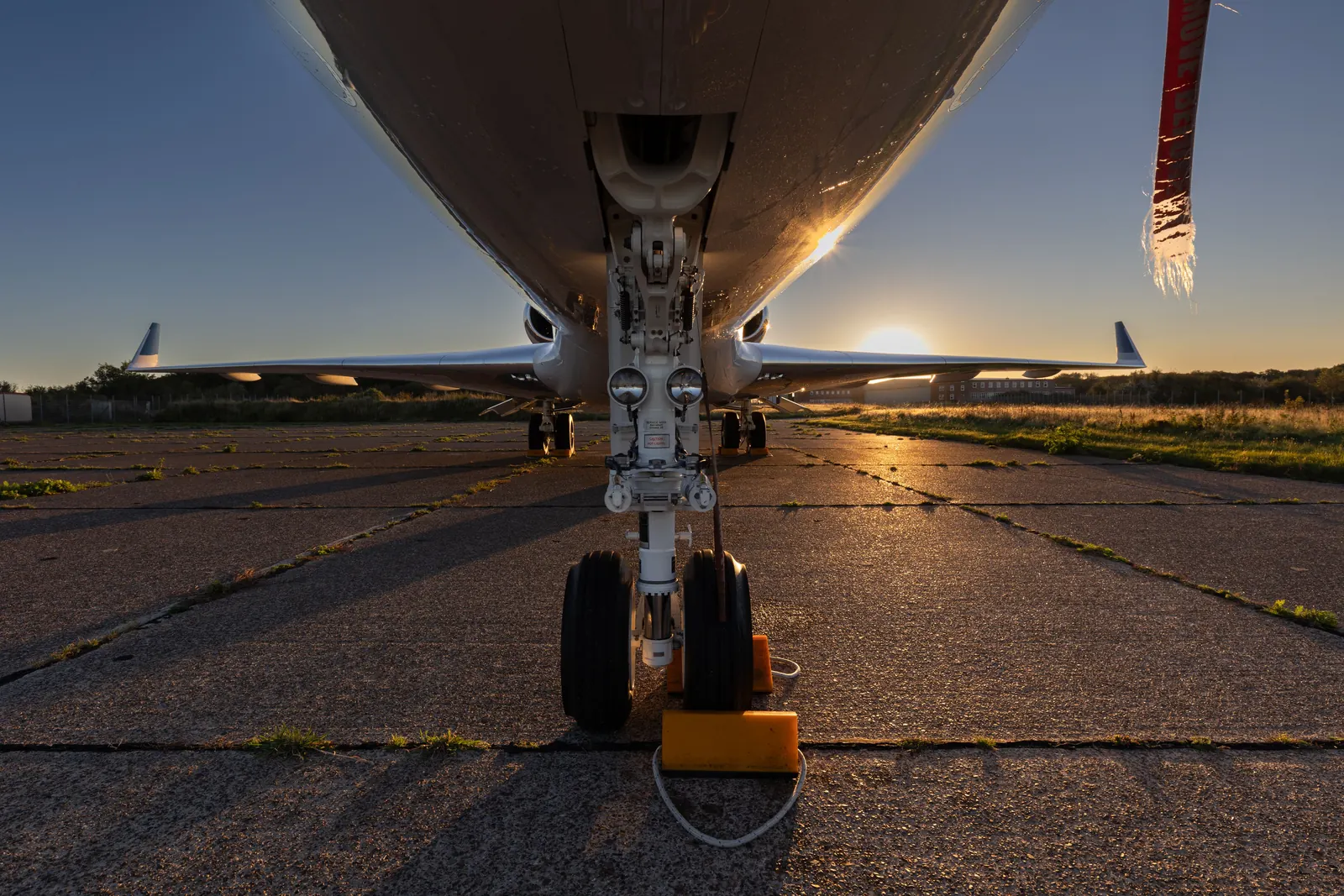 Belly and exhaust track cleaningExhaust soot, hydraulic staining and runway grime removed from belly panels and trailing surfaces.
From the journal
Further reading.
 Exterior · 7 min readAviation ceramic sealant explainedAn aviation ceramic sealant is a thin, hard, silica-based layer bonded to clean aircraft paint, making it slicker and more water-repellent. Soot, bugs and grime release more easily, and it adds some UV and chemical resistance. It will not stop chips or erosion, and its life depends on exposure, washing and hours flown.
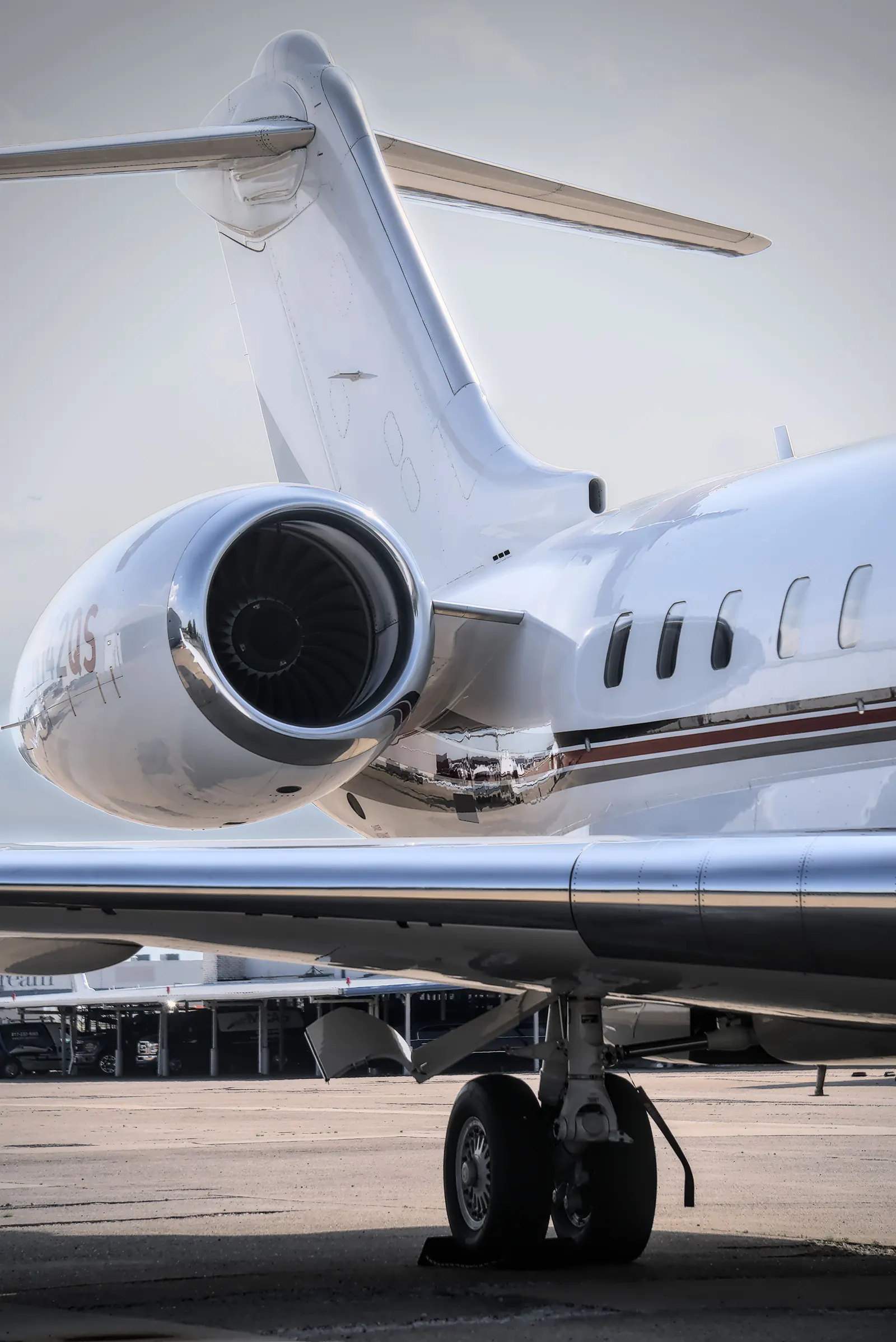 Exterior · 5 min readHow to remove bugs from aircraft leading edgesRemove insects from aircraft leading edges by softening the residue with an aircraft-safe bug remover or a damp microfibre compress, then lifting it gently with a soft cloth. Never scrub, scrape or use abrasive pads. Remove insects soon after flight, because dried residue can etch paint and brightwork. Protection such as sealant makes future removal easier.
 Ownership · 6 min readHow to prepare an aircraft for saleTo prepare an aircraft for sale, organise complete maintenance records and logbooks, fix known squawks, then book a full presentation detail before listing photos. Keep the aircraft presentable for viewings, plan a light clean-up after the pre-buy inspection, and record condition honestly. Presentation never replaces maintenance, but it shapes a buyer’s first impression.

Private consultation
Exceptional care begins here.
A short, confidential conversation about your aircraft, your operation and your ground windows. A written scope follows, never a price list.