
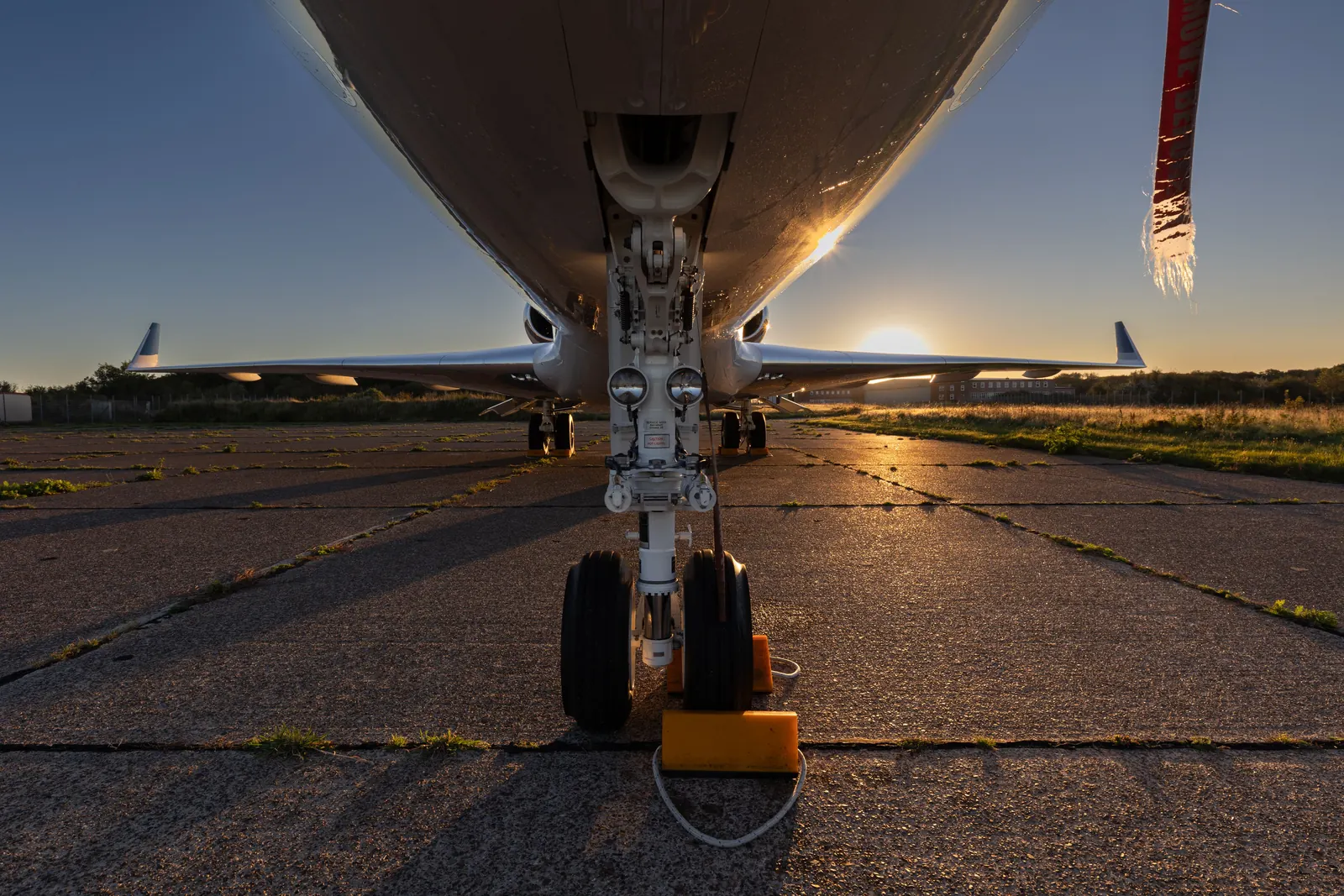
Belly and exhaust
The surfaces nobody photographs,cleaned as carefully as the ones they do.
Exhaust soot, oil mist and fluid seepage collect where the aircraft is hardest to see. Left alone, they bond, stain and make fresh leaks harder to spot.
- Usually part of a full exterior detail. Heavily stained turboprops may need a longer slot or a second visit.
- At your FBO or hangar
- Confidential by default
What is belly and exhaust track cleaning?
Belly and exhaust track cleaning removes the soot, oil mist, hydraulic staining and runway grime that collect on an aircraft's lower fuselage, nacelles and trailing surfaces. Noctavius Aviation uses pH-buffered, aviation-appropriate product to lift these deposits without stressing paint, and points out any fresh fluid traces to your crew or maintenance provider.
Overview
Belly and exhaust track cleaningdone properly.
Every aircraft has a dirty side. On turboprops, exhaust streams along the nacelles and fuselage sides. On jets, the belly collects oil mist, brake dust, runway spray and seepage from gear bays and service panels. On helicopters, exhaust settles along the tail boom. These deposits are oily, they cure with heat and sun, and a general wash will not shift them.
Treating them properly takes dedicated product and patience. We use pH-buffered removers that break down carbon and oil films, give them time to work, and lift the residue with soft materials rather than force. Aggressive degreasers simply trade staining for damage, softening the topcoat and degrading seals and sealants.
A clean belly has a practical value beyond appearance: fresh fluid traces stand out against clean paint. When we see staining that looks recent or unusual, such as fluid around a gear bay or service panel, we point it out to your crew or maintenance provider. Diagnosis is theirs. A clean surface simply makes it easier.
The scope
What it includes.Every surface, by name.
- Exhaust tracks
- Soot and carbon film removed from fuselage sides, nacelles and trailing surfaces behind the exhausts.
- Belly panels
- Lower fuselage cleaned of oil mist, runway spray and road film.
- Hydraulic and oil staining
- Fluid staining treated with suitable product, with any recent traces reported to the crew.
- Gear doors and fairings
- Exterior surfaces cleaned cosmetically, with lubricated components left untouched.
- Drain and vent surrounds
- Staining around drains and vents cleaned without introducing product into the openings.
- De-icing residue
- Glycol residue removed from painted lower surfaces after winter operations.
- Helicopter tail booms
- Exhaust deposits cleaned from tail booms and engine cowlings.
Why the method matters
The differenceis in what you don't see.
- I
Heat bakes residue in
Exhaust deposits left through repeated flights cure into the surface and become far harder to remove.
- II
Not all degreasers are equal
Strong alkaline or solvent degreasers can soften paint and attack seals. pH-buffered product avoids that.
- III
Clean surfaces reveal leaks
Fresh hydraulic or oil traces are much easier for maintenance to spot on a clean belly.
- IV
Winter grime holds moisture
Salty slush held against the lower fuselage through a winter is an invitation to corrosion at fasteners and seams.
The process
How we workon your aircraft.
Usually part of a full exterior detail. Heavily stained turboprops may need a longer slot or a second visit.
- I
Inspect and note
Staining mapped, and anything that looks like an active leak reported before cleaning starts.
- II
Protect openings
Drains, vents, sensors and gear components protected from product.
- III
Pre-treat
pH-buffered remover applied and given time to break down the deposit.
- IV
Lift gently
Residue worked free with soft brushes and microfibre, never abrasive pads.
- V
Wipe clean and inspect
All product and residue removed, and the area checked under good light.
Airframes
Matched to the aircraft,not applied generically.
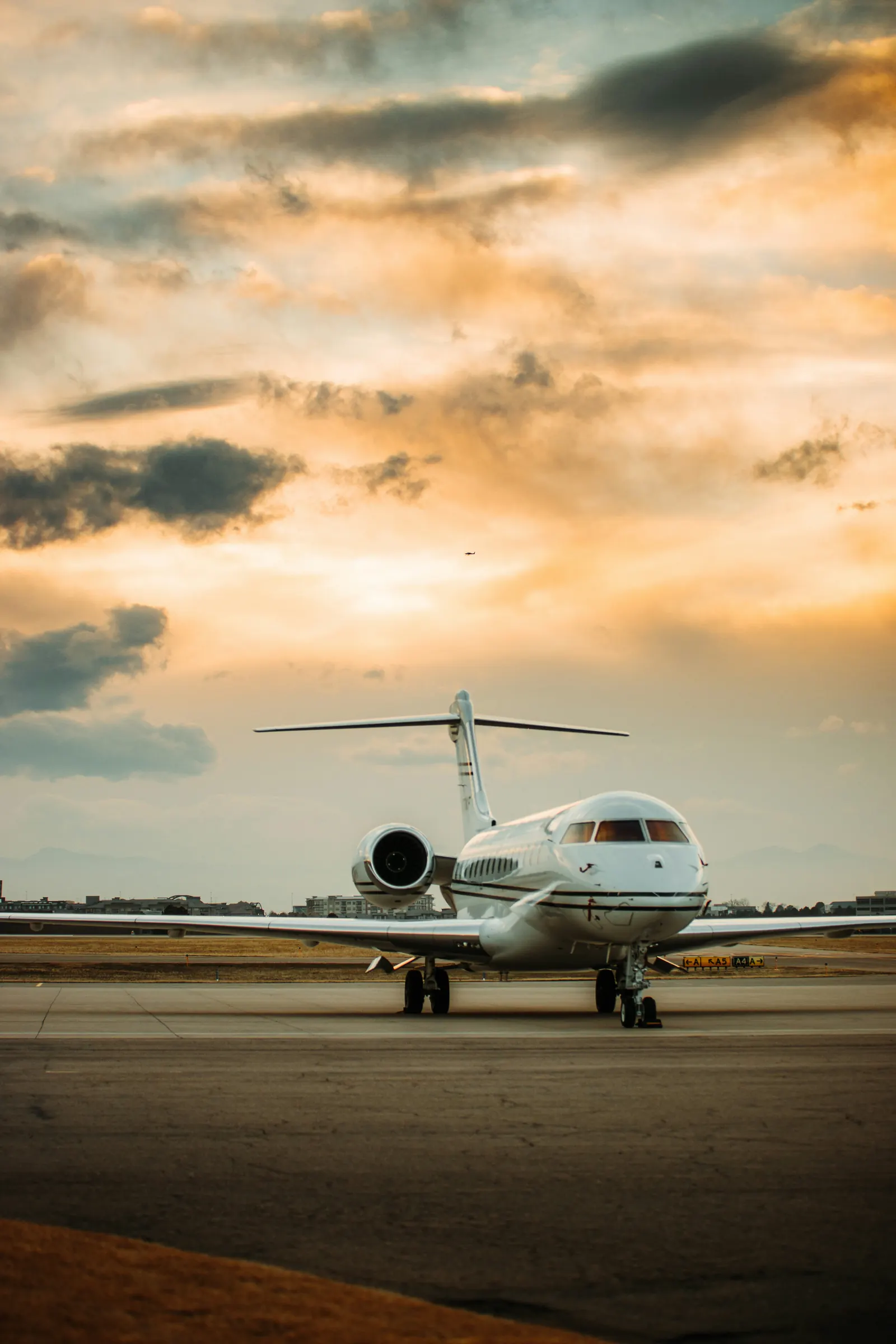 Super-midsize, large-cabin and ultra-long-range jetsBombardierGlobal 7500, Global 6000, Challenger 650, Challenger 350
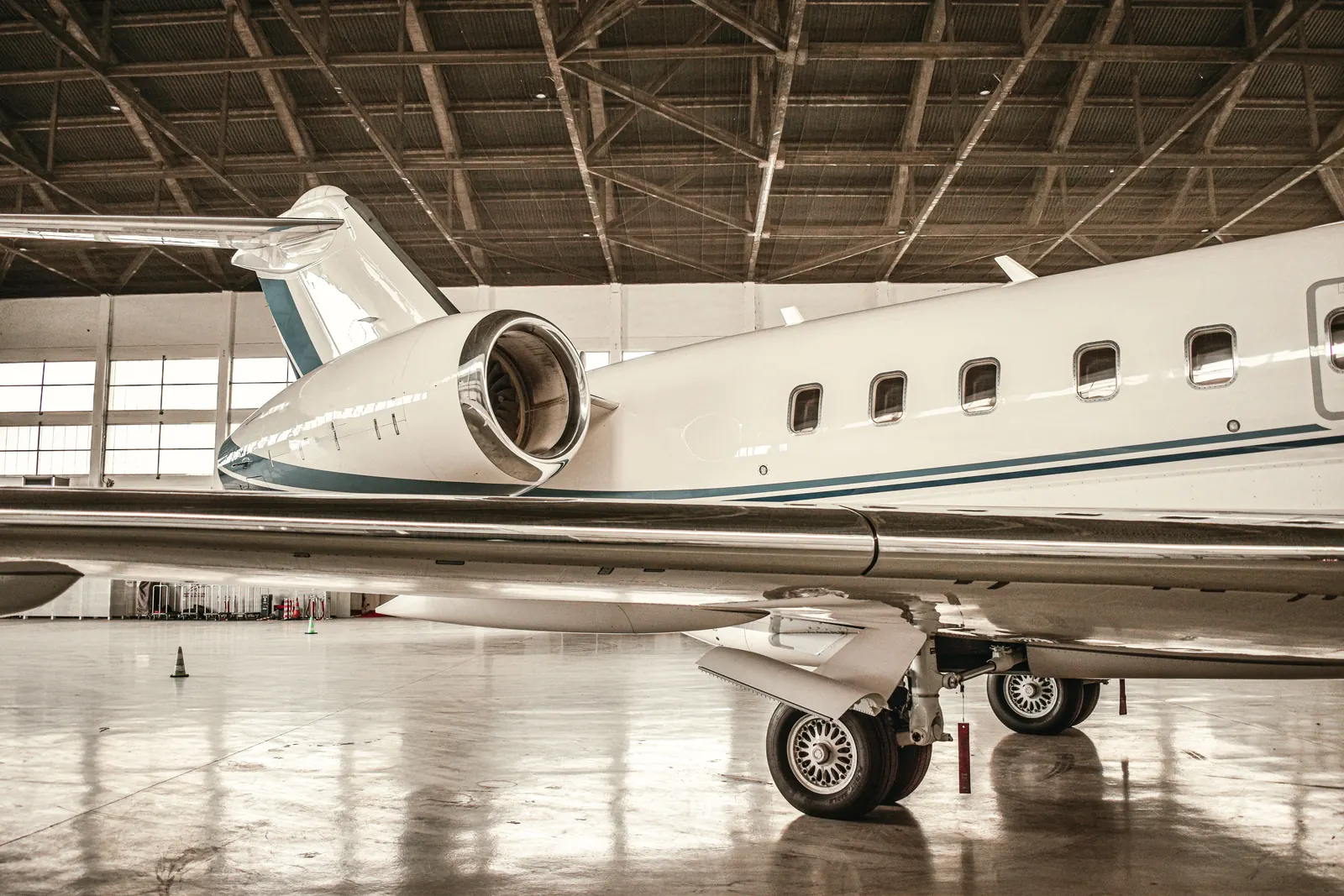 Large-cabin trijets and twinjetsDassault FalconFalcon 8X, Falcon 7X, Falcon 2000
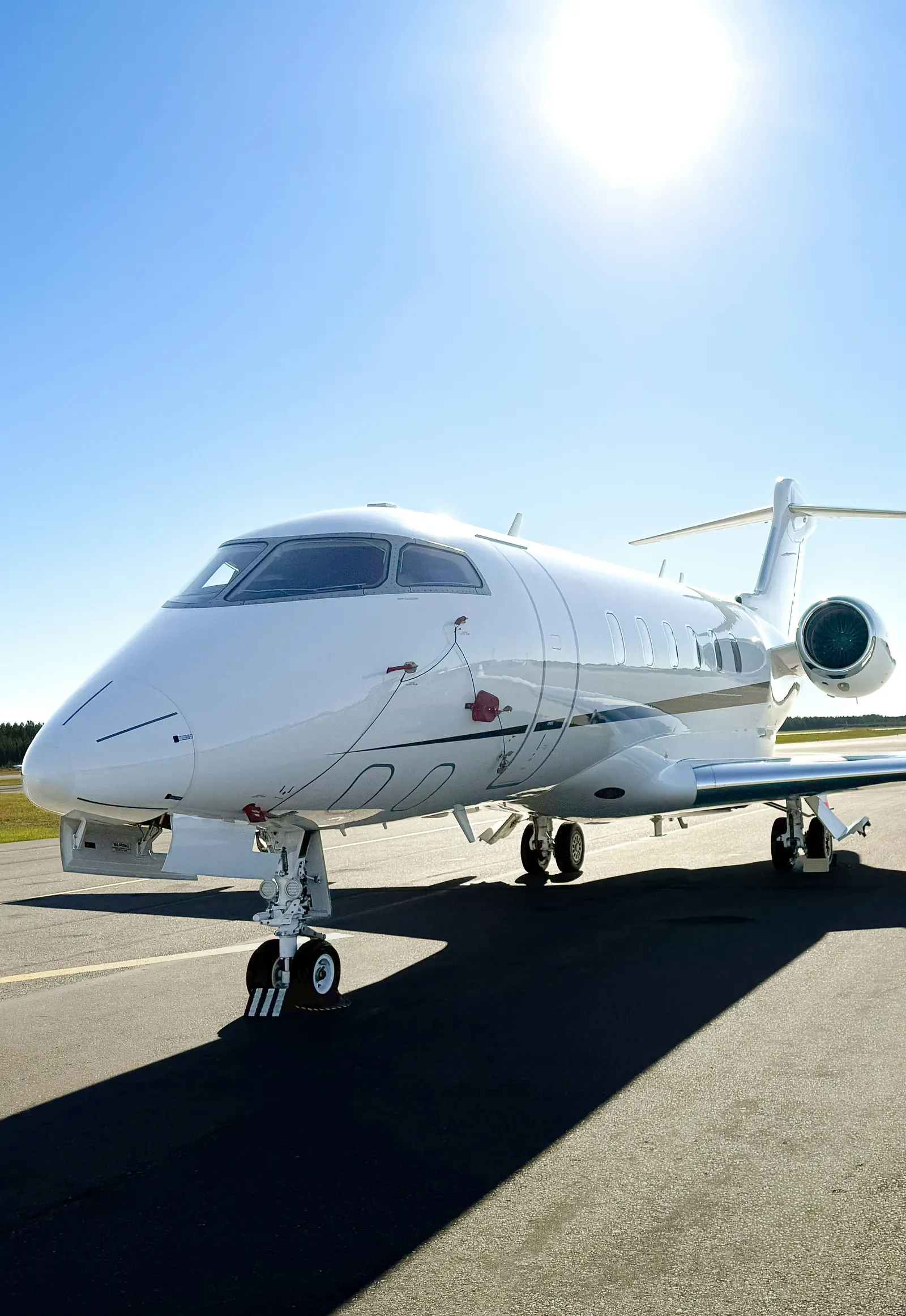 Midsize and super-midsize jetsCessna CitationCitation Longitude, Citation Latitude, Citation X, Citation Sovereign
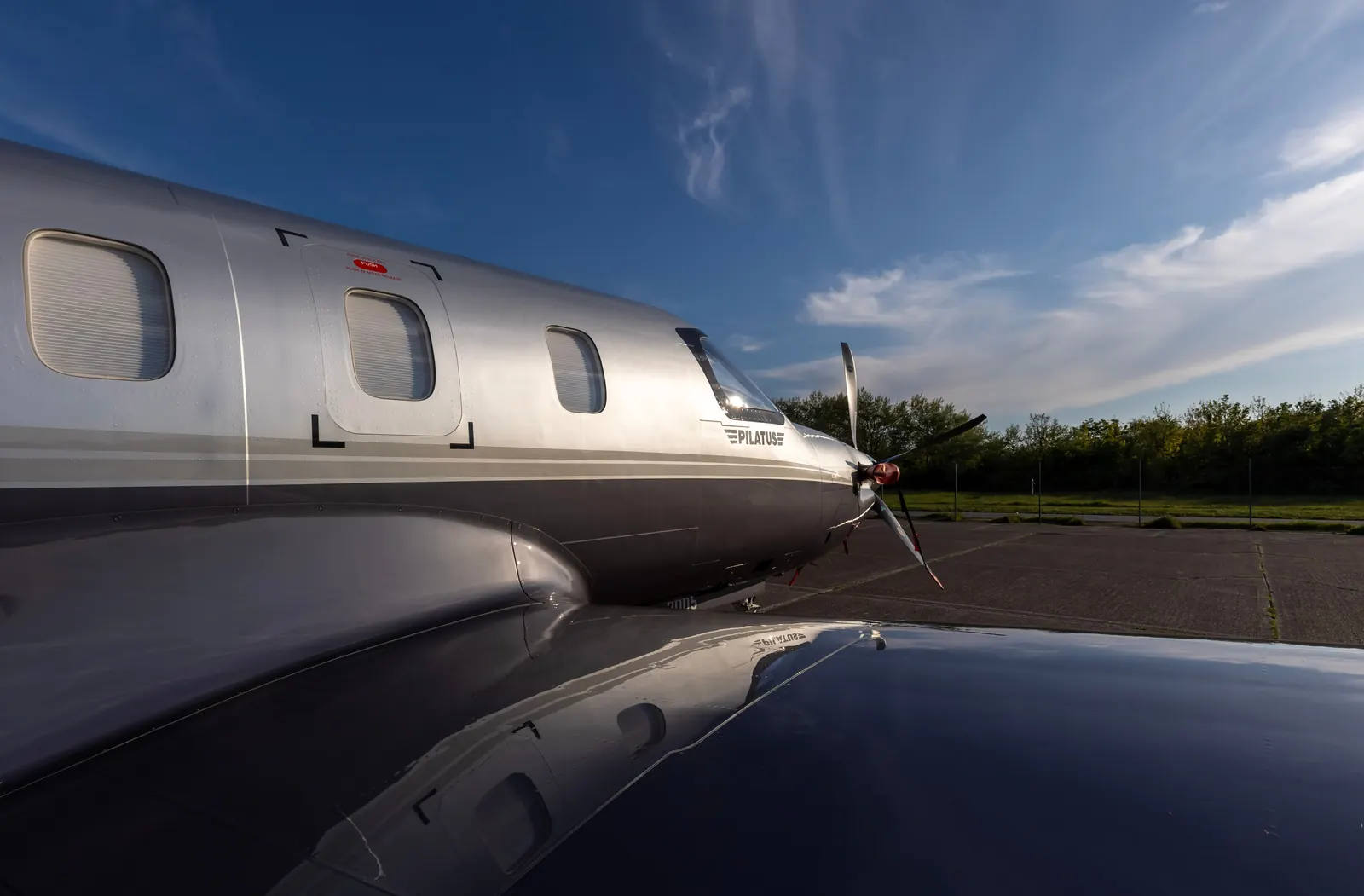 Single-engine turboprops and light jetsPilatusPC-24, PC-12
Questions
Asked by ownersand flight departments.
Why are turboprop exhaust stains so hard to remove?
Turbine exhaust carries carbon and oily residue that lands on warm paint and bakes on with every flight. On aircraft such as the King Air and PC-12, the exhaust stacks discharge along the nacelles or fuselage sides, so staining builds in the same place again and again. It needs a dedicated remover and dwell time, not harder scrubbing.
Do you use degreaser on the belly?
We use pH-buffered removers designed to break down carbon and oil without harming paint, rather than strong alkaline or solvent degreasers. Aggressive products remove staining quickly but can soften the topcoat and degrade sealants and rubber seals over time. The gentler approach takes longer, and the paint stays intact.
What happens if you find a fluid leak?
We do not diagnose or repair anything. If we see staining that looks fresh or unusual, such as hydraulic fluid near a gear bay or oil streaking from a cowling, we stop cleaning that area and tell your crew or maintenance provider so they can inspect it. We are a cosmetic detailing provider, not an approved maintenance organization.
Do you clean inside the wheel wells?
Only the visible, accessible surfaces, and only cosmetically. Wheel wells contain brakes, hydraulic lines, sensors and lubricated components that are maintenance territory. We clean what can be cleaned safely without disturbing any of it, and leave the rest to your maintenance provider.
How often should the belly be cleaned?
It follows utilization. A frequently flown turboprop or charter jet may need belly and exhaust attention at most exterior details, while a lightly used, hangared jet needs it less often. Cleaning before deposits bake in is always easier on the paint than removing months of build-up in one session.
Can you remove de-icing fluid residue?
Yes, from painted lower surfaces and the fuselage. Glycol-based fluids leave a sticky film that holds dirt, particularly through an Ontario winter. Residue inside control-surface gaps or around flight-control hinges is different. It is a maintenance concern, so we report it to your crew rather than clean inside those areas.
Often paired with
Related services.
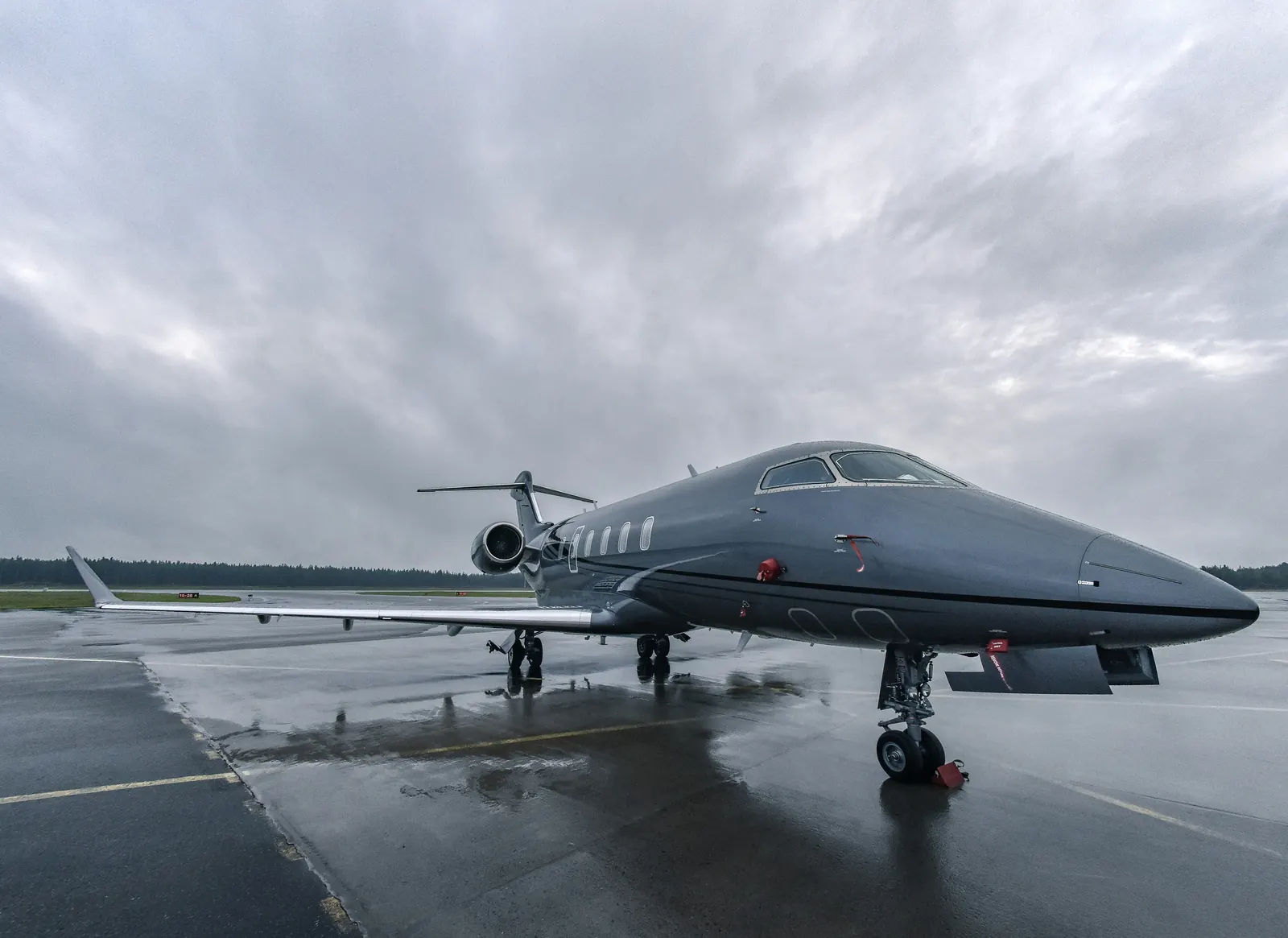 Exterior dry washWaterless exterior cleaning that keeps moisture out of ports, hinge lines and panel seams.
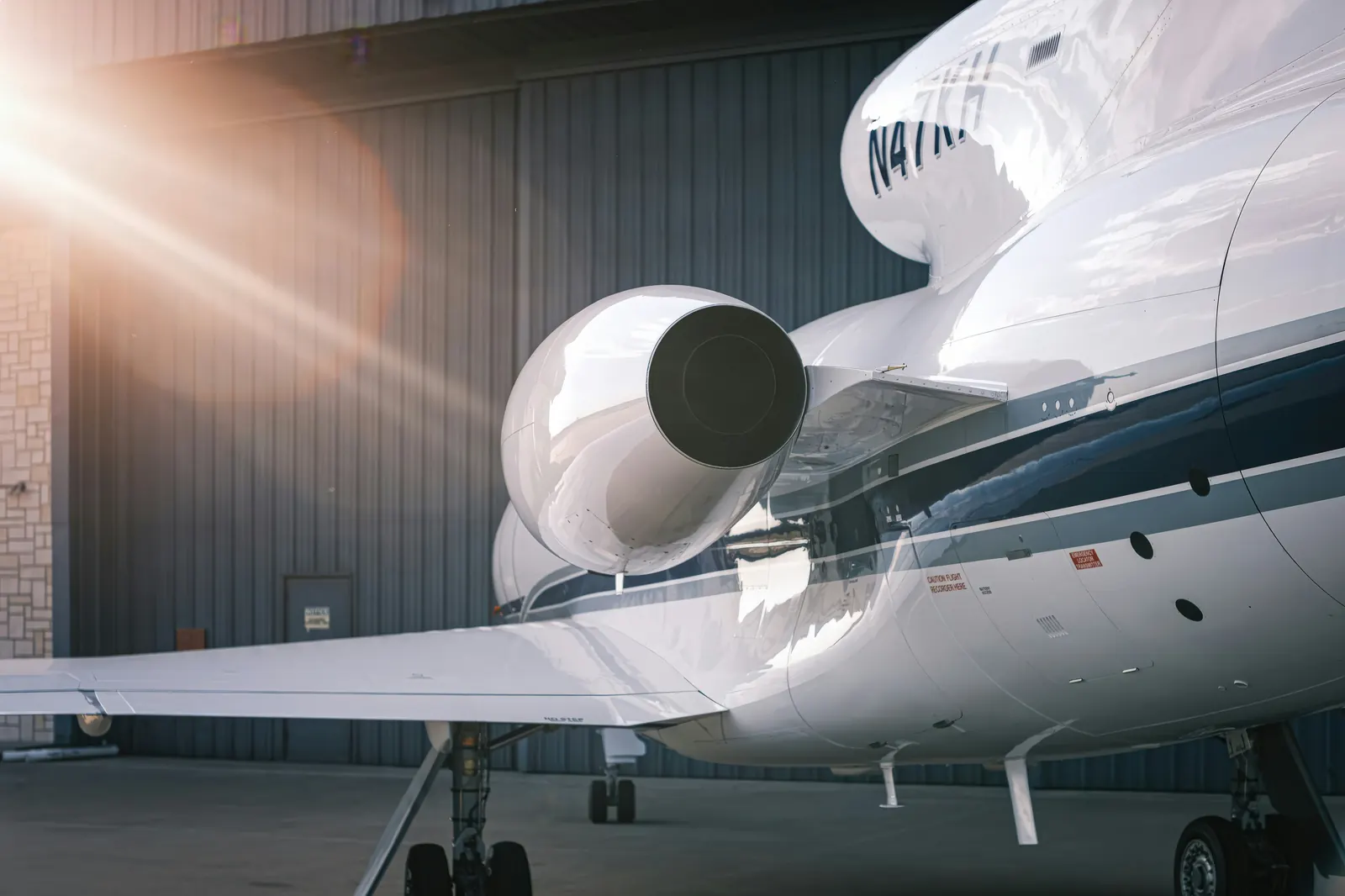 Aviation ceramic sealantAircraft-formulated SiO₂ protection that helps paint resist UV, exhaust residue and environmental fallout.
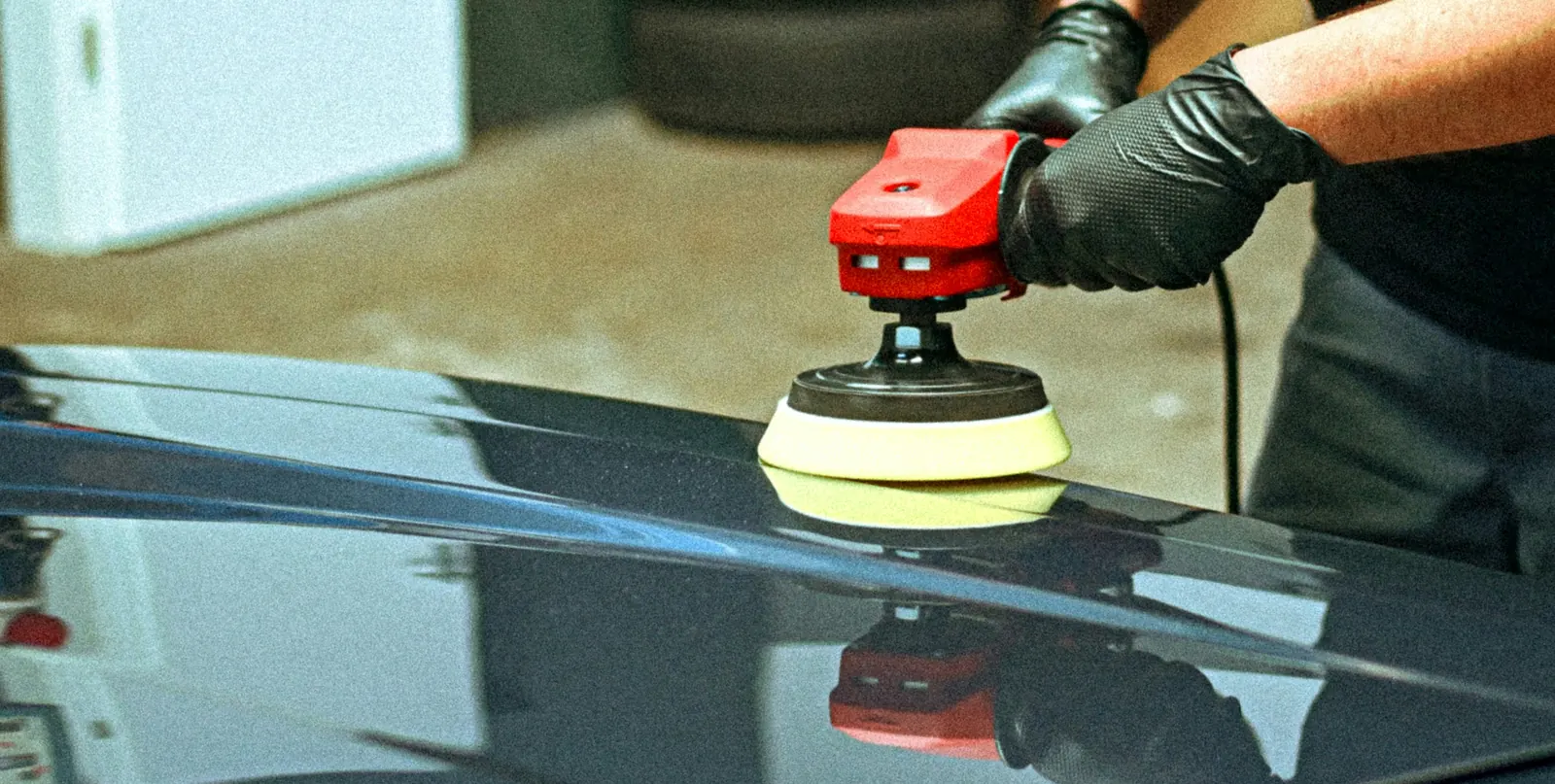 Paint correction and brightworkMeasured machine polishing of aircraft paint and bright metal, only where the coating can spare it.
From the journal
Further reading.
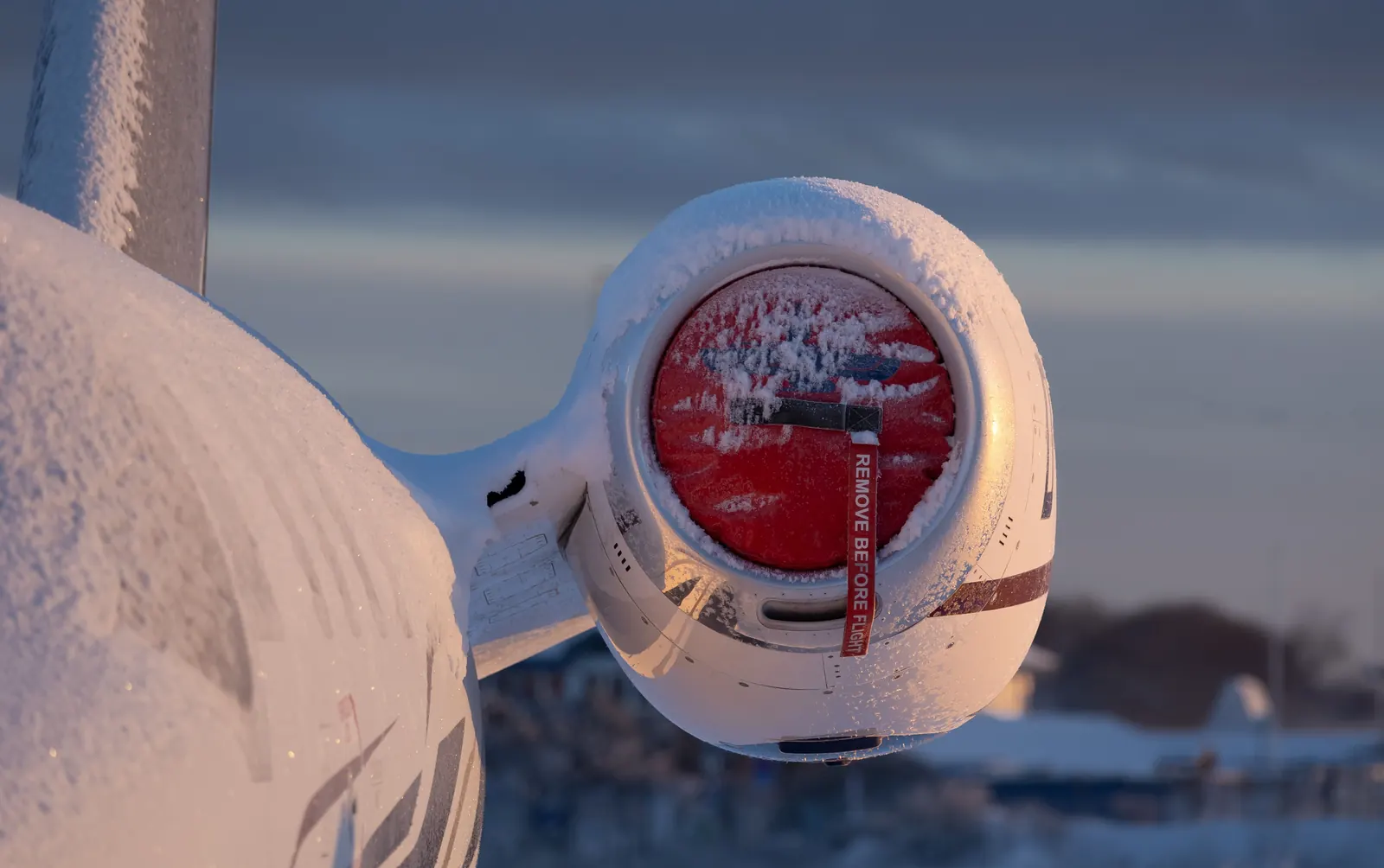 Exterior · 7 min readDry wash vs wet wash: which is right for a private jet?For routine cleaning of a private jet, a dry wash is usually the better choice: lubricated waterless products and microfibre lift light to moderate dirt without driving water into static ports, hinges and panel gaps, and without runoff. A wet wash remains the right tool for heavy grime, thick deicing residue or badly soiled bellies.
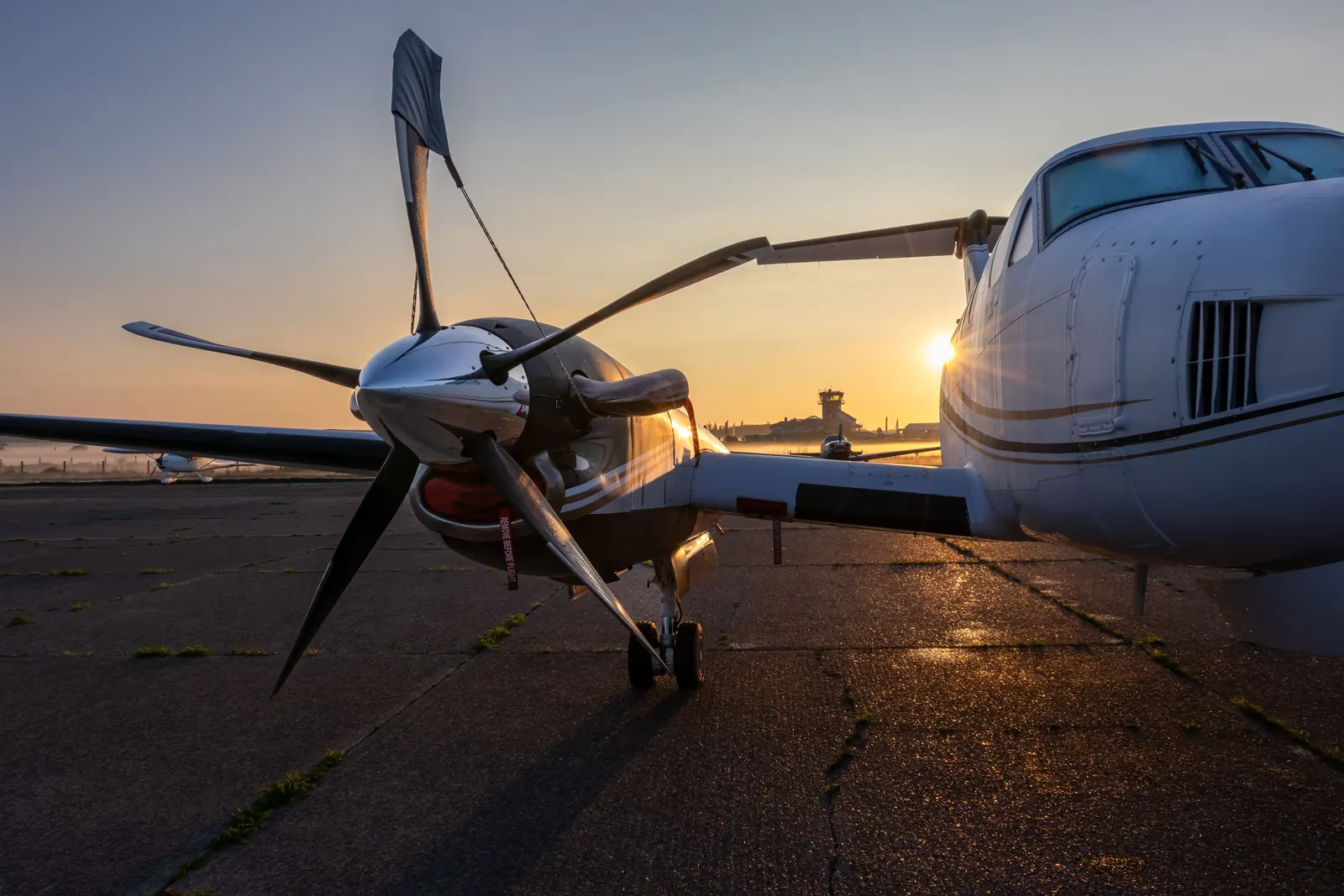 Ownership · 7 min readHow often should a private jet be detailed?There is no single interval. A private jet's cabin should be reset after every trip with passengers, while full interior and exterior details are scheduled by utilisation, storage and season. Charter aircraft and those parked outdoors need the shortest intervals; hangared, owner-flown aircraft can go longer. Winter deicing and summer insects shorten every interval.
 Exterior · 7 min readAviation ceramic sealant explainedAn aviation ceramic sealant is a thin, hard, silica-based layer bonded to clean aircraft paint, making it slicker and more water-repellent. Soot, bugs and grime release more easily, and it adds some UV and chemical resistance. It will not stop chips or erosion, and its life depends on exposure, washing and hours flown.

Private consultation
Exceptional care begins here.
A short, confidential conversation about your aircraft, your operation and your ground windows. A written scope follows, never a price list.