
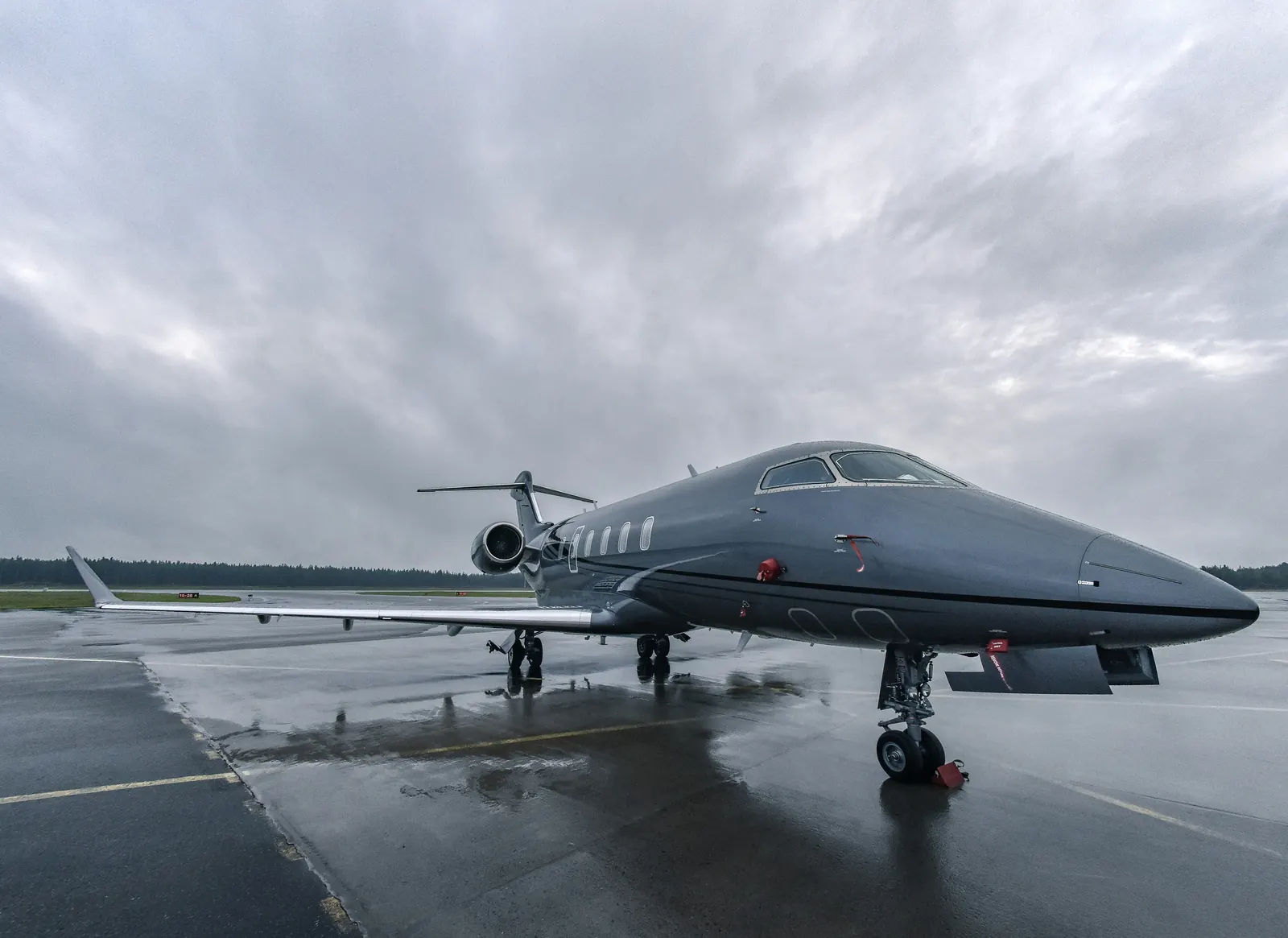
Exterior care
A clean airframe,with no water where it does not belong.
Ramp dust, atmospheric film and insect residue are lifted by hand, panel by panel, at your FBO or hangar. Nothing is hosed. Nothing is forced into a seam.
- Usually completed inside a single ground window. Larger airframes or heavier soiling may need a longer slot, which is confirmed in the written scope.
- At your FBO or hangar
- Confidential by default
What is exterior dry wash?
An aircraft dry wash is a waterless exterior cleaning method: a lubricating solution is applied by hand, encapsulates dirt, and is wiped away with microfibre. Noctavius Aviation uses it on jets, turboprops and helicopters at Ontario FBOs and hangars because it cleans paint without pushing water into static ports, hinge lines or panel seams.
Overview
Exterior dry washdone properly.
Most of what dirties an aircraft exterior is light: ramp dust, atmospheric film, insect residue on leading edges, and the fine grey haze that settles on a parked airframe. None of it calls for a pressure washer. A dry wash lifts it with a lubricated, hand-applied solution, so the cloth glides over the paint instead of grinding contamination into it.
The method exists for reasons specific to aircraft. Pitot-static ports, drain holes, antenna bases, flap tracks and control-surface hinge lines are all places where water should never be driven at pressure. A dry wash keeps the work on the skin of the aircraft. There is no runoff to manage on the ramp, and no mineral spotting from tap water drying on dark paint.
Our technicians work in small sections with fresh microfibre, so grime from the belly never travels to the upper fuselage. Heavier soiling, such as exhaust tracks or hydraulic staining, is treated separately with the right product rather than scrubbed harder with the wrong one.
The scope
What it includes.Every surface, by name.
- Fuselage and empennage
- Hand-applied dry wash across the fuselage and the vertical and horizontal stabilizers, worked from the top down.
- Wings and leading edges
- Insect residue and atmospheric film lifted from leading edges, wing surfaces and winglets without abrasive pads.
- Windscreens and cabin windows
- Exterior glass and acrylic cleaned with dedicated, non-abrasive product and cloths that never touch paint.
- Engine nacelles and cowlings
- Exterior nacelle surfaces cleaned with inlets and exhausts covered as the crew or maintenance provider directs.
- Gear doors and fairings
- Visible gear-door and fairing surfaces cleaned cosmetically. Lubricated components are left to maintenance.
- Livery and registration
- Stripes, decals and registration markings wiped with product that will not lift edges or dull vinyl.
- Final inspection pass
- A last look under raking light for streaks or missed residue before the aircraft is handed back.
Why the method matters
The differenceis in what you don't see.
- I
Water at pressure finds the wrong places
Static ports, drains and hinge lines are designed around airflow, not hose spray. Water forced into them can disturb instrument readings or sit where corrosion starts.
- II
Tap water marks dark paint
Dissolved minerals dry into spots that can etch in strong sun. A dry wash leaves nothing behind to evaporate.
- III
Grit is what dulls gloss
A dry cloth dragged over a dusty airframe leaves swirl marks. Generous lubrication and constant cloth changes prevent them.
- IV
Ramps are not wash bays
Many ramps restrict wet washing because of runoff and environmental rules. A dry wash can usually be done where the aircraft is parked.
The process
How we workon your aircraft.
Usually completed inside a single ground window. Larger airframes or heavier soiling may need a longer slot, which is confirmed in the written scope.
- I
Walk-around and covers
We confirm with the crew that pitot, static and engine covers are fitted, and note existing chips or damage before touching the aircraft.
- II
Heavy soil first
Insect residue and any exhaust or fluid staining are pre-treated, so the main wash can stay light.
- III
Top down, section by section
Fuselage, empennage and wings are washed in small sections. A soiled cloth never returns to clean paint.
- IV
Glass and acrylic
Windscreens and windows are cleaned last, with their own product and their own cloths.
- V
Inspection and handover
A final check under raking light, then a walkthrough with your crew or line staff.
Airframes
Matched to the aircraft,not applied generically.
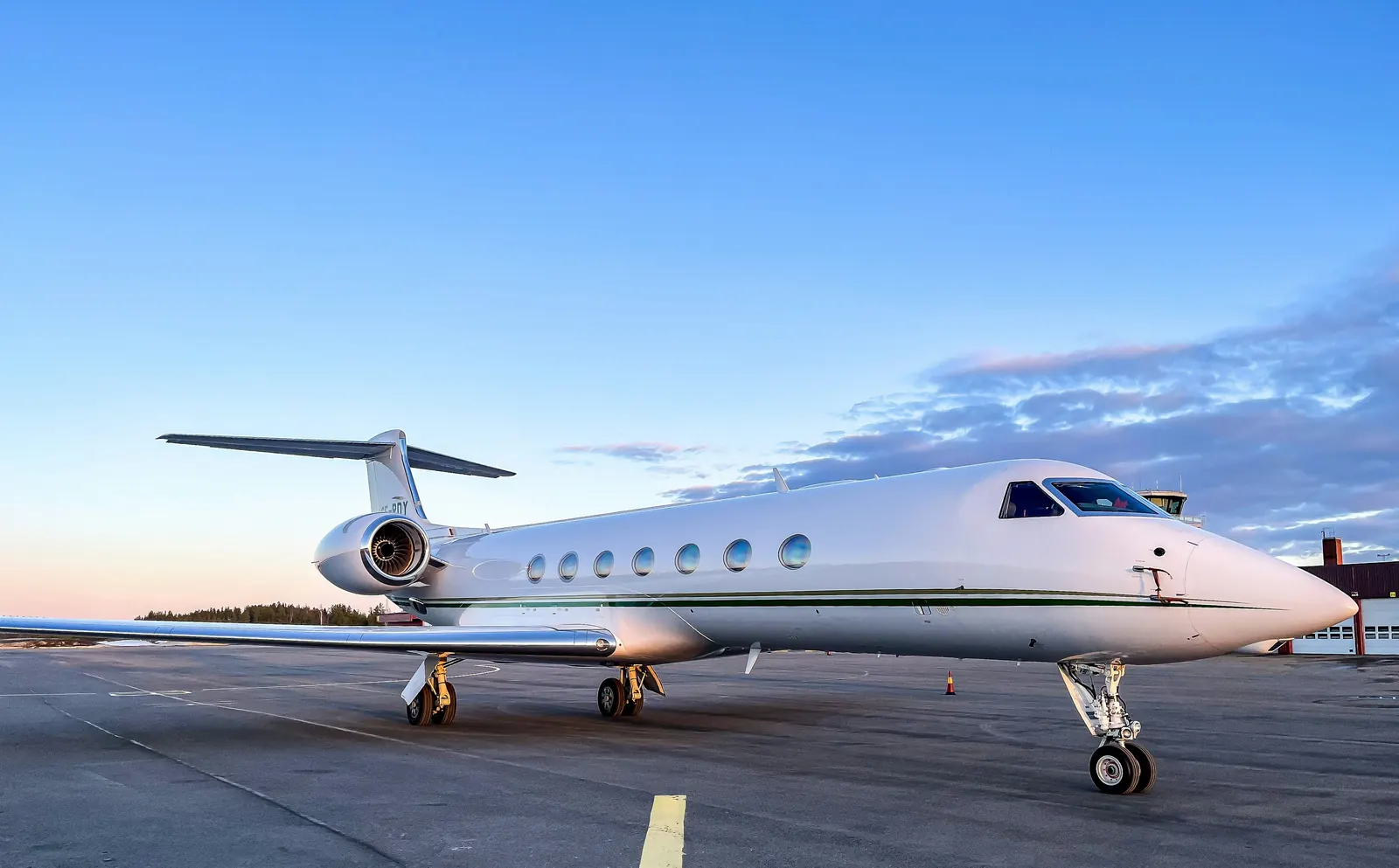 Large-cabin and ultra-long-range jetsGulfstreamG700, G650, G550, G450
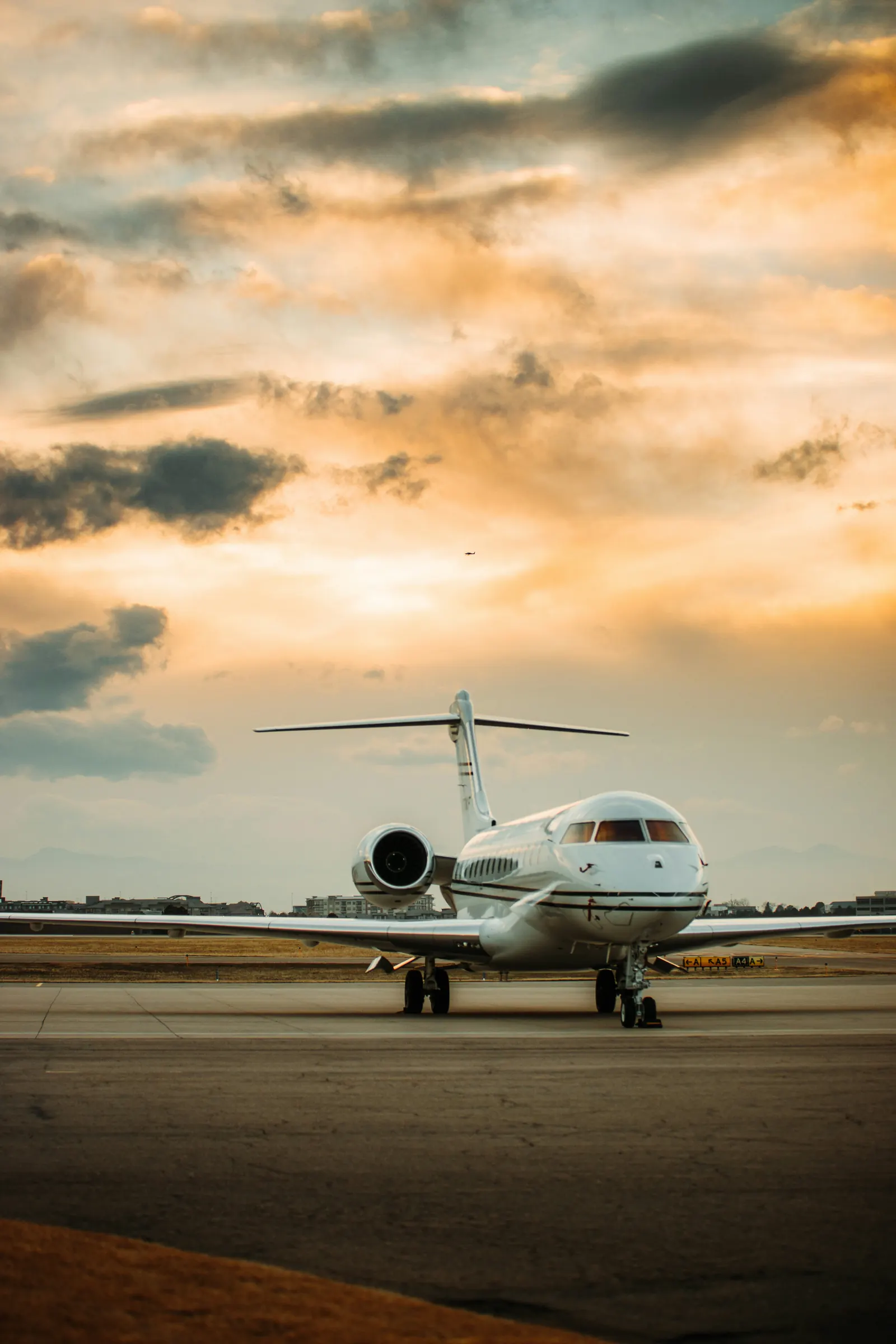 Super-midsize, large-cabin and ultra-long-range jetsBombardierGlobal 7500, Global 6000, Challenger 650, Challenger 350
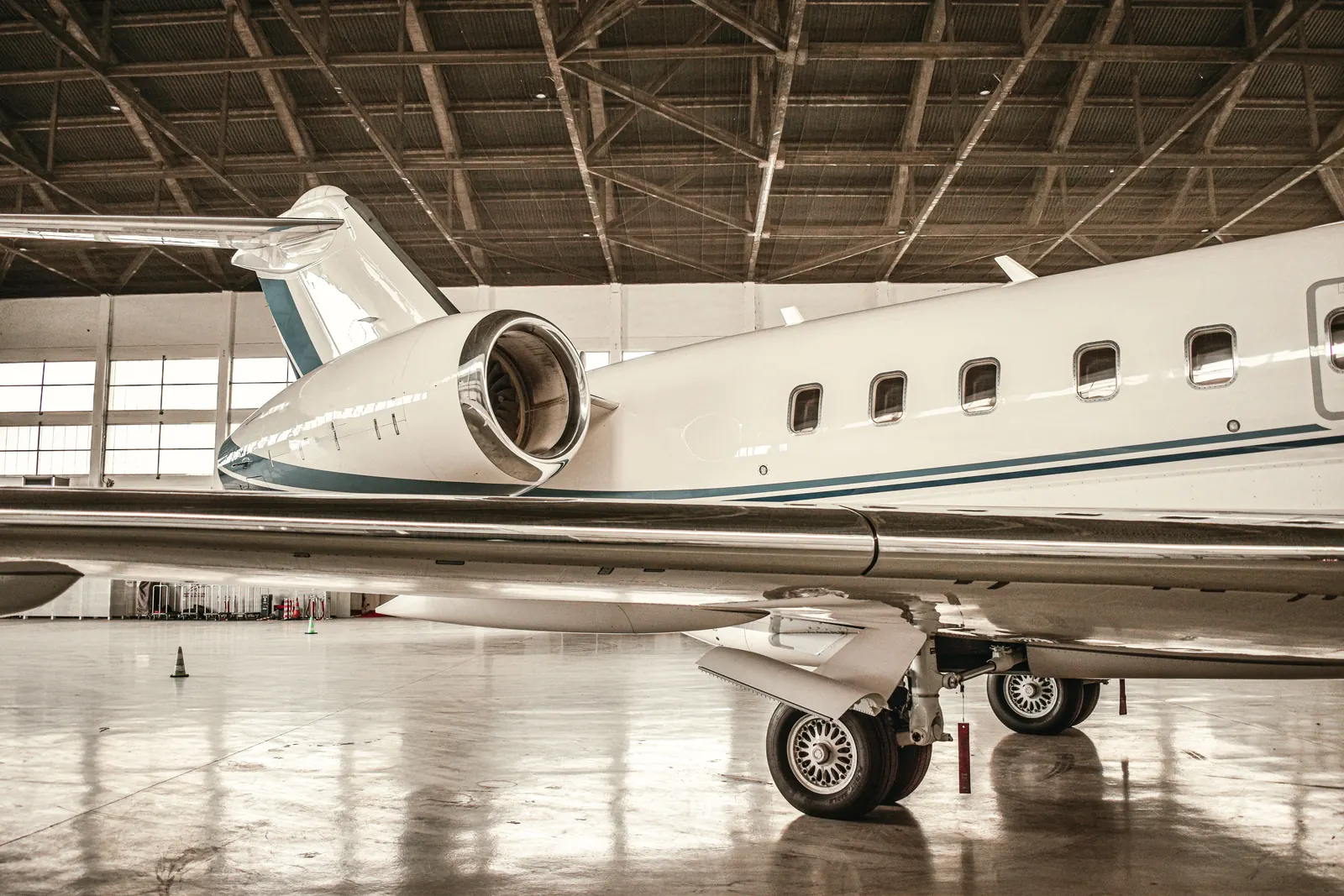 Large-cabin trijets and twinjetsDassault FalconFalcon 8X, Falcon 7X, Falcon 2000
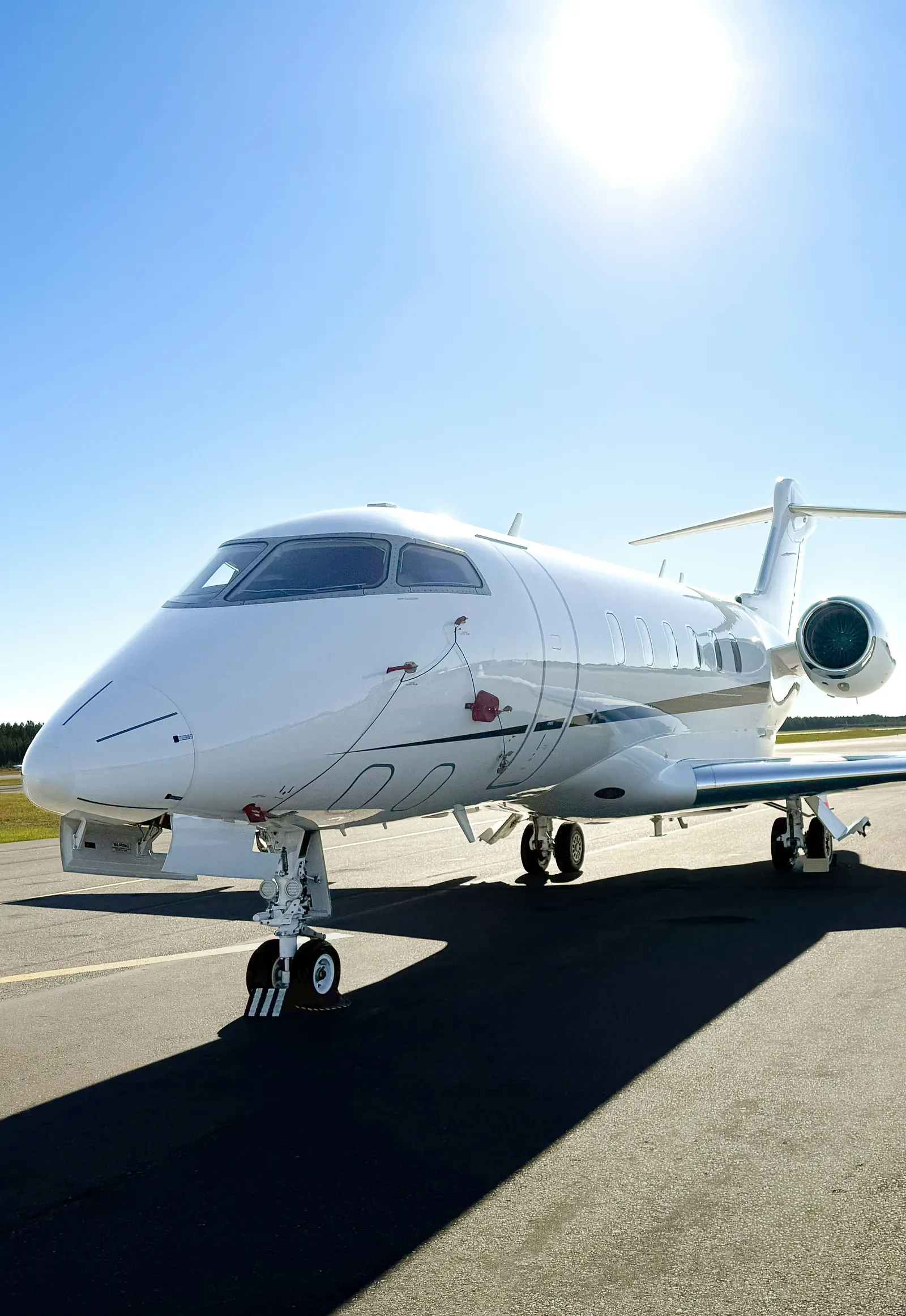 Midsize and super-midsize jetsCessna CitationCitation Longitude, Citation Latitude, Citation X, Citation Sovereign
Questions
Asked by ownersand flight departments.
Is a dry wash safe on aircraft paint?
Yes, when it is done properly. The solution lubricates the surface and encapsulates dirt so it lifts away rather than being dragged across the paint. Damage comes from too little product, reused cloths, or a heavily soiled airframe treated as though it were lightly soiled. We pre-treat heavy contamination and change microfibre constantly, which is what keeps gloss intact.
Can you wash the aircraft on the ramp without moving it?
In most cases, yes. A dry wash produces no runoff, so it can usually be done where the aircraft is parked, on the ramp or in the hangar. We confirm the location's rules beforehand and coordinate access with your flight department or the FBO directly. The aircraft does not need to be repositioned.
How often should a private jet be dry washed?
It depends on how and where the aircraft lives. A hangared jet flying a few times a month may only need an exterior wash every few weeks, while an aircraft parked outside through an Ontario winter, or flying frequent charter legs, collects grime far faster. We recommend an interval after the first assessment, based on what we actually find.
Does a dry wash remove exhaust and hydraulic staining?
Light exhaust film, yes. Established exhaust tracks and hydraulic fluid staining need dedicated product and dwell time, so we treat them as a separate step or as part of belly and exhaust track cleaning. Attacking them with the general wash solution tends to smear the residue across clean paint rather than remove it.
What about de-icing fluid residue after winter operations?
Glycol-based de-icing and anti-icing fluids can leave a tacky film that holds dirt. We remove it from painted surfaces as part of the exterior wash. Residue found in control-surface gaps or around hinges is a maintenance matter, because it can affect how those surfaces move, so we report it to your crew or maintenance provider rather than working inside those areas.
Is a dry wash better than a conventional wet wash?
For routine cleaning of a private aircraft, usually. It uses no pressure, creates no runoff and keeps water out of ports and seams. A wet wash still has its place for very heavy soiling or before certain maintenance tasks, and that call belongs to your maintenance provider. For keeping an aircraft presentable between those events, a dry wash is the right tool.
Often paired with
Related services.
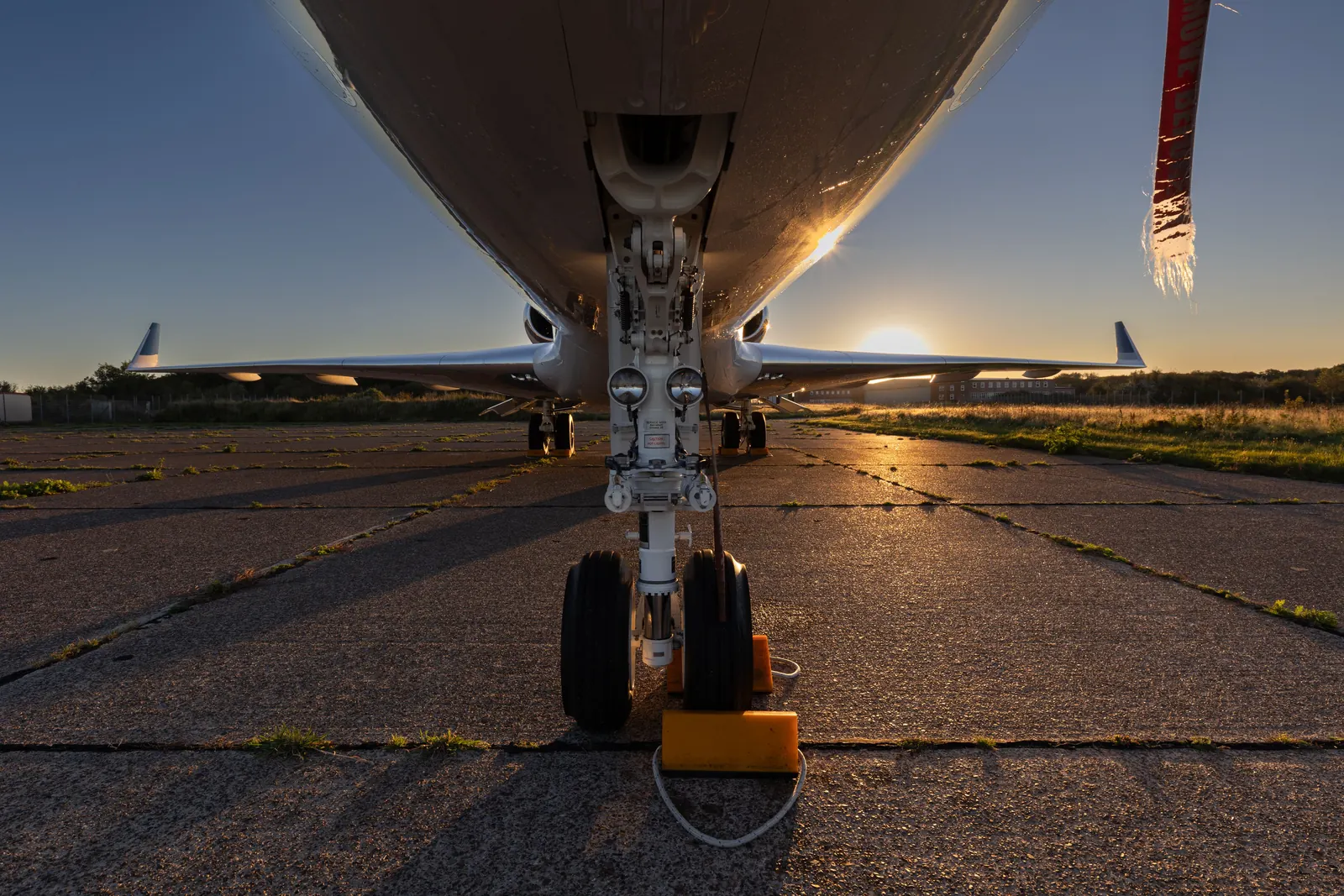 Belly and exhaust track cleaningExhaust soot, hydraulic staining and runway grime removed from belly panels and trailing surfaces.
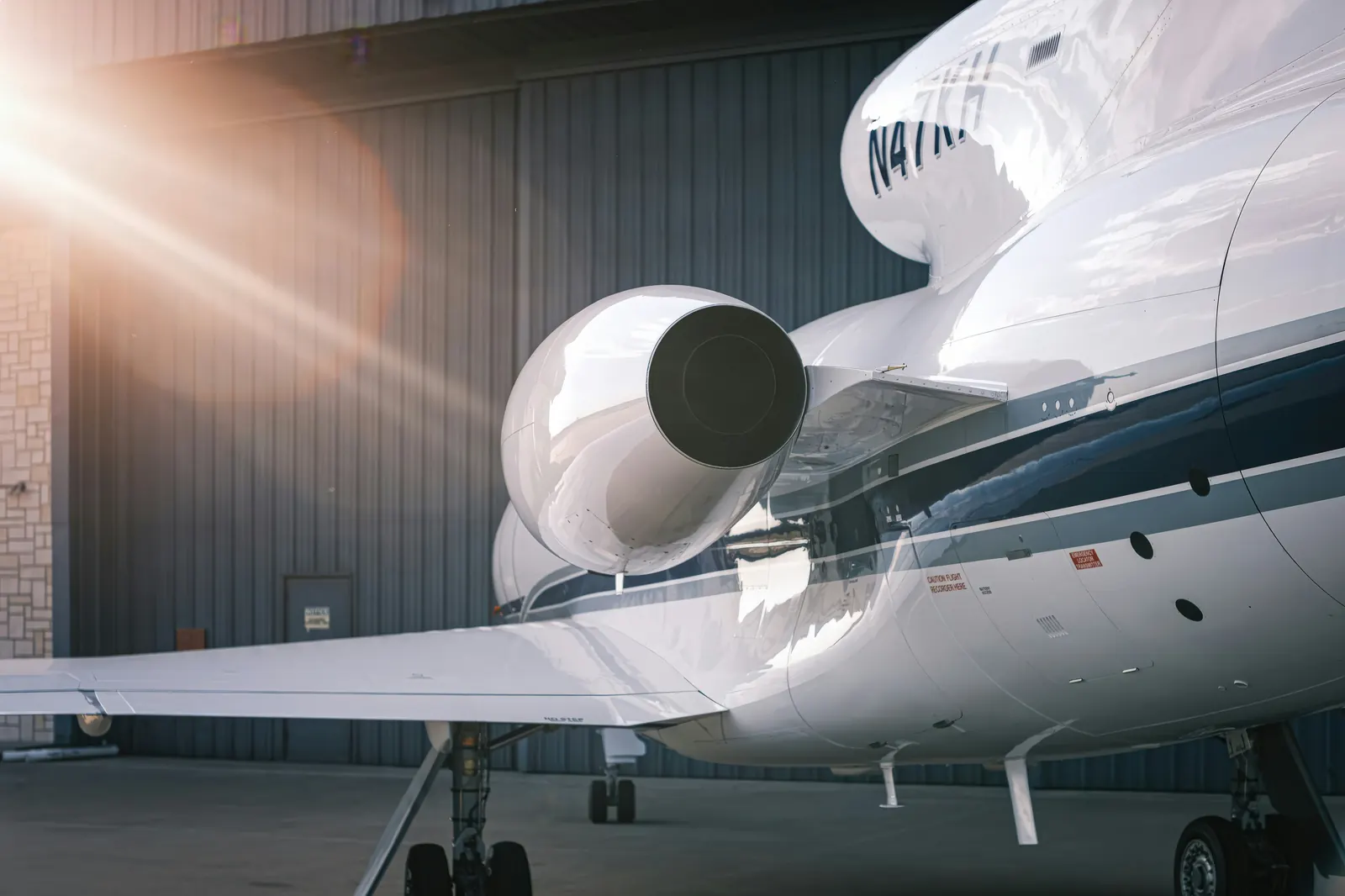 Aviation ceramic sealantAircraft-formulated SiO₂ protection that helps paint resist UV, exhaust residue and environmental fallout.
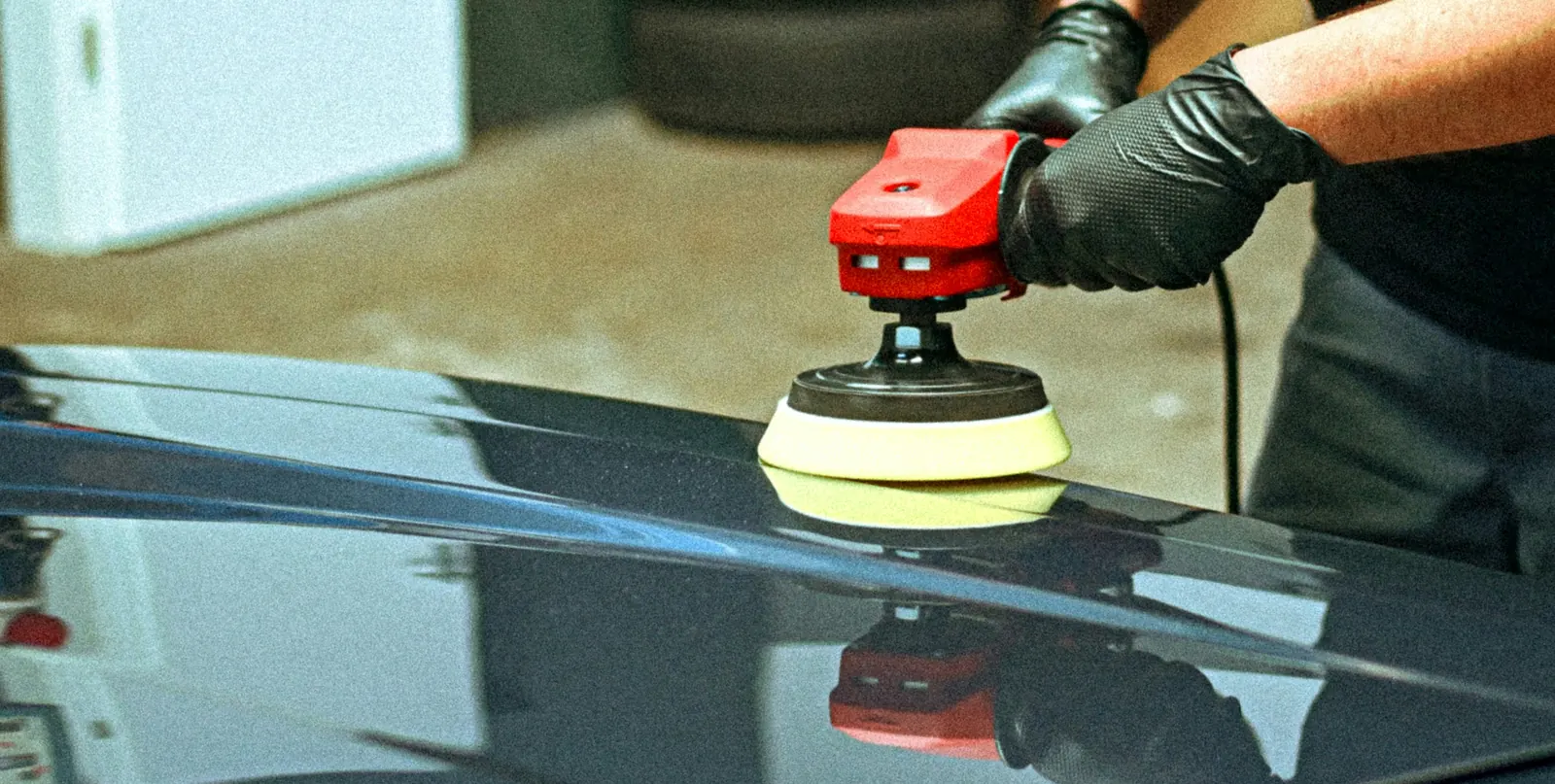 Paint correction and brightworkMeasured machine polishing of aircraft paint and bright metal, only where the coating can spare it.
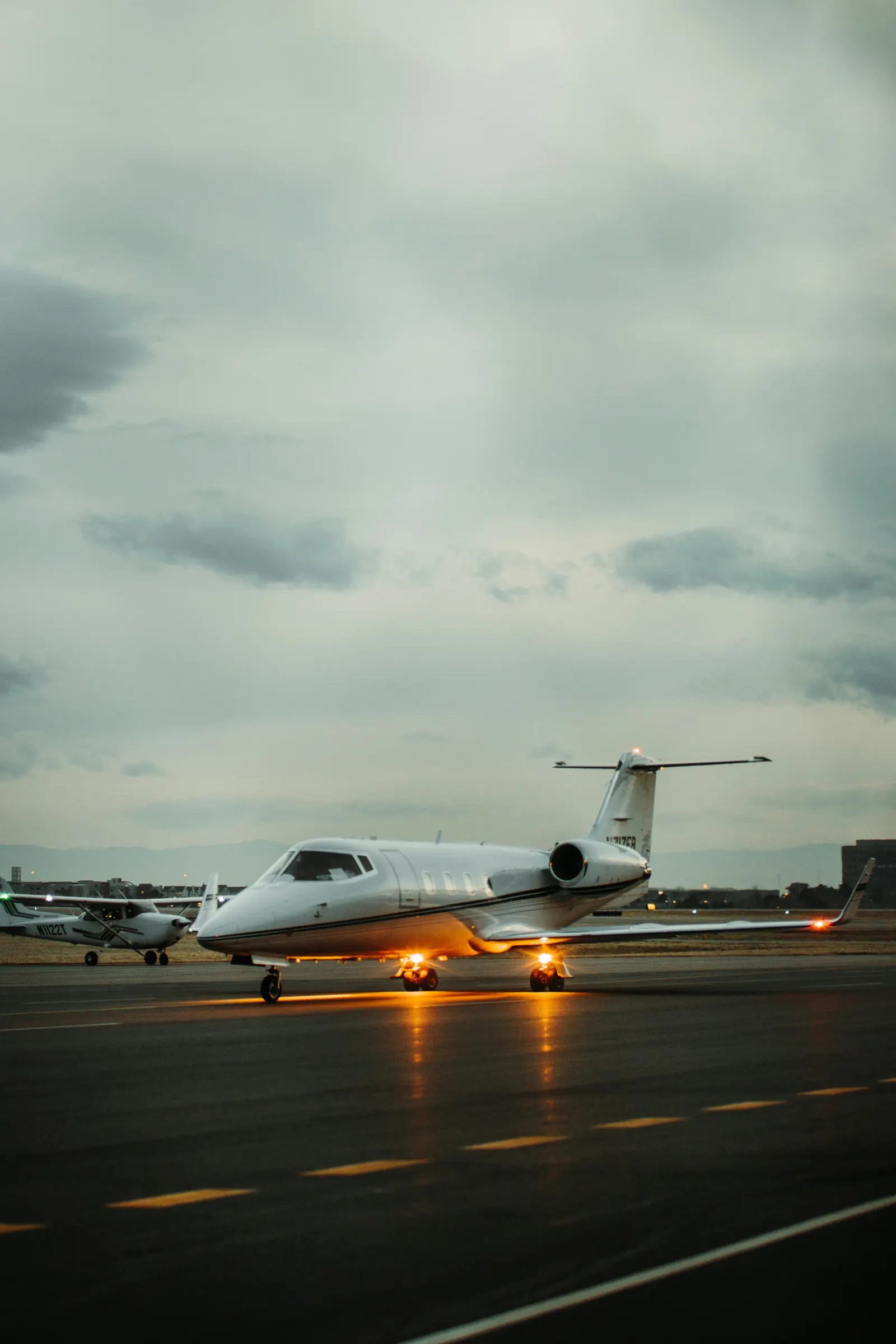 Pre-charter turnaroundA rapid presentation detail between flights, sized to your ground window and finished before crew arrival.
From the journal
Further reading.
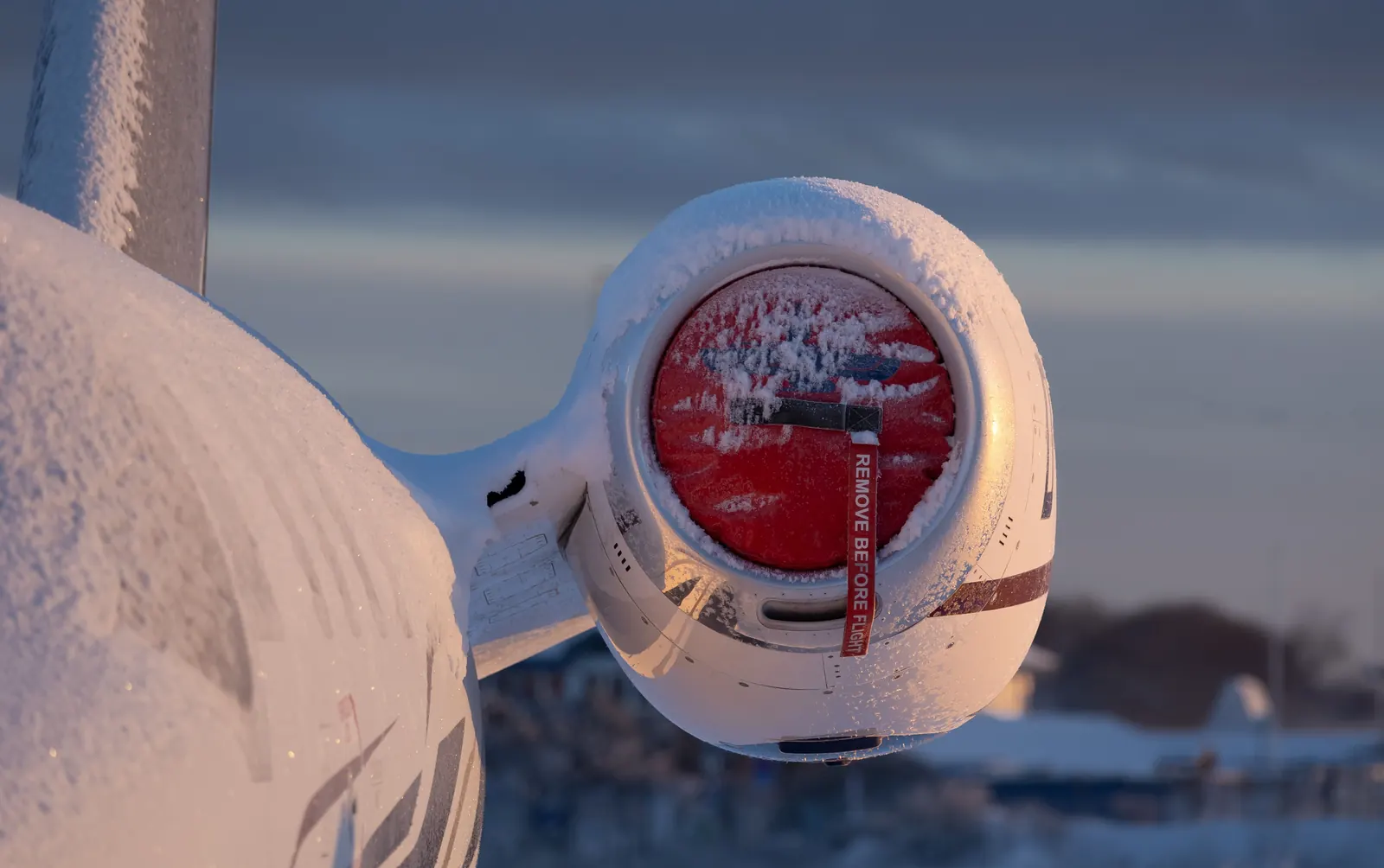 Exterior · 7 min readDry wash vs wet wash: which is right for a private jet?For routine cleaning of a private jet, a dry wash is usually the better choice: lubricated waterless products and microfibre lift light to moderate dirt without driving water into static ports, hinges and panel gaps, and without runoff. A wet wash remains the right tool for heavy grime, thick deicing residue or badly soiled bellies.
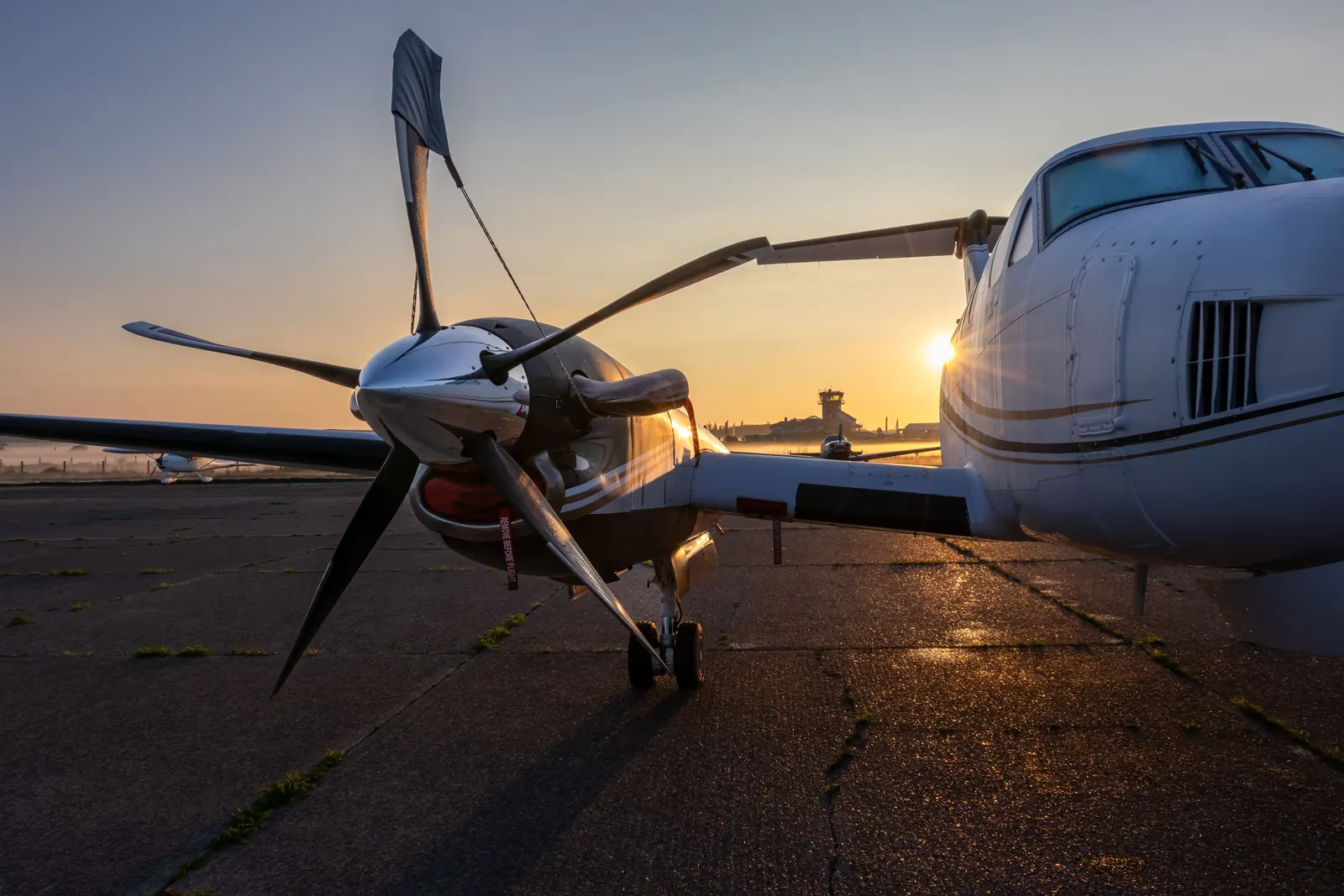 Ownership · 7 min readHow often should a private jet be detailed?There is no single interval. A private jet's cabin should be reset after every trip with passengers, while full interior and exterior details are scheduled by utilisation, storage and season. Charter aircraft and those parked outdoors need the shortest intervals; hangared, owner-flown aircraft can go longer. Winter deicing and summer insects shorten every interval.
 Exterior · 7 min readAviation ceramic sealant explainedAn aviation ceramic sealant is a thin, hard, silica-based layer bonded to clean aircraft paint, making it slicker and more water-repellent. Soot, bugs and grime release more easily, and it adds some UV and chemical resistance. It will not stop chips or erosion, and its life depends on exposure, washing and hours flown.

Private consultation
Exceptional care begins here.
A short, confidential conversation about your aircraft, your operation and your ground windows. A written scope follows, never a price list.