
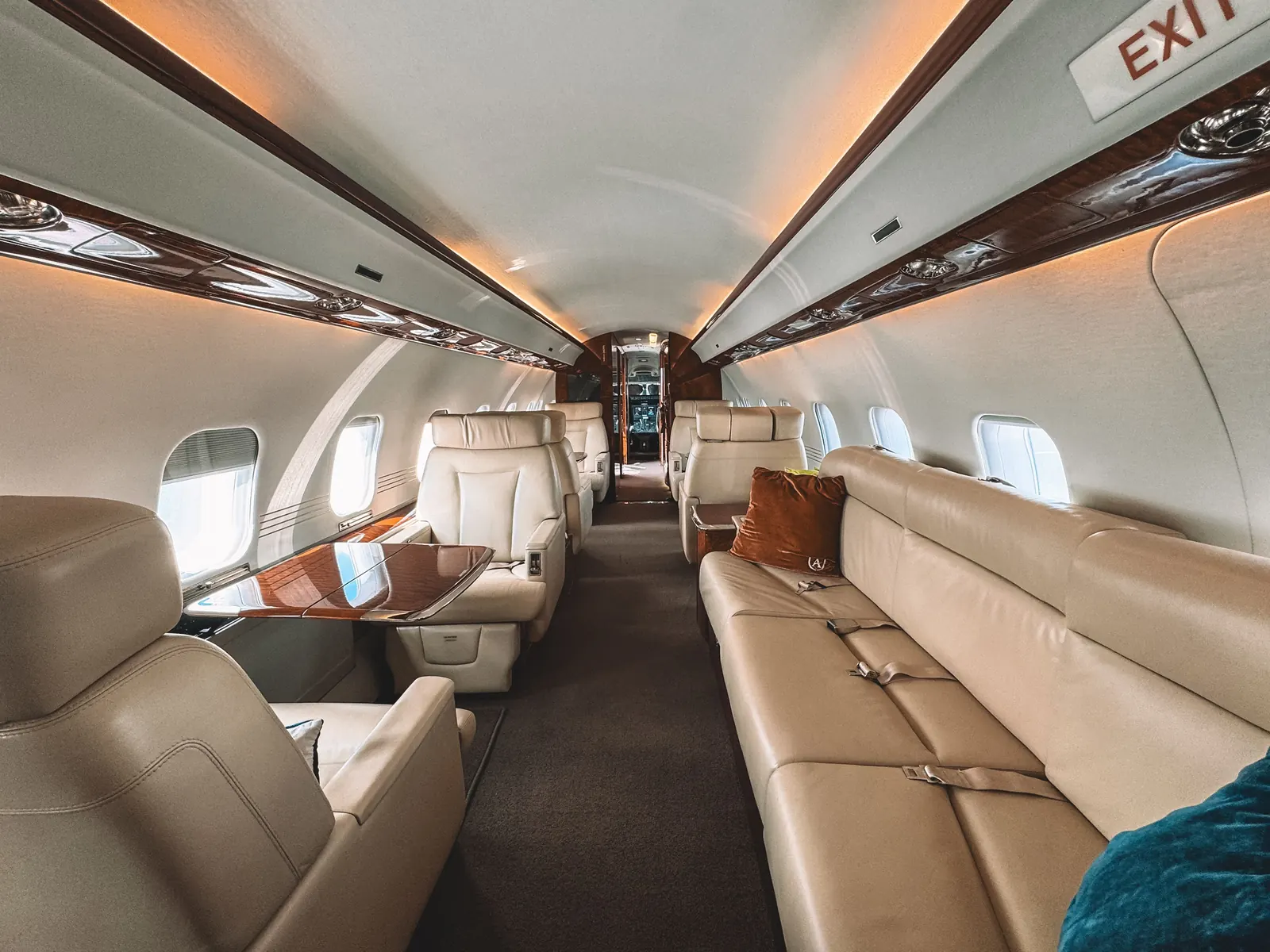
Cabin
Wood veneer and cabinetry care,for the finest surfaces in the cabin.
Aircraft veneers are thin, lacquered and costly to refinish. Kept properly, they are what makes a cabin feel rich.
- Included in every full cabin detail; can also be booked on its own.
- At your FBO or hangar
- Confidential by default
What is wood veneer & cabinetry care?
Aircraft wood veneer care is the cleaning and protection of the lacquered or satin-finished veneers, cabinetry, tables and inlays in a business aircraft cabin. Noctavius Aviation identifies each finish, cleans with products that leave no silicone or wax build-up, protects edges and hardware, and reports scratches or lifting for a refinisher.
Overview
Wood veneer & cabinetry caredone properly.
Business aircraft cabinetry is typically real wood veneer over a lightweight core, sealed in high-gloss or satin lacquer. It is beautiful, light and difficult to repair: a deep scratch or a burn through the lacquer usually means refinishing by a specialist.
Most veneer damage comes from cleaning: abrasive cloths, household sprays, silicone polishes that build up and smear, and liquid left at edges where it lifts the veneer. Careful routine care avoids all of it.
The scope
What it includes.Every surface, by name.
- Finish identification
- High-gloss, satin and open-grain finishes identified before cleaning.
- Dusting
- Soft, clean microfibre to lift dust without scratching.
- Cleaning
- Finish-matched cleaner, lightly applied and wiped dry.
- Edges and inlays
- Edges, inlays and joints kept dry.
- Hardware
- Plated and polished hardware cleaned without contaminating the veneer.
- Condition report
- Scratches, lifting or crazing photographed and reported.
Why the method matters
The differenceis in what you don't see.
- I
Lacquer is thin
Abrasion wears through quickly and needs refinishing.
- II
Polish builds up
Silicone and wax polishes smear and attract dust.
- III
Water lifts edges
Moisture at edges and joints can lift veneer.
The process
How we workon your aircraft.
Included in every full cabin detail; can also be booked on its own.
- I
Assess
Identify finishes and record existing wear.
- II
Dust
Remove dust and grit before any wet cleaning.
- III
Clean
Finish-matched products, lightly applied, wiped dry.
- IV
Protect
Appropriate protection for high-gloss surfaces where suitable.
- V
Inspect
Check under raking light and report anything for a refinisher.
Airframes
Matched to the aircraft,not applied generically.
Questions
Asked by ownersand flight departments.
Can you remove scratches from aircraft veneer?
Surface marks in the lacquer can sometimes be improved; scratches through the finish need a refinisher, and we report them.
Should we use furniture polish on the cabinetry?
No. Many household polishes contain silicone or wax that builds up, smears and complicates refinishing later.
Is satin veneer cleaned differently from high-gloss?
Yes. Satin finishes should not be polished to a shine, and are cleaned with products that keep the sheen even.
How often should veneer be cared for?
Light dusting and cleaning on every cabin detail, with a closer inspection a few times a year.
Often paired with
Related services.
- Cabin interior detailingSeating, veneers, carpets, headliners and sidewalls, each cleaned with product matched to the material.
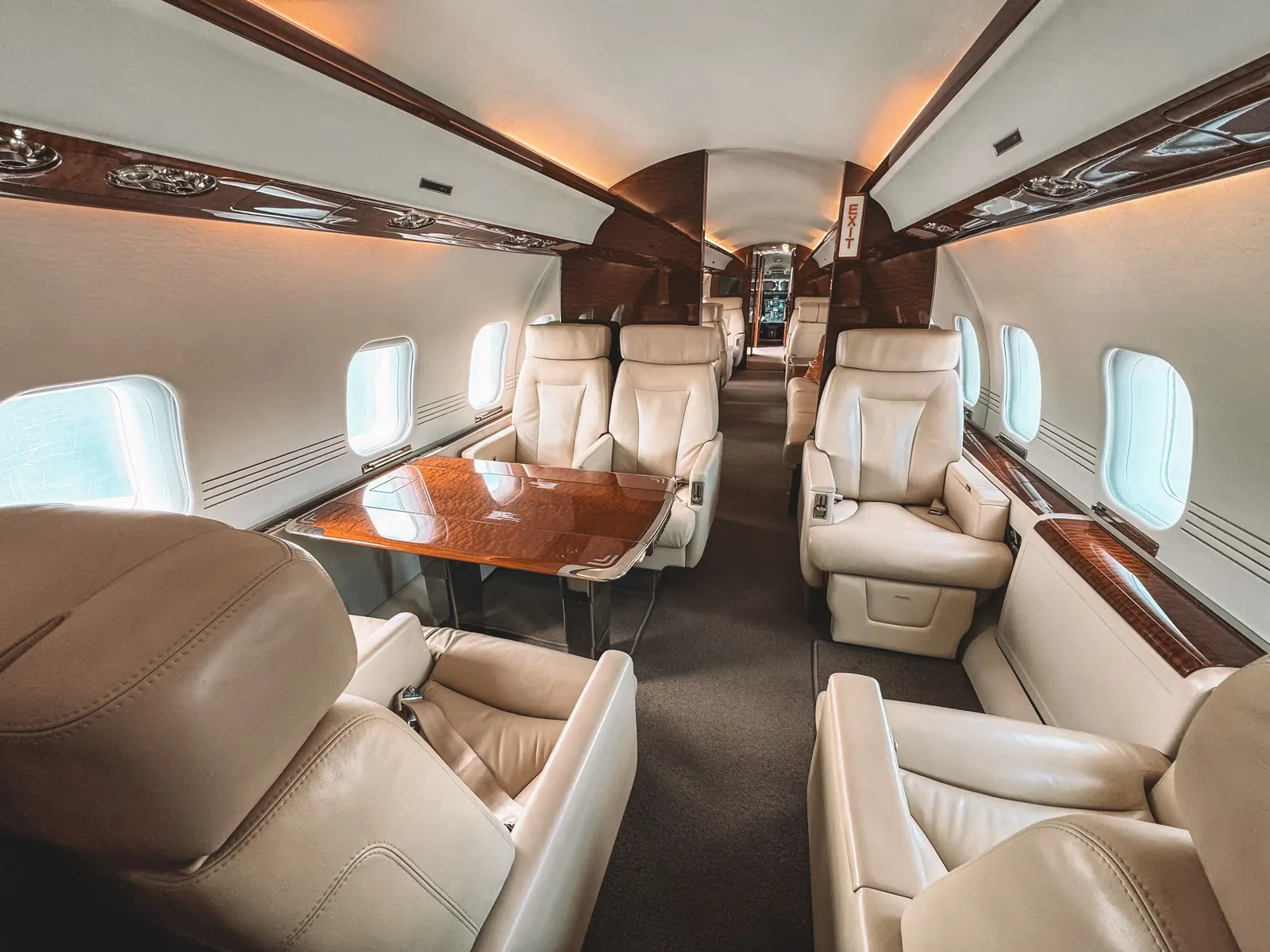 Aircraft leather careCleaning and conditioning for thin, finished aviation hide, without tackiness or premature cracking.
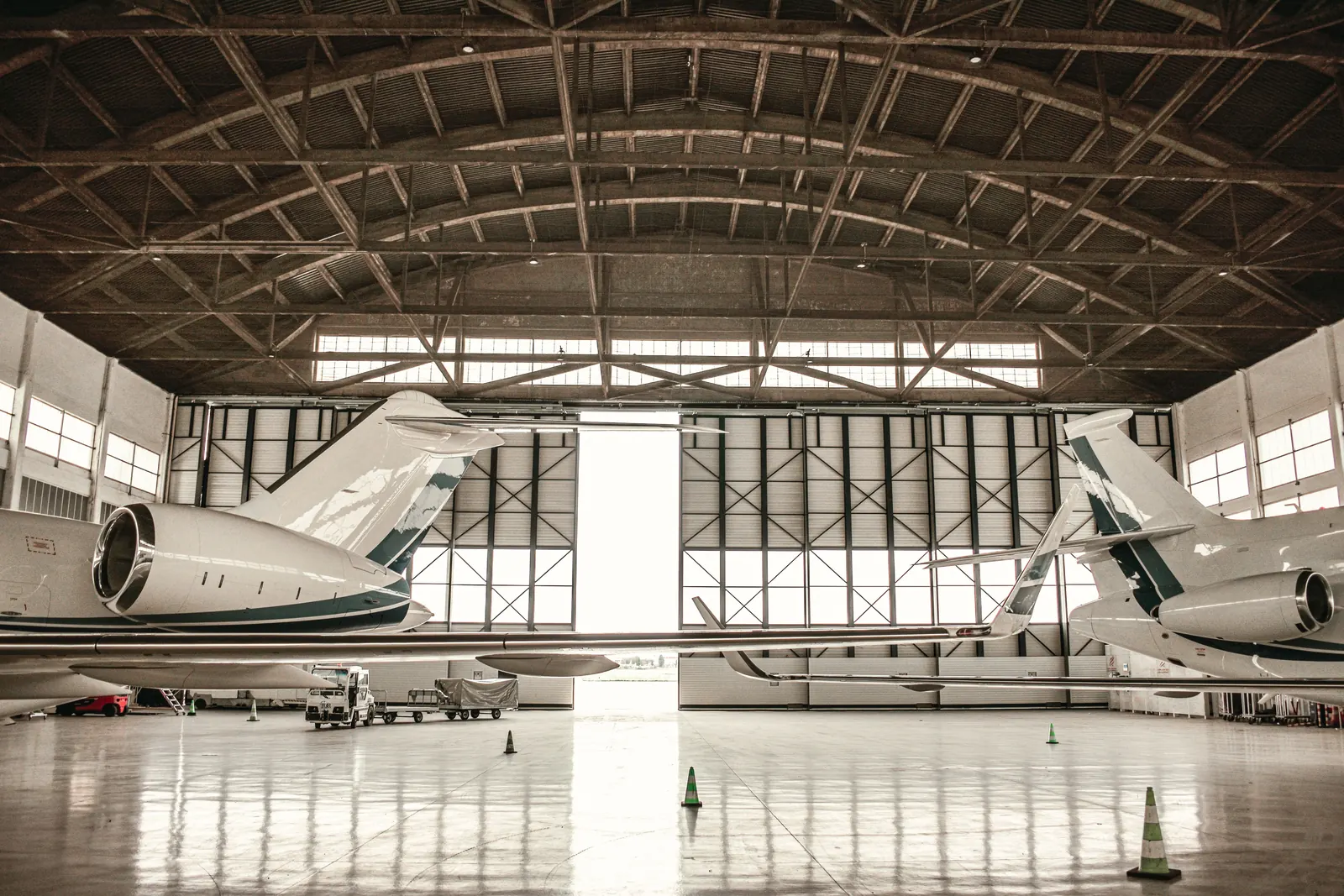 Pre-sale & delivery detailingA complete presentation detail before listing, inspection or delivery.


Private consultation
Exceptional care begins here.
A short, confidential conversation about your aircraft, your operation and your ground windows. A written scope follows, never a price list.