
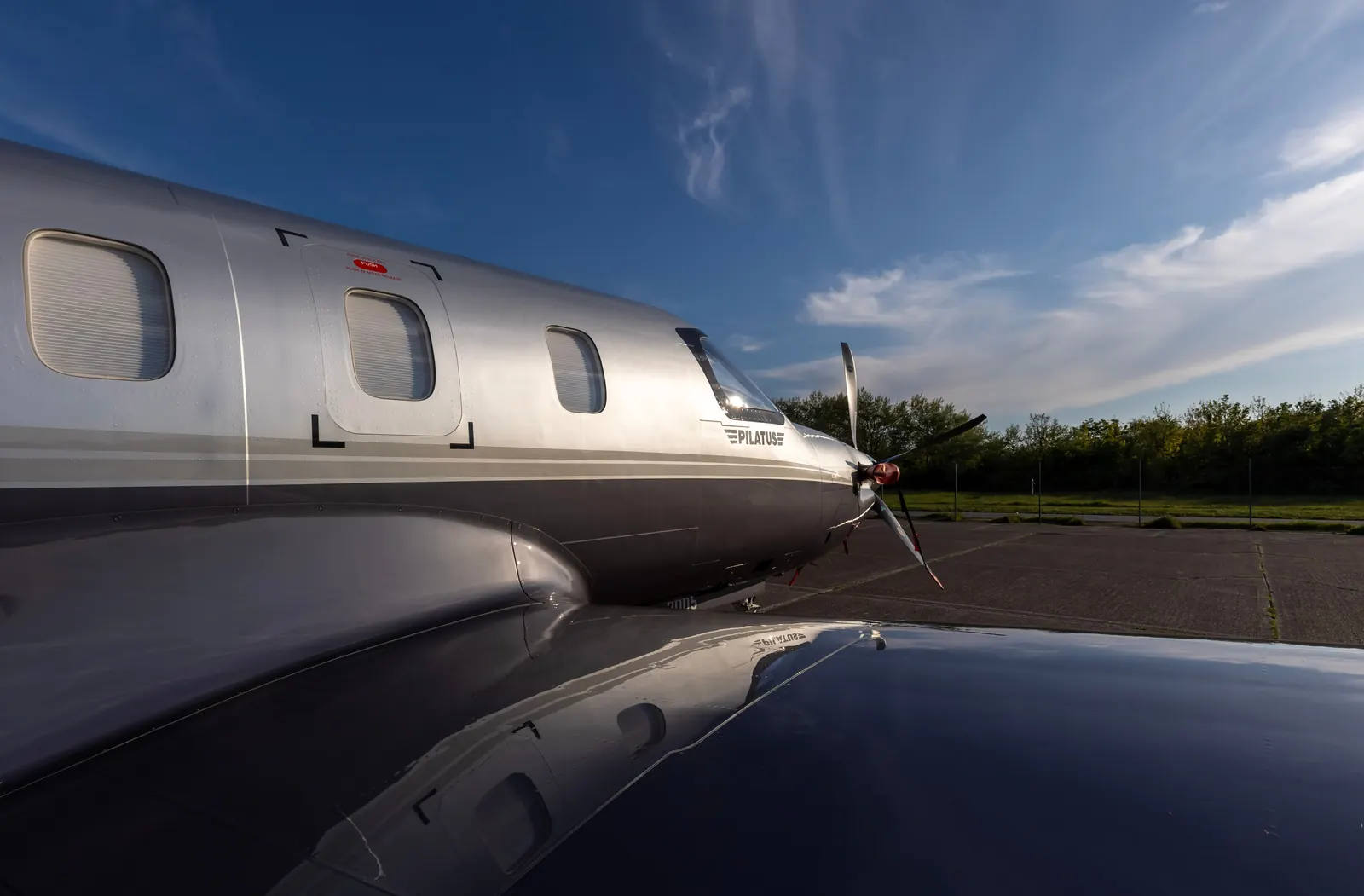
Pilatus
Built to work,and detailed for it.
The PC-12 and PC-24 earn their keep on short strips, frequent legs and mixed loads. Their detailing starts with exhaust, belly and the cabin floor.
- PC-24
- PC-12
Pilatus detailing, in brief
Noctavius Aviation details Pilatus PC-12 turboprops and PC-24 jets at Ontario FBOs and hangars. Pilatus detailing focuses on what these hard-working aircraft collect: PT6 exhaust staining along the PC-12's forward fuselage, belly grime from short and unpaved strips, propeller and spinner care, and cabins and cargo areas that see heavy use.
Single-engine turboprops and light jets
Pilatuscabins and airframes.
The PC-12 is one of the most versatile turboprops flying, and the PC-24 brought similar thinking to a light jet, including approval to operate from unpaved runways. Both have large cargo doors and flexible cabins, and both tend to be flown hard: passengers one day, equipment the next.
That versatility shows in the detailing. On the PC-12, exhaust from the PT6 leaves through stacks on either side of the forward fuselage and streams aft along the sides, leaving the familiar soot track. Both types can return from grass, gravel or wet strips with spray and debris on the belly, flaps and gear doors. Inside, the cargo area and cabin floor take the wear of loading.
We prioritise by exposure: exhaust and belly first, then a careful exterior wash, propeller and spinner care on the PC-12, and a cabin detail that respects the leather and trim while dealing honestly with practical wear.
What we pay attention to
Considerationsspecific to Pilatus.
- I
PT6 exhaust tracks
On the PC-12, stacks on both sides of the forward fuselage lay soot along the cabin sides. Regular pH-buffered cleaning stops it baking into the paint.
- II
Short and unpaved strips
Gravel, grass and wet-strip operations leave mud and spray on the belly, gear doors and flaps, cleaned cosmetically with gear components left to maintenance.
- III
Propeller and spinner
The PC-12's spinner and propeller surfaces are cleaned and polished cosmetically. Blades and de-ice elements are handled only as maintenance permits.
- IV
Cargo door and cabin floor
Large cargo doors mean loading wear on sills, floor coverings and lower sidewalls. These are cleaned to their material, with damage noted.
- V
Pneumatic de-ice boots
The PC-12's wing and tail boots are cleaned with rubber-compatible product. Any boot treatment follows your maintenance provider's instructions.
Recommended scope
Services foryour Pilatus.
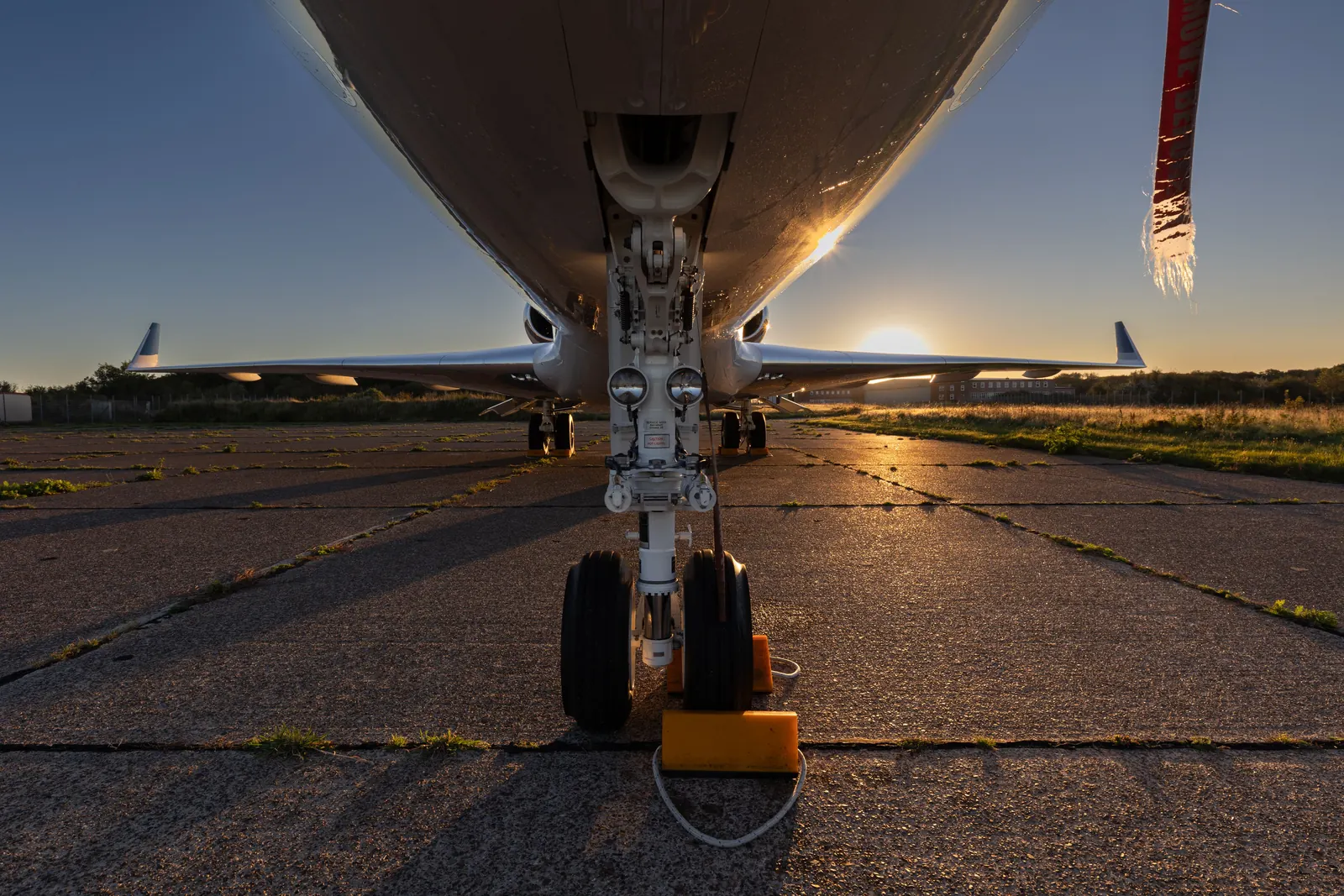 Belly and exhaust track cleaningExhaust soot, hydraulic staining and runway grime removed from belly panels and trailing surfaces.
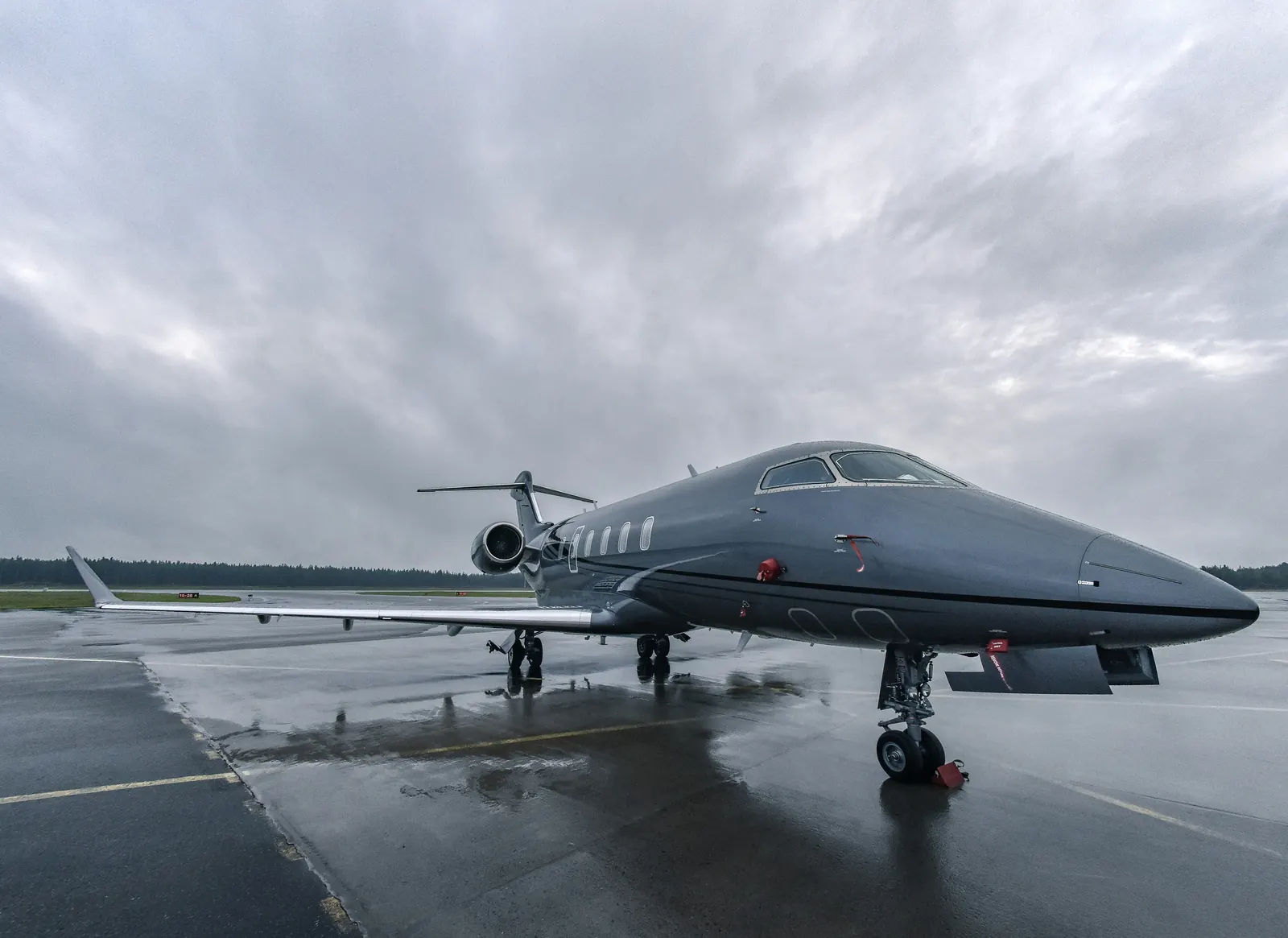 Exterior dry washWaterless exterior cleaning that keeps moisture out of ports, hinge lines and panel seams.
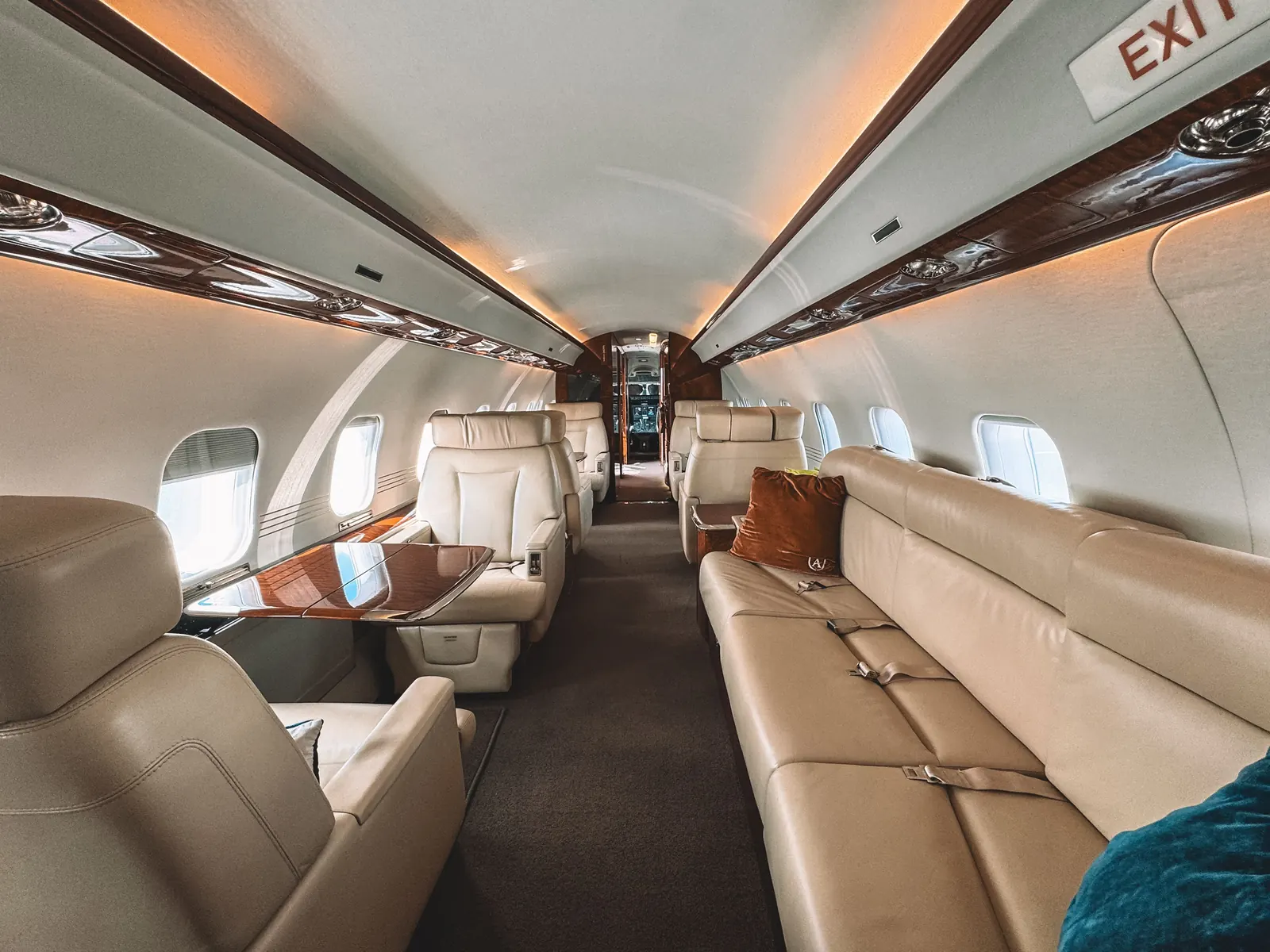 Cabin interior detailingSeating, veneers, carpets, headliners and sidewalls, each cleaned with product matched to the material.
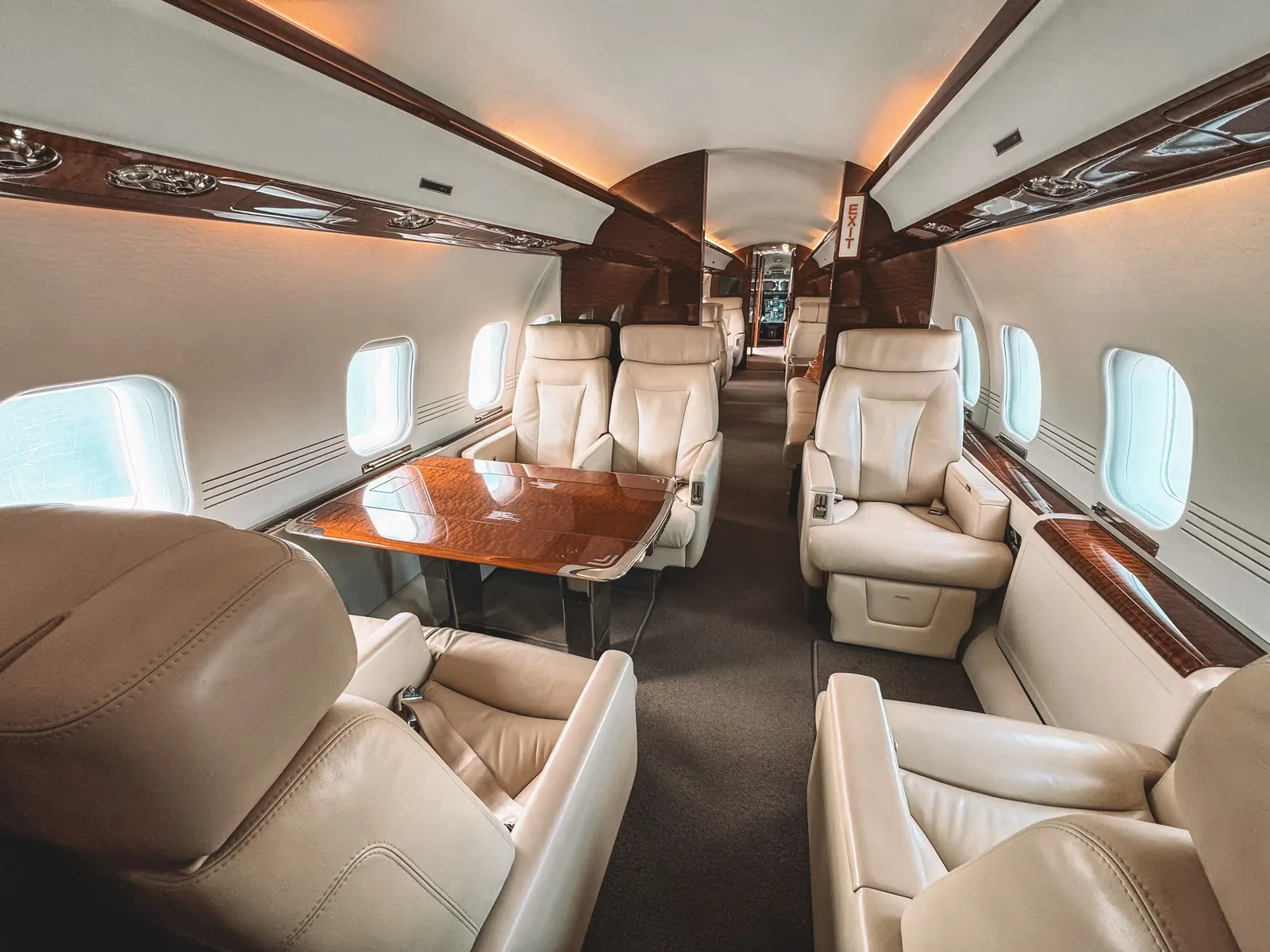 Aircraft leather careCleaning and conditioning for thin, finished aviation hide, without tackiness or premature cracking.
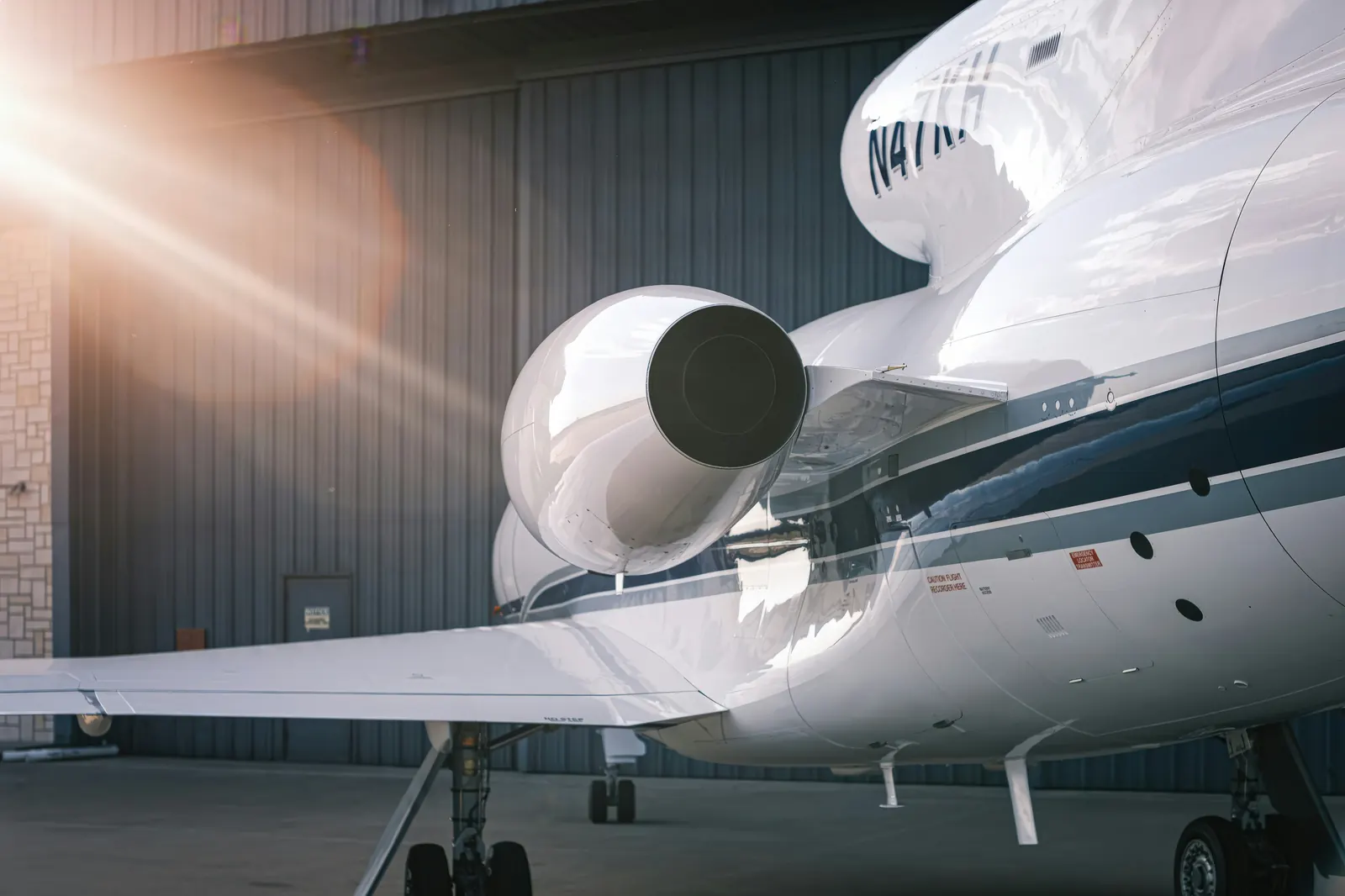 Aviation ceramic sealantAircraft-formulated SiO₂ protection that helps paint resist UV, exhaust residue and environmental fallout.
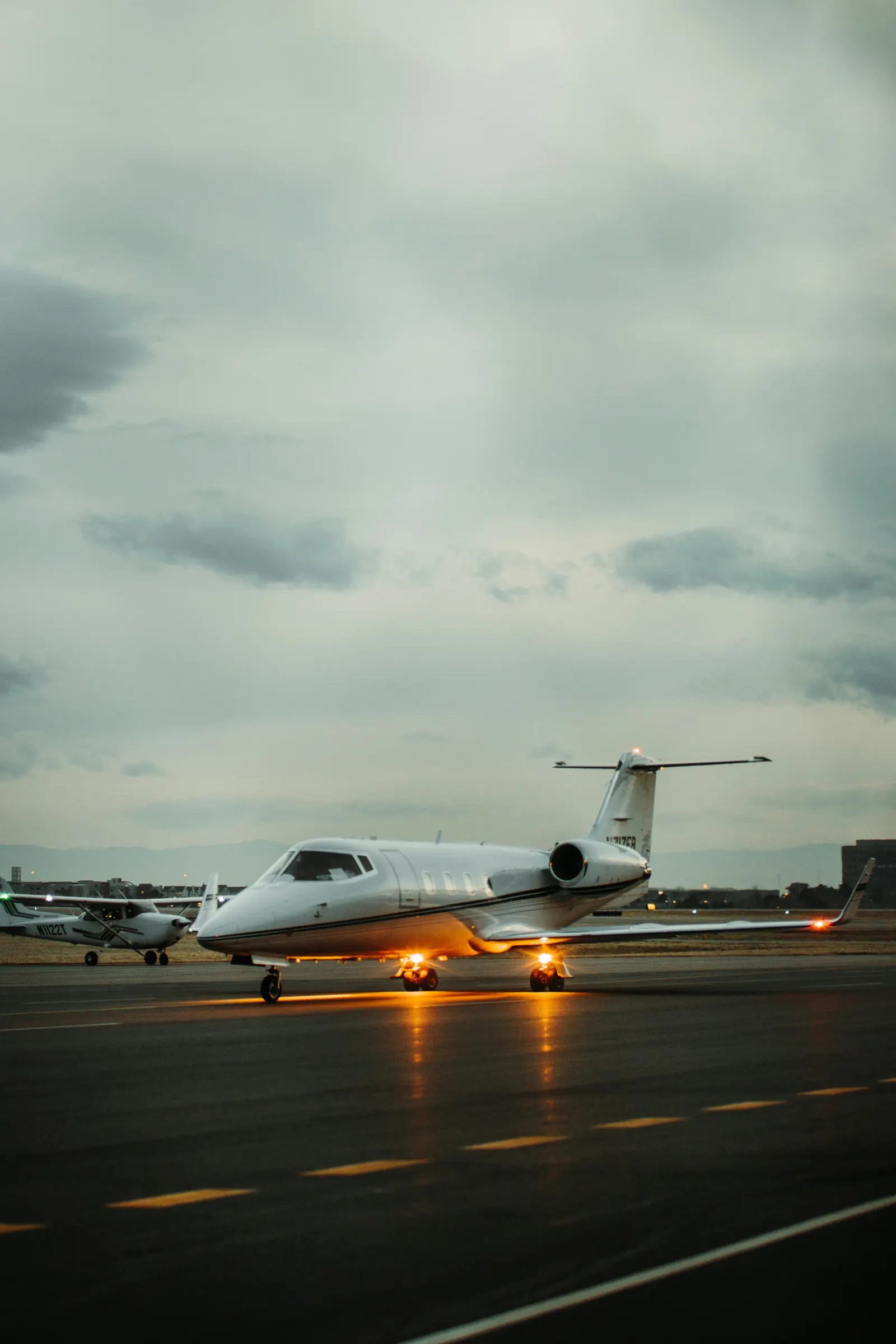 Pre-charter turnaroundA rapid presentation detail between flights, sized to your ground window and finished before crew arrival.
Questions
Pilatus ownersask us.
How do you remove PC-12 exhaust stains?
With a pH-buffered exhaust remover applied to the soot tracks along the forward fuselage and given time to break the deposit down, before it is lifted with soft microfibre. Strong degreasers are avoided because they can soften paint and attack seals. Cleaning the tracks regularly, before they bake in, is far kinder to the paint.
Do you detail the Pilatus PC-24?
Yes. The PC-24 and PC-12 are both on our published fleet list. Because the PC-24 can use short and unpaved runways, its belly, gear doors and flaps can collect more debris than a typical light jet's, so we give the lower surfaces particular attention alongside the cabin and cockpit.
Can you clean a PC-12 after gravel or grass strip operations?
Yes. Mud, spray and debris on the belly, flaps and gear doors are cleaned cosmetically with appropriate product. Anything inside the gear, around brakes or on lubricated components is left to your maintenance provider. If we see stone or debris damage, we note it for the crew.
Do you polish Pilatus propellers?
We clean and polish the PC-12's spinner and propeller surfaces cosmetically, as permitted by the crew or maintenance provider. We do not dress blade edges, work on de-ice elements beyond gentle cleaning, or inspect for airworthiness. Anything that looks damaged is reported rather than treated.
Is a dry wash suitable for a turboprop?
Yes. A dry wash suits the lighter grime on most of a turboprop's surfaces and keeps water out of ports, drains and hinge lines. The heavier exhaust and belly deposits are treated separately with dedicated product, so the general wash stays gentle on the paint.
The fleet we service
Other airframes.
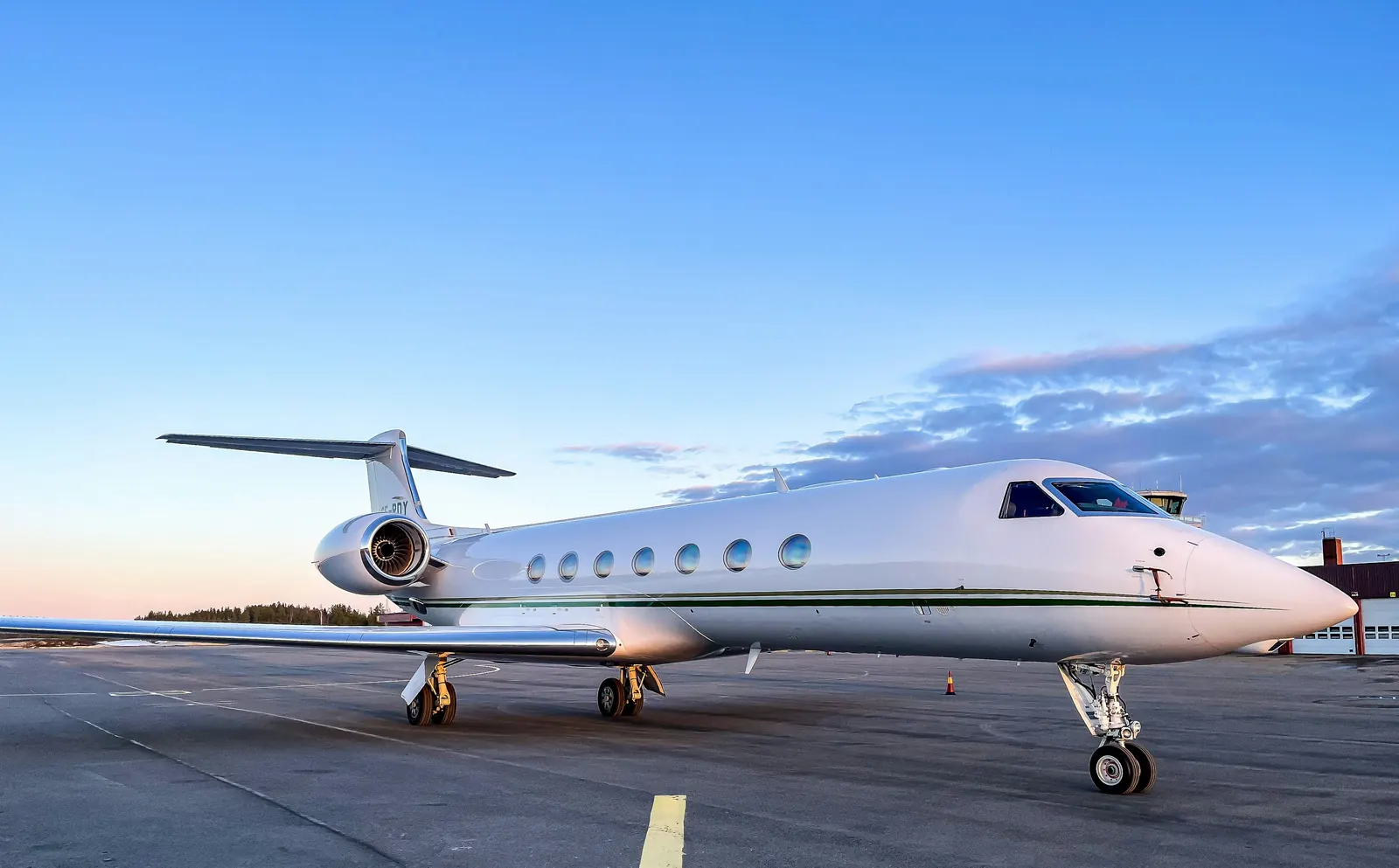 Large-cabin and ultra-long-range jetsGulfstreamG700, G650, G550, G450
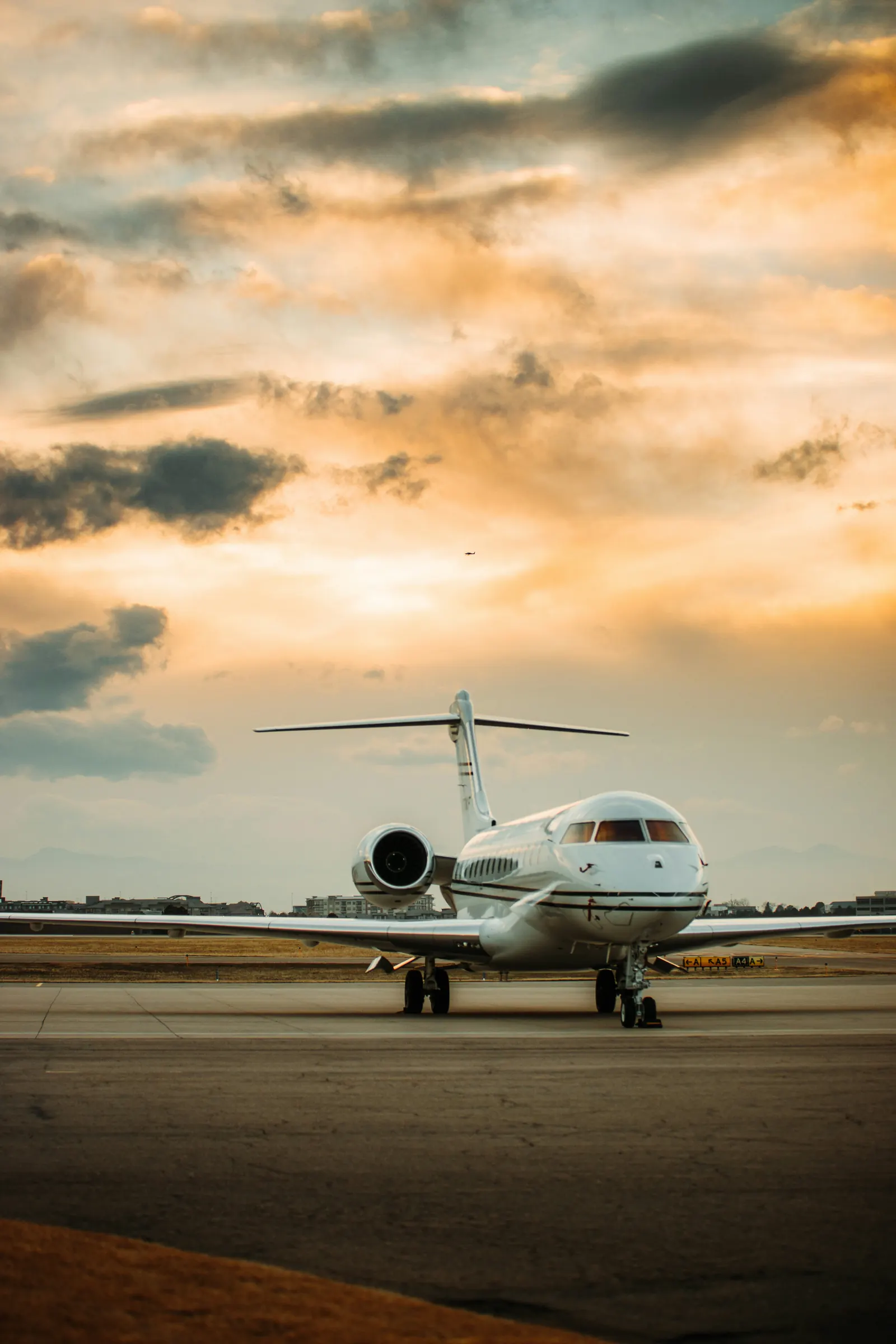 Super-midsize, large-cabin and ultra-long-range jetsBombardierGlobal 7500, Global 6000, Challenger 650, Challenger 350
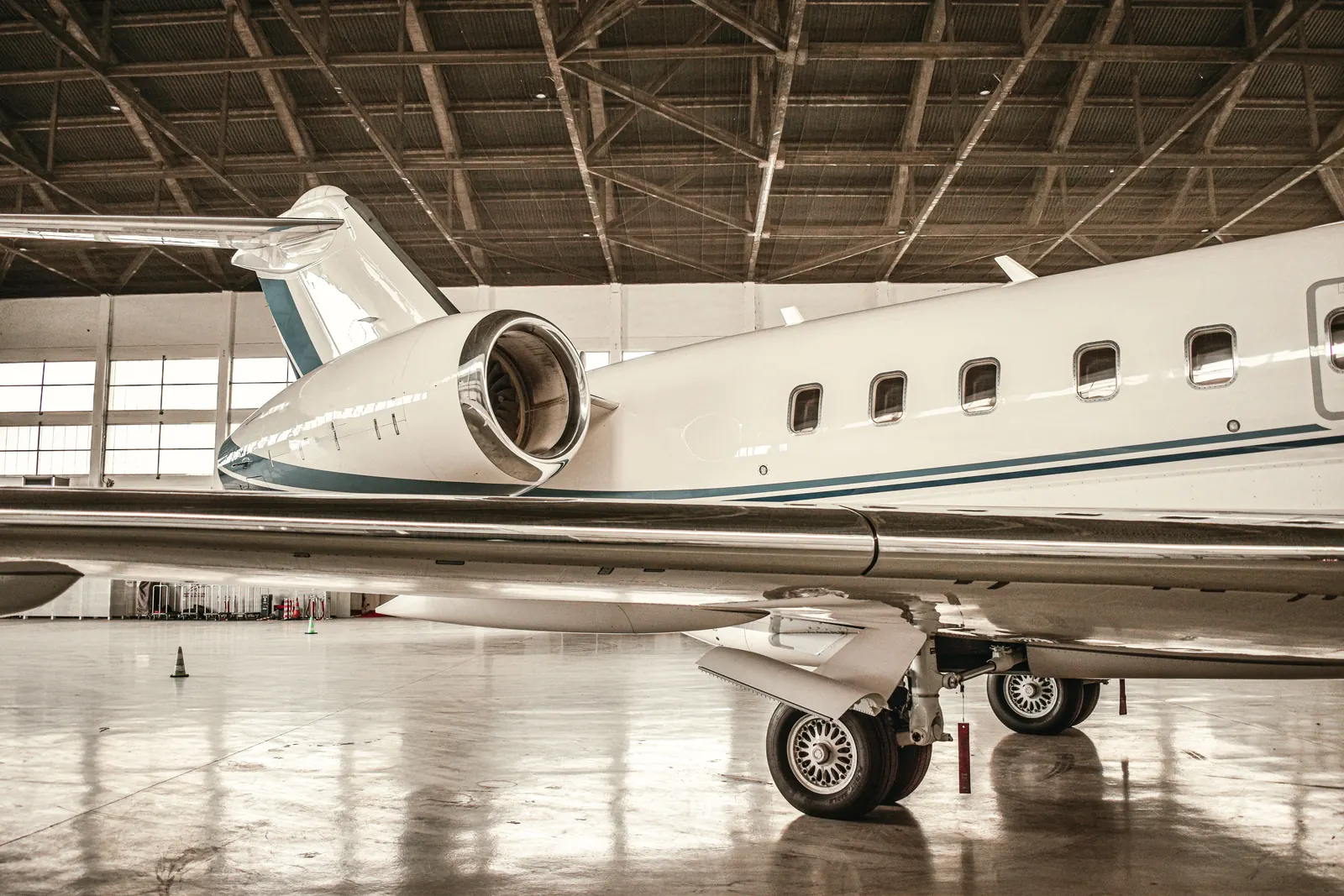 Large-cabin trijets and twinjetsDassault FalconFalcon 8X, Falcon 7X, Falcon 2000
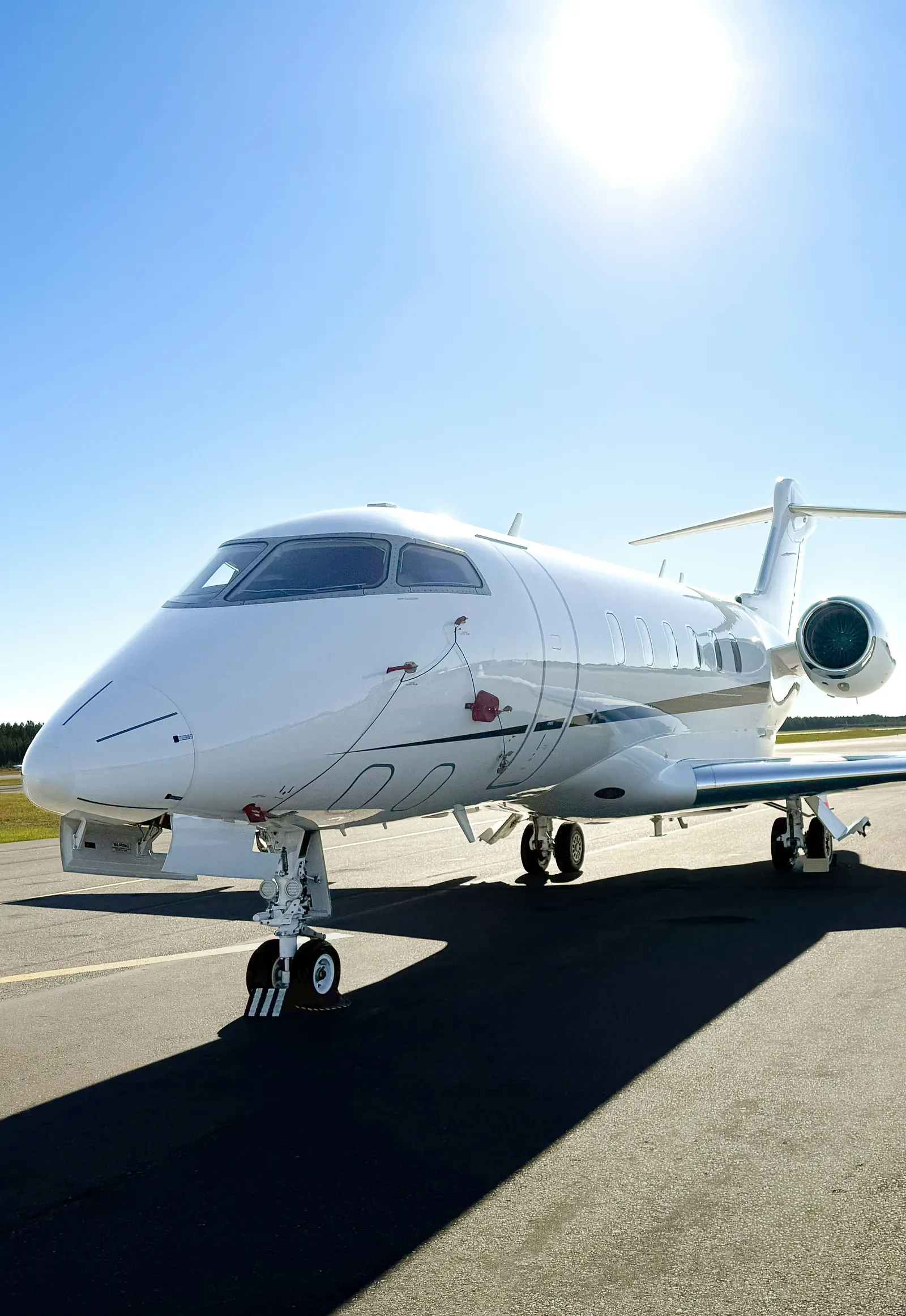 Midsize and super-midsize jetsCessna CitationCitation Longitude, Citation Latitude, Citation X, Citation Sovereign
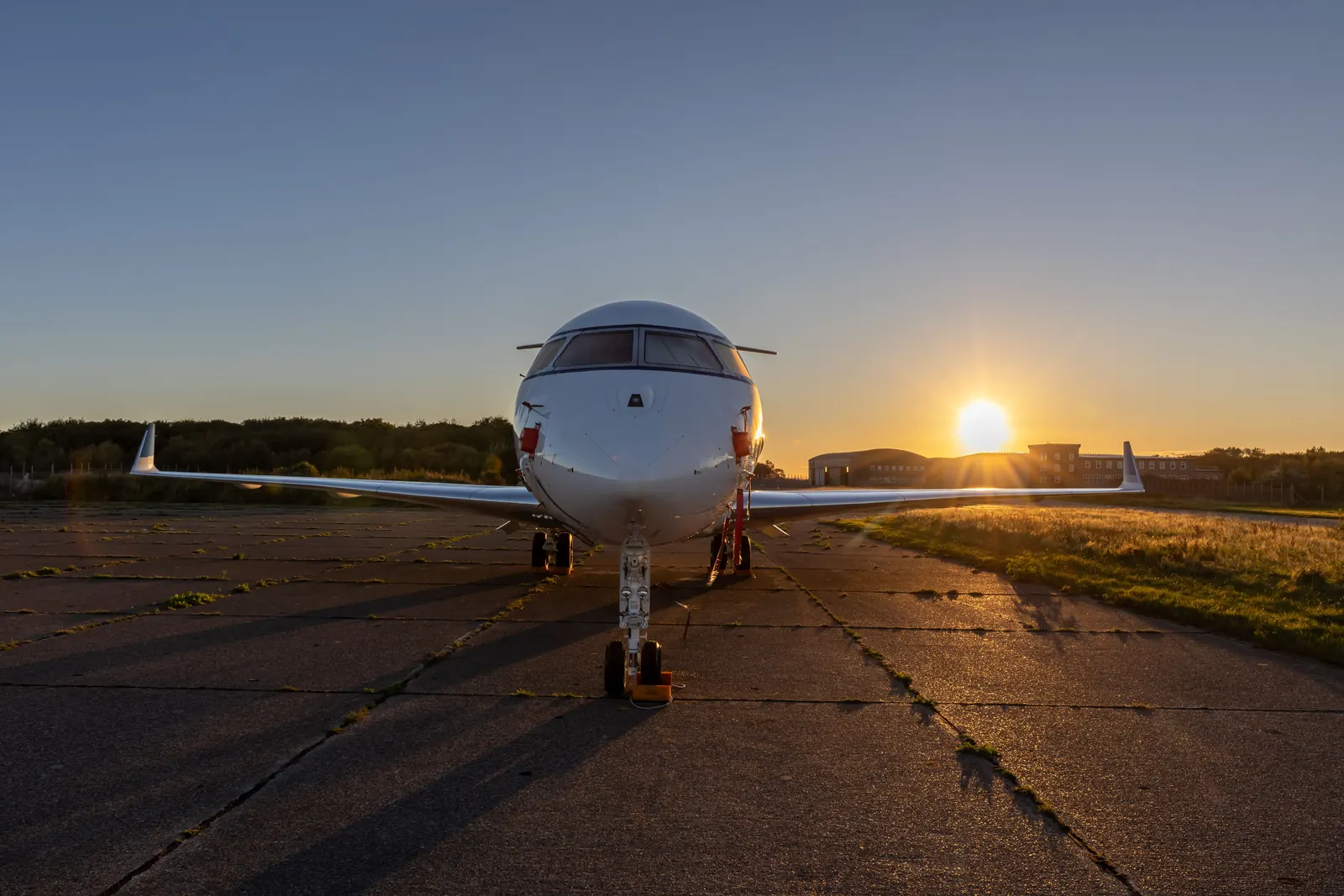 Midsize and super-midsize jetsEmbraerPraetor 600, Praetor 500, Legacy 500, Legacy 450
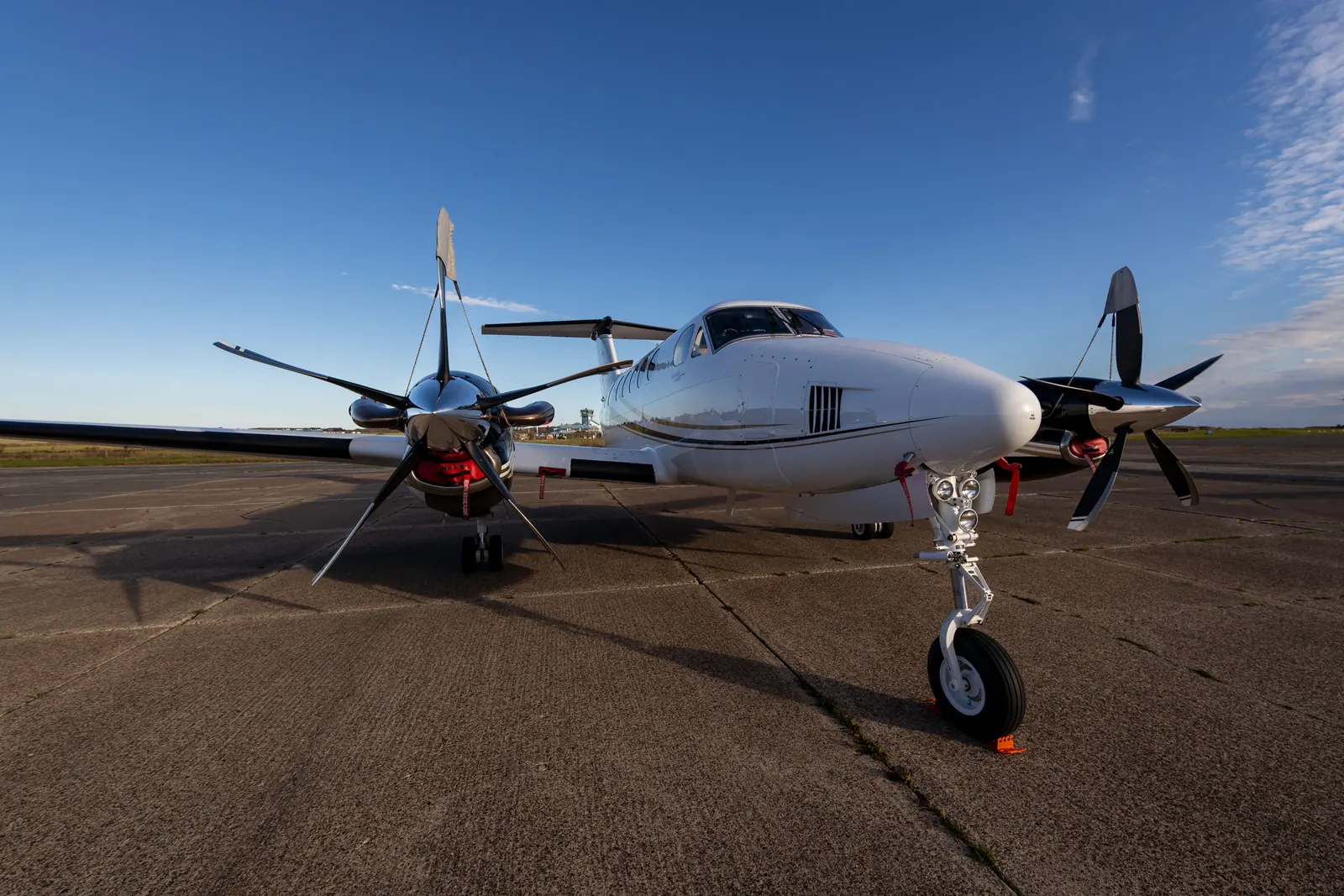 Twin-engine turbopropsBeechcraft King AirKing Air 350i, King Air 260
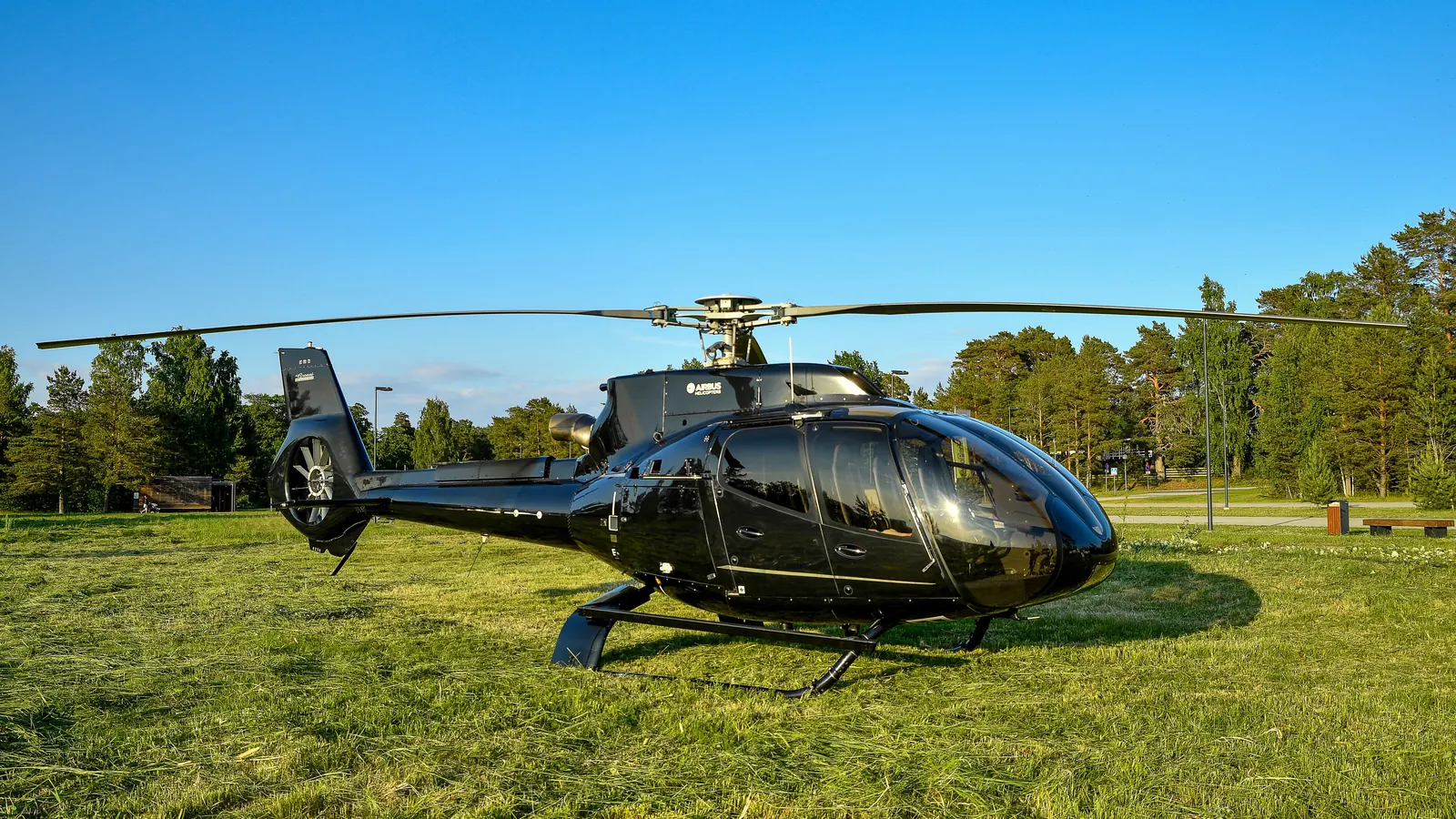 Executive and civil helicoptersAirbus Helicopters and SikorskyAirbus ACH130, Airbus H145, Sikorsky S-76
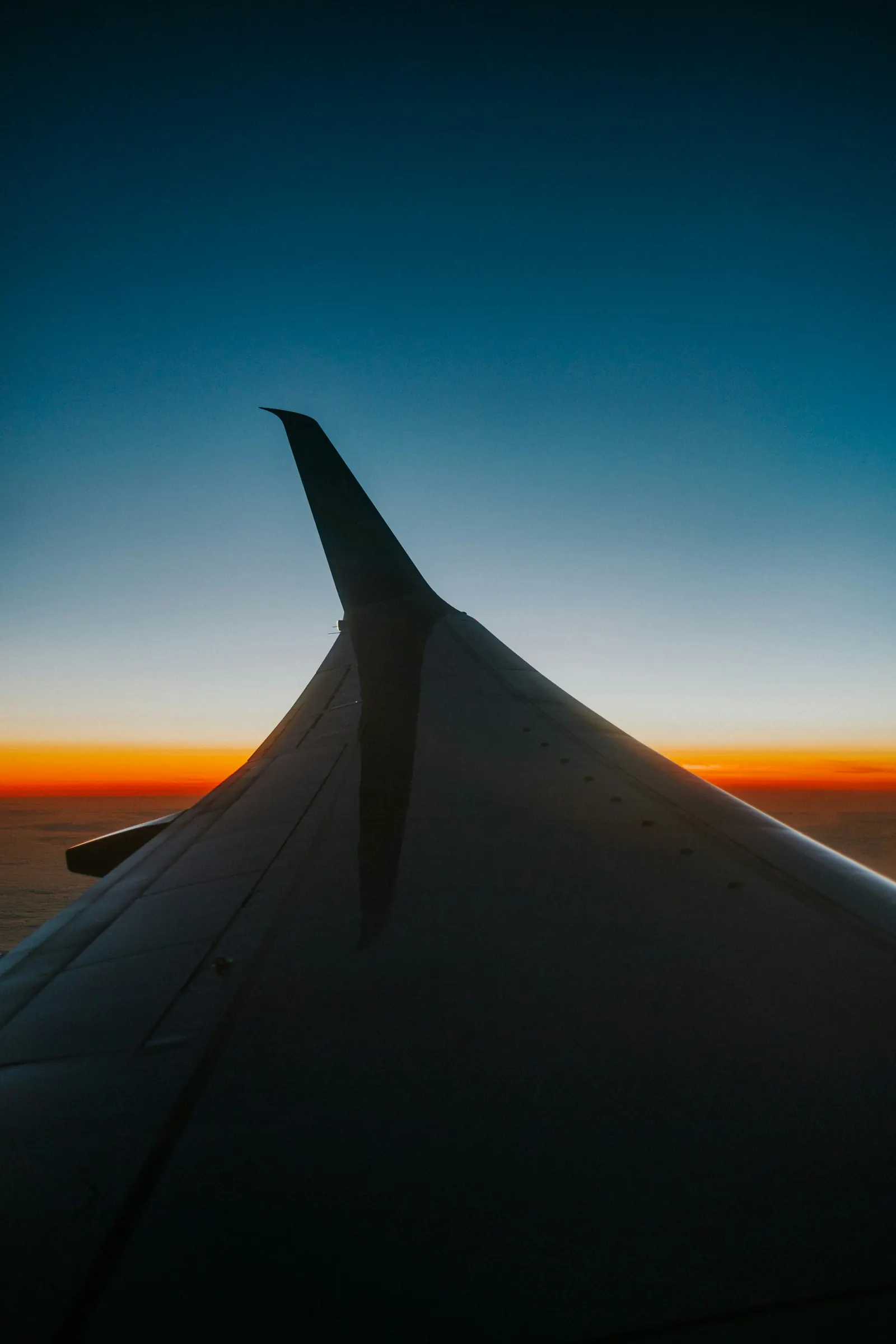 Very light jetsHondaJetHondaJet (HA-420), HondaJet Elite, HondaJet Elite S, HondaJet Elite II
- Light and midsize jetsLearjetLearjet 40, Learjet 45, Learjet 60, Learjet 70, Learjet 75
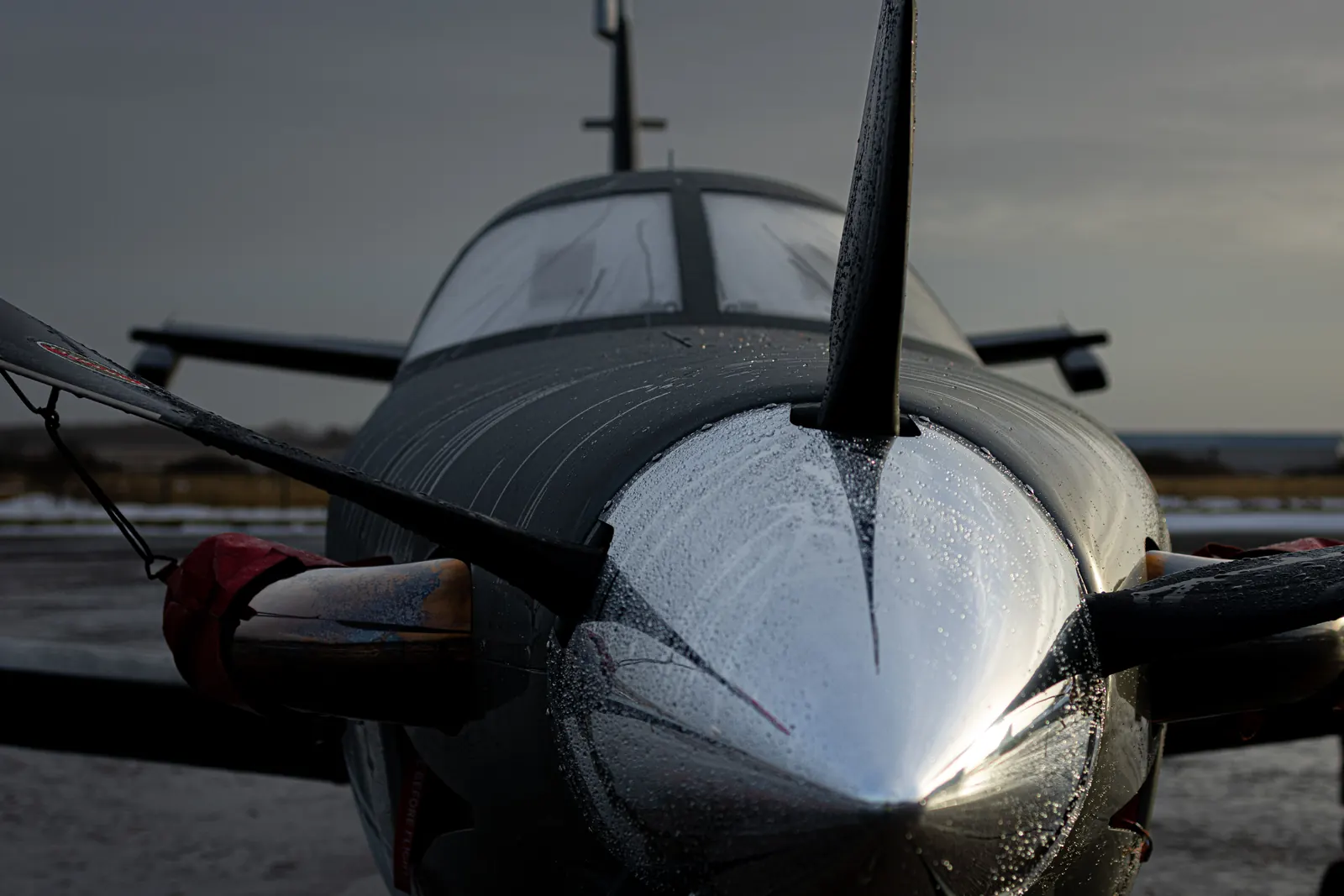 Single-engine turbopropsDaher TBMTBM 850, TBM 900, TBM 910, TBM 930, TBM 940, TBM 960
- High-performance singles and personal jetsCirrusSR20, SR22, SR22T, SF50 Vision Jet
 Pressurised singles and turbopropsPiper M-ClassM350, M500, M600
- Midsize and super-midsize jetsHawkerHawker 400XP, Hawker 800XP, Hawker 850XP, Hawker 900XP, Hawker 4000

Private consultation
Exceptional care begins here.
A short, confidential conversation about your aircraft, your operation and your ground windows. A written scope follows, never a price list.