
The short answer
In an Ontario winter, aircraft need detailing adjusted for deicing fluid film, salt and grit on lower surfaces, and moisture carried into the cabin. Remove glycol film soon after deicing, ideally in a heated hangar. Protect cabin entries, dry carpets thoroughly and let leather warm before conditioning. Residue in control surface gaps is for maintenance to inspect.
Key takeaways
- Deicing fluid leaves a sticky film that holds dirt; clean it off soon after deicing events.
- Thickened anti-icing fluid residue can collect in aerodynamically quiet areas; inspecting and removing it there is a maintenance task.
- Salt, grit and slush concentrate on steps, lower fuselage, belly and entry carpets.
- Cabin moisture from boots and condensation needs active drying to prevent odour and staining.
- Products and coatings have minimum temperatures; winter detailing is best done in a heated hangar.
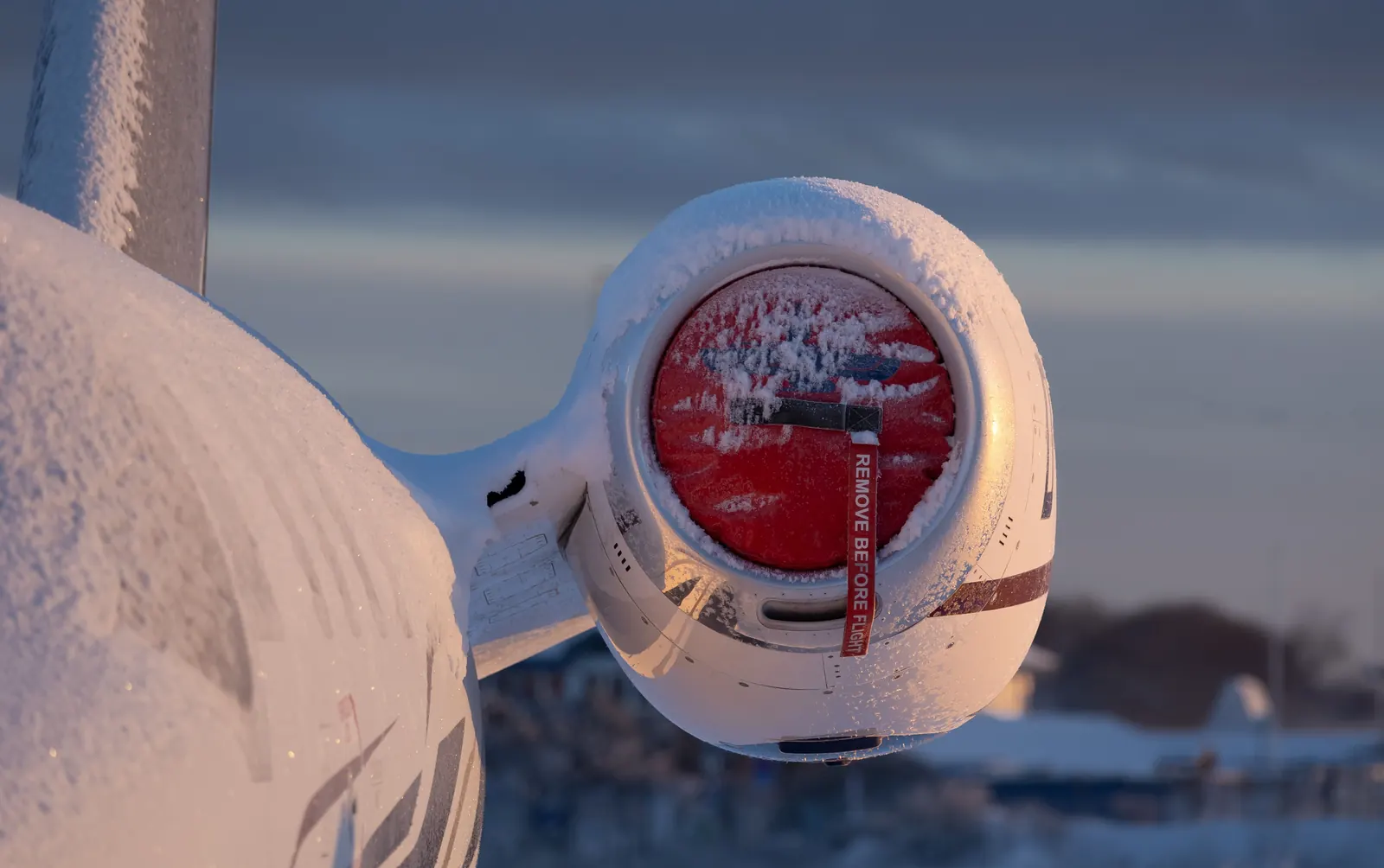
Ontario winters run from late autumn into spring, and for an aircraft that flies through them the season changes almost everything about how it gets dirty. Deicing fluid, treated ramps, slush carried aboard on boots and the constant shift between cold ramps and warm hangars all leave their marks. A summer detailing routine applied unchanged in January will miss most of what matters.
Deicing fluid residue
Aircraft deicing in North America typically uses glycol-based fluids. Type I fluid, usually dyed orange, is sprayed hot to remove frost, snow and ice. Type IV fluid, usually dyed green, is a thickened anti-icing fluid that clings to the surfaces to delay new contamination before takeoff, then shears off during the takeoff roll. Both are effective at their jobs. Both leave traces.
On the visible surfaces, glycol leaves a slightly sticky film that streaks, dulls the paint and collects dirt and soot. It runs back along the fuselage and gathers around windows, door seals and the belly. Left through a series of deicing events, the film builds into a grimy layer that is harder to remove and can stain light paint.
Thickened fluid residue is a maintenance matter
Thickened anti-icing fluids can dry into a residue in aerodynamically quiet areas such as control surface gaps, hinge areas and the gaps around stabilisers. That residue can rehydrate into a gel and freeze, which is a known airworthiness concern. Inspecting and removing it in those areas is the responsibility of the operator and maintenance provider, following the manufacturer's guidance. A detailer should not work inside control surface gaps, but should report any residue noticed there.
Salt, grit and slush
Airports use runway and taxiway deicers that are chosen to be less harmful to aircraft than road salt, but aprons, parking areas and the vehicles that serve aircraft still bring chloride salt and sand close to the airframe. Slush thrown from the gear and ground equipment coats lower surfaces, and passengers and crew carry salt and grit aboard on their boots.
- Airstairs and entry steps collect salt crust and grit that scratch carpet and step finishes.
- The lower fuselage and belly carry slush spray mixed with soot and fluid residue.
- Brightwork, especially polished leading edges and trim, can spot and dull from salt exposure.
- Door seals and the area around the entry door collect grime from repeated opening in wet conditions.
Wheel wells, brakes and gear components are maintenance territory. Salt and runway deicer exposure there are inspected and treated by maintenance, not by a detailer.
Cabin moisture
Winter puts more water inside an aircraft than any other season. Snow and slush on boots melt into carpets. Wet coats sit on seats. An aircraft brought from a cold ramp into a warm hangar can form condensation on cold surfaces. Moisture left in carpets and under runners leads to musty odours, tide marks and, if it persists, potential for mould.
- Use protective entry runners during winter and change them frequently.
- Extract wet carpets promptly and dry them fully, with air movement and warmth, rather than leaving them to dry slowly in a cold cabin.
- Check under runners and around the entry door for trapped moisture.
- Wipe salt tide marks from carpet and leather before they set.
- Store wet coats and luggage away from leather seating where possible.
Cold-soaked materials
Leather, plastics and adhesives behave differently when cold. Cold leather is stiffer and does not absorb conditioner well, so conditioning should wait until the cabin is at normal temperature. Cleaning products and protective coatings also have minimum application temperatures. Many dry wash products, and almost all sealants, perform poorly or fail to cure in the cold. Winter detailing is therefore best done in a heated hangar, with the aircraft given time to warm before work begins.
A winter detailing routine
| Area | Winter focus | Timing |
|---|---|---|
| Upper surfaces and fuselage | Remove glycol film and streaks | Soon after deicing events, in a heated hangar |
| Belly and lower fuselage | Remove slush spray, soot and fluid residue | At each exterior detail; more often after heavy weather |
| Brightwork | Remove salt spotting; protect polished surfaces | Regularly through winter |
| Entry and airstair | Remove salt crust and grit; clean door seal areas | After each trip in wet weather |
| Carpets and runners | Extract moisture and salt; dry thoroughly | After each trip with slush or snow |
| Leather | Clean salt marks; condition once warm | Regularly, at cabin temperature |
| Control surface gaps | Report residue to maintenance | Observed during exterior work |
Hangar transitions and condensation
Moving a cold-soaked aircraft into a warm, humid hangar causes moisture to condense on cold surfaces inside and out. Windows fog, metal fittings and trim sweat, and water can collect at the base of windows and in carpet edges. The answer is time and air movement: let the aircraft warm gradually, open the cabin to circulate air where the operator permits, and wipe condensation from interior surfaces before it marks veneer or leather. Exterior work should wait until surfaces are dry and at hangar temperature.
The reverse matters too. A cabin that is cleaned in a warm hangar and then rolled out onto a frozen ramp with damp carpets will hold that moisture until the next flight. Drying should be finished before the aircraft leaves the hangar.
Helicopters in winter
Helicopters flying from snow-covered pads recirculate snow and grit in their own rotor wash, and large acrylic windows collect salt film and scratches from it. Lower fuselage surfaces and skids carry slush and sand from landing areas. Windows should be cleaned with plenty of lubrication and clean microfibre to avoid dragging grit across the acrylic. Any residue around the rotor head, transmission area or engine inlets is for the operator and maintenance provider to address.
Brightwork and windows in salt season
Polished aluminium and plated trim react to salt and moisture faster than painted surfaces. Spotting appears first, then dulling, and on bare polished metal, left long enough, oxidation that takes real polishing to remove. Through winter, brightwork benefits from regular gentle cleaning with products made for polished metal and, where suitable, a protective layer applied before the season.
Windows and windshields also take a beating. Glycol overspray and road film smear acrylic cabin windows, and grit carried in the slush can scratch them if they are wiped dry. Use a cleaner made for aviation acrylic, plenty of lubrication and clean microfibre, and lift loose grit before wiping. Windshields are treated according to the aircraft manufacturer's guidance, since many carry heating elements or coatings of their own.
Entry door seals deserve a mention too. They sit at the meeting point of slush, salt and repeated opening, and grime packed against them can affect how they look and wear. A gentle wipe of the visible seal surface with a mild cleaner is cosmetic; anything involving the seal's condition or treatment is for maintenance.
Before and after the season
Autumn is the right time for protective work. A thorough exterior detail, correction of any paint defects and a ceramic sealant where appropriate make glycol film and grime easier to release all winter. Polished brightwork benefits from protection before salt season. In spring, a full detail removes the season's residue from every surface, followed by a deep cabin clean to deal with salt and moisture in carpets and seats.
Noctavius Aviation adjusts products and methods for winter conditions and reports anything we see in maintenance-controlled areas, such as fluid residue in control surface gaps, to the operator and maintenance provider rather than acting on it.
Related services