The short answer
To remove odours from an aircraft cabin, find and clean the source rather than masking it. Common sources are damp carpets, the lavatory and galley, food and drink spills in seat tracks, and moisture after winter flying. Clean and fully dry affected materials, sanitise the galley and lavatory, and keep the cabin ventilated. Persistent odours can indicate a maintenance issue.
Key takeaways
- Find the source; don’t mask it.
- Damp carpet is the most common cause.
- Galley, lavatory and seat tracks trap residue.
- Persistent or unusual odours go to maintenance.
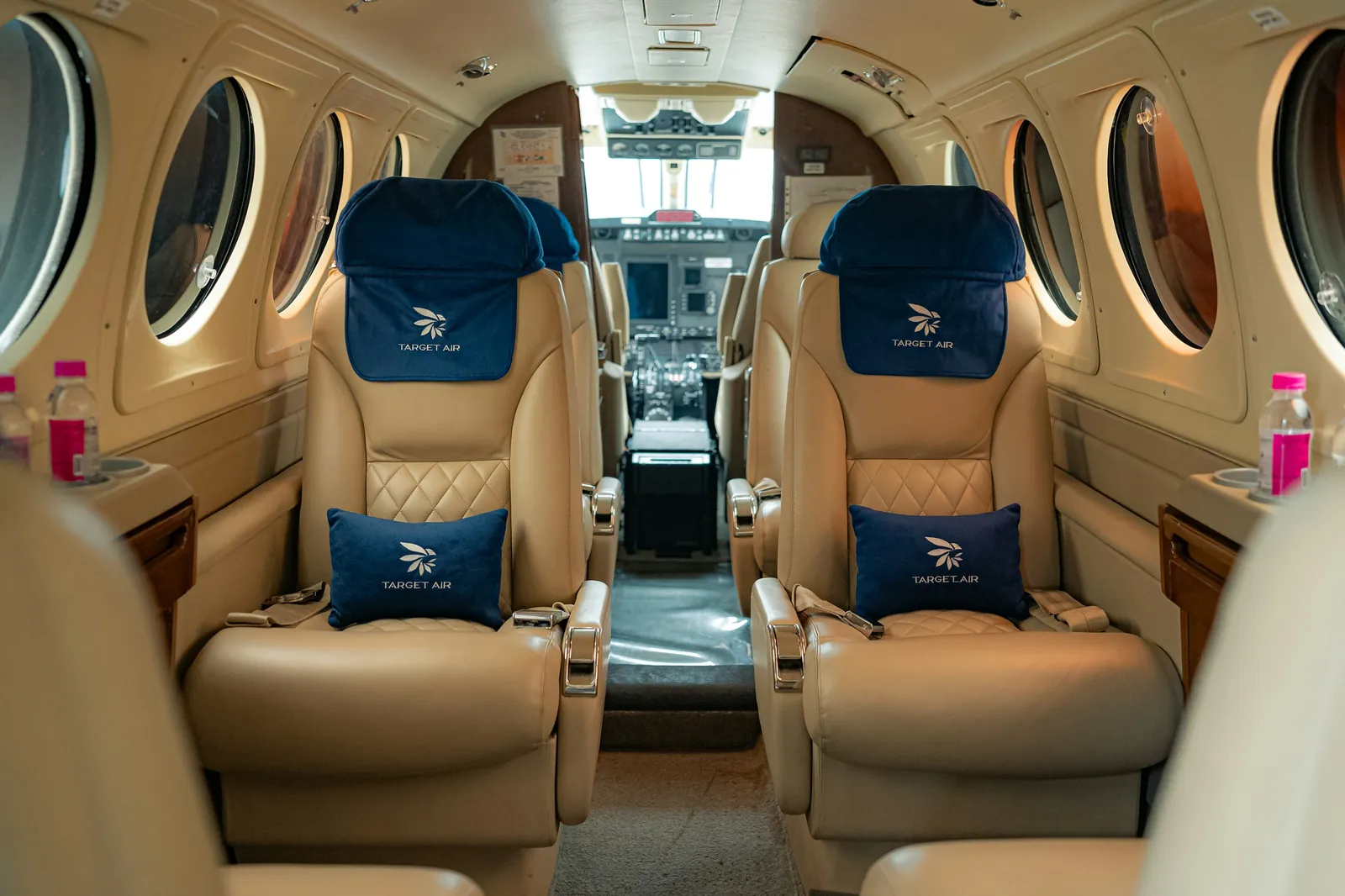
A closed aircraft cabin holds smells. Fragrance sprays only cover them for a while, and in a small cabin they often make things worse.
Common sources
- Damp carpets and runners after wet-weather boarding
- Spills that run into seat tracks and under runners
- Galley drains, bins and fridges
- Lavatory surfaces and fittings
- Leather and fabric that absorbed food or smoke
The fix
- 1Locate the source by area: entry, galley, lavatory, seating.
- 2Remove debris from seat tracks and under runners.
- 3Clean and fully dry carpets with low-moisture extraction.
- 4Sanitise galley and lavatory surfaces.
- 5Clean leather and fabric that hold odour.
- 6Ventilate and recheck after the cabin has been closed for a day.
When it is not a cleaning problem
Fuel, electrical, hydraulic or burning smells, and odours that come from vents, are maintenance issues. Report them to the crew and maintenance provider immediately.
Where we do this work